
Course Features
Price
Study Method
Online | Self-paced
Course Format
Interactive PDFs, Articles & Learning Resources
Duration
6 hours, 35 minutes
Qualification
Professional Skills Development Course
Assessment
Final MCQ Exam (included in price)
Certificate
Verifiable Digital Certificate - Free
Additional info
Lifetime Access | Start Instantly
- Share
Overview
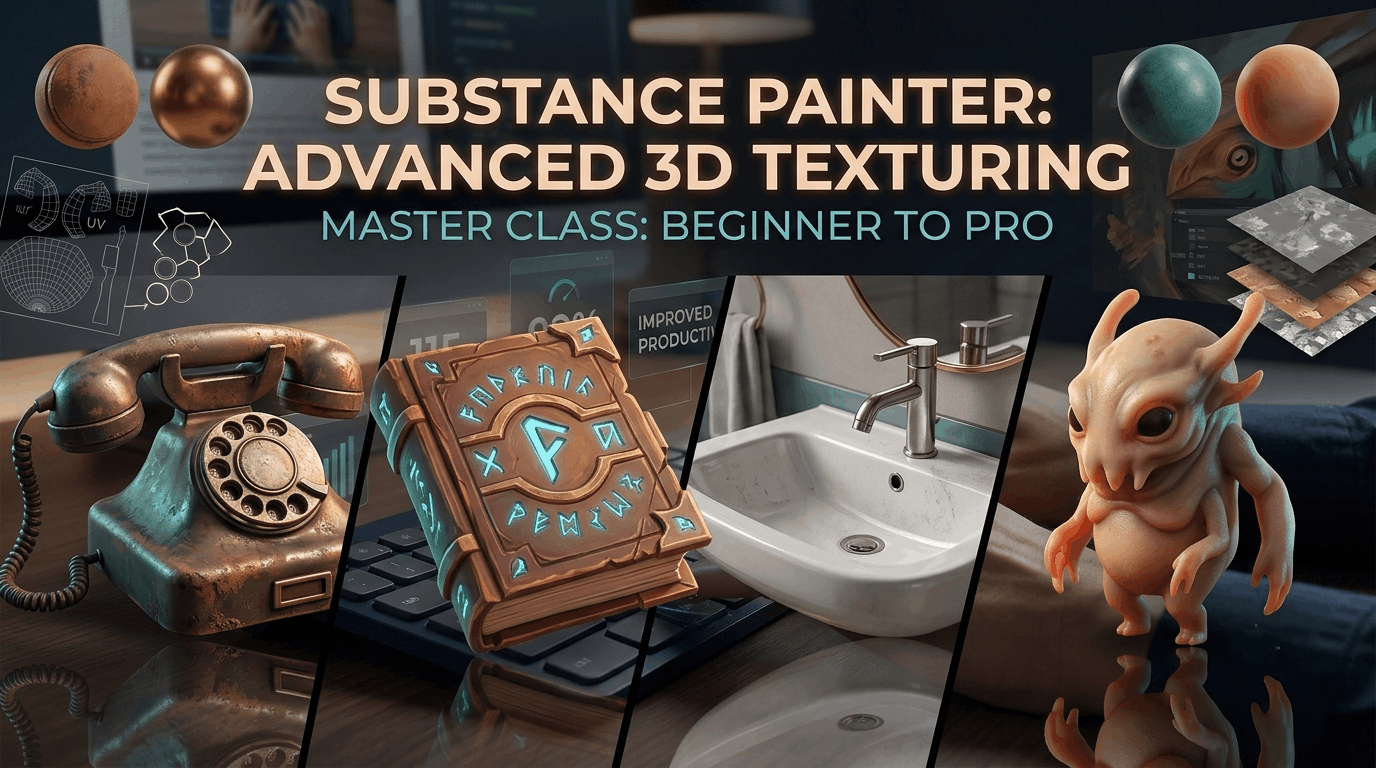
Substance Painter Course training provides beginners with a practical route into modern 3D texturing, helping learners develop the techniques needed to create convincing surfaces for a range of digital assets. The course moves from essential software navigation to more advanced workflows, allowing students to build their skills through structured, project-based learning.
You will begin by exploring the interface and navigation tools before learning how to bake high-quality mesh maps. From there, the course introduces effective masking techniques and realistic texturing workflows through the creation of a detailed 3D telephone asset. You will work on individual components, refine surface details, clean up the project and prepare textures for export and final rendering.
The course then introduces hand-painted texturing, giving you the opportunity to develop a different visual approach. Through assets such as a book, wavemeter, locking mechanism and surrounding environment, you will practise building stylised surfaces and adding artistic detail. This provides valuable experience in balancing technical workflows with creative decision-making.
You will also explore custom material creation through a complete scene-texturing project. By working on bathroom walls, a sink, faucet, mirror, towel rack, soap and lighting elements, you can gain experience in maintaining visual consistency across multiple objects within the same environment. The final practical section focuses on organic asset texturing and subsurface scattering (SSS), covering realistic skin, eyes, ears, tail, tusk and hair.
By completing these varied projects, you can develop a broader understanding of PBR texturing, hand-painted techniques, masking, material creation, SSS workflows, texture exporting and final presentation. These transferable skills can support further learning in game art, animation, 3D visualisation and digital asset production.
Students also receive access to 5-star rated support available 24/7 through email, providing assistance whenever guidance is needed. After successfully completing the course, learners will receive a free course completion certificate. For those who want additional professional documentation, multiple premium certificate and transcript options are also available for purchase.Who is this course for?
Substance Painter Course training provides beginners with a practical route into modern 3D texturing, helping learners develop the techniques needed to create convincing surfaces for a range of digital assets. The course moves from essential software navigation to more advanced workflows, allowing students to build their skills through structured, project-based learning.
You will begin by exploring the interface and navigation tools before learning how to bake high-quality mesh maps. From there, the course introduces effective masking techniques and realistic texturing workflows through the creation of a detailed 3D telephone asset. You will work on individual components, refine surface details, clean up the project and prepare textures for export and final rendering.
The course then introduces hand-painted texturing, giving you the opportunity to develop a different visual approach. Through assets such as a book, wavemeter, locking mechanism and surrounding environment, you will practise building stylised surfaces and adding artistic detail. This provides valuable experience in balancing technical workflows with creative decision-making.
You will also explore custom material creation through a complete scene-texturing project. By working on bathroom walls, a sink, faucet, mirror, towel rack, soap and lighting elements, you can gain experience in maintaining visual consistency across multiple objects within the same environment. The final practical section focuses on organic asset texturing and subsurface scattering (SSS), covering realistic skin, eyes, ears, tail, tusk and hair.
By completing these varied projects, you can develop a broader understanding of PBR texturing, hand-painted techniques, masking, material creation, SSS workflows, texture exporting and final presentation. These transferable skills can support further learning in game art, animation, 3D visualisation and digital asset production.
Students also receive access to 5-star rated support available 24/7 through email, providing assistance whenever guidance is needed. After successfully completing the course, learners will receive a free course completion certificate. For those who want additional professional documentation, multiple premium certificate and transcript options are also available for purchase.Requirements
Substance Painter Course training provides beginners with a practical route into modern 3D texturing, helping learners develop the techniques needed to create convincing surfaces for a range of digital assets. The course moves from essential software navigation to more advanced workflows, allowing students to build their skills through structured, project-based learning.
You will begin by exploring the interface and navigation tools before learning how to bake high-quality mesh maps. From there, the course introduces effective masking techniques and realistic texturing workflows through the creation of a detailed 3D telephone asset. You will work on individual components, refine surface details, clean up the project and prepare textures for export and final rendering.
The course then introduces hand-painted texturing, giving you the opportunity to develop a different visual approach. Through assets such as a book, wavemeter, locking mechanism and surrounding environment, you will practise building stylised surfaces and adding artistic detail. This provides valuable experience in balancing technical workflows with creative decision-making.
You will also explore custom material creation through a complete scene-texturing project. By working on bathroom walls, a sink, faucet, mirror, towel rack, soap and lighting elements, you can gain experience in maintaining visual consistency across multiple objects within the same environment. The final practical section focuses on organic asset texturing and subsurface scattering (SSS), covering realistic skin, eyes, ears, tail, tusk and hair.
By completing these varied projects, you can develop a broader understanding of PBR texturing, hand-painted techniques, masking, material creation, SSS workflows, texture exporting and final presentation. These transferable skills can support further learning in game art, animation, 3D visualisation and digital asset production.
Students also receive access to 5-star rated support available 24/7 through email, providing assistance whenever guidance is needed. After successfully completing the course, learners will receive a free course completion certificate. For those who want additional professional documentation, multiple premium certificate and transcript options are also available for purchase.Career path
Substance Painter Course training provides beginners with a practical route into modern 3D texturing, helping learners develop the techniques needed to create convincing surfaces for a range of digital assets. The course moves from essential software navigation to more advanced workflows, allowing students to build their skills through structured, project-based learning.
You will begin by exploring the interface and navigation tools before learning how to bake high-quality mesh maps. From there, the course introduces effective masking techniques and realistic texturing workflows through the creation of a detailed 3D telephone asset. You will work on individual components, refine surface details, clean up the project and prepare textures for export and final rendering.
The course then introduces hand-painted texturing, giving you the opportunity to develop a different visual approach. Through assets such as a book, wavemeter, locking mechanism and surrounding environment, you will practise building stylised surfaces and adding artistic detail. This provides valuable experience in balancing technical workflows with creative decision-making.
You will also explore custom material creation through a complete scene-texturing project. By working on bathroom walls, a sink, faucet, mirror, towel rack, soap and lighting elements, you can gain experience in maintaining visual consistency across multiple objects within the same environment. The final practical section focuses on organic asset texturing and subsurface scattering (SSS), covering realistic skin, eyes, ears, tail, tusk and hair.
By completing these varied projects, you can develop a broader understanding of PBR texturing, hand-painted techniques, masking, material creation, SSS workflows, texture exporting and final presentation. These transferable skills can support further learning in game art, animation, 3D visualisation and digital asset production.
Students also receive access to 5-star rated support available 24/7 through email, providing assistance whenever guidance is needed. After successfully completing the course, learners will receive a free course completion certificate. For those who want additional professional documentation, multiple premium certificate and transcript options are also available for purchase.-
- Welcome and Course Introduction 00:10:00
- How to Download Project Files 00:10:00
- Exploring the Interface and Navigation Tools 00:10:00
-
- Baking High-Quality Mesh Maps 00:10:00
- Using Masking Techniques Effectively 00:10:00
- Texturing the Phone Body 00:10:00
- Detailing the Rotary Dial 00:10:00
- Texturing the Handset, Switch Arm, and Cord 00:10:00
- Project Clean-Up and Final Checks 00:10:00
- Exporting Textures and Final Rendering 00:10:00
- Introduction to Hand-Painted Texturing 00:10:00
- Painting the Book Base 00:10:00
- Designing the Wavemeter 00:10:00
- Painting the Locking Mechanism 00:10:00
- Texturing the Environment 00:10:00
- Clean-Up and Polish 00:10:00
- Understanding Subsurface Scattering (SSS) 00:10:00
- Preparing the Model for SSS 00:10:00
- Creating Realistic Skin Textures 00:10:00
- Detailing the Eyes 00:10:00
- Painting the Ears and Tail 00:10:00
- Texturing the Tusk and Hair 00:10:00
- Finalizing the Environment 00:10:00
- Final Clean-Up and Rendering 00:10:00
- Exam of Substance Painter Texturing for Beginners: Master PBR & Hand-Painted Assets 00:50:00

No Reviews found for this course.
Is this certificate recognized?
Yes, our premium certificate and transcript are widely recognized and accepted by embassies worldwide, particularly by the UK embassy. This adds credibility to your qualification and enhances its value for professional and academic purposes.
I am a beginner. Is this course suitable for me?
Yes, this course is designed for learners of all levels, including beginners. The content is structured to provide step-by-step guidance, ensuring that even those with no prior experience can follow along and gain valuable knowledge.
I am a professional. Is this course suitable for me?
Yes, professionals will also benefit from this course. It covers advanced concepts, practical applications, and industry insights that can help enhance existing skills and knowledge. Whether you are looking to refine your expertise or expand your qualifications, this course provides valuable learning.
Does this course have an expiry date?
No, you have lifetime access to the course. Once enrolled, you can revisit the materials at any time as long as the course remains available. Additionally, we regularly update our content to ensure it stays relevant and up to date.
How do I claim my free certificate?
I trust you’re in good health. Your free certificate can be located in the Achievement section. The option to purchase a CPD certificate is available but entirely optional, and you may choose to skip it. Please be aware that it’s crucial to click the “Complete” button to ensure the certificate is generated, as this process is entirely automated.
Does this course have assessments and assignments?
Yes, the course includes both assessments and assignments. Your final marks will be determined by a combination of 20% from assignments and 80% from assessments. These evaluations are designed to test your understanding and ensure you have grasped the key concepts effectively.
Is this course accredited?
We are a recognized course provider with CPD, UKRLP, and AOHT membership. The logos of these accreditation bodies will be featured on your premium certificate and transcript, ensuring credibility and professional recognition.
Will I receive a certificate upon completion?
Yes, you will receive a free digital certificate automatically once you complete the course. If you would like a premium CPD-accredited certificate, either in digital or physical format, you can upgrade for a small fee.
Course Features
Price
Study Method
Online | Self-paced
Course Format
Interactive PDFs, Articles & Learning Resources
Duration
6 hours, 35 minutes
Qualification
Professional Skills Development Course
Assessment
Final MCQ Exam (included in price)
Certificate
Verifiable Digital Certificate - Free
Additional info
Lifetime Access | Start Instantly
- Share

Sonographer Level 3 Advanced Diploma
Course Line257£490.00Original price was: £490.00.£14.99Current price is: £14.99.Assistant Accountant Training
Course Line244£490.00Original price was: £490.00.£14.99Current price is: £14.99.Employment Law Level 7 Advanced Diploma
Course Line252£490.00Original price was: £490.00.£14.99Current price is: £14.99.



Related Courses
AutoCAD Floor Plan Rendering in Photoshop: Architectural Visualisation Professional Training
£490.00Original price was: £490.00.£14.99Current price is: £14.99.237Professional Photography Masterclass: Camera, Lighting, Composition & Portraits
£490.00Original price was: £490.00.£14.99Current price is: £14.99.237Adobe Photoshop CC MasterClass: From Beginner to Advanced Digital Artist
£490.00Original price was: £490.00.£14.99Current price is: £14.99.237


Related Courses
AutoCAD Floor Plan Rendering in Photoshop: Architectural Visualisation Professional Training
£490.00Original price was: £490.00.£14.99Current price is: £14.99.237Professional Photography Masterclass: Camera, Lighting, Composition & Portraits
£490.00Original price was: £490.00.£14.99Current price is: £14.99.237Adobe Photoshop CC MasterClass: From Beginner to Advanced Digital Artist
£490.00Original price was: £490.00.£14.99Current price is: £14.99.237

