
Course Features
Price
Study Method
Online | Self-paced
Course Format
Interactive PDFs, Articles & Learning Resources
Duration
15 minutes
Qualification
Professional Skills Development Course
Assessment
Final MCQ Exam (included in price)
Certificate
Verifiable Digital Certificate - Free
Additional info
Lifetime Access | Start Instantly
- Share
Overview
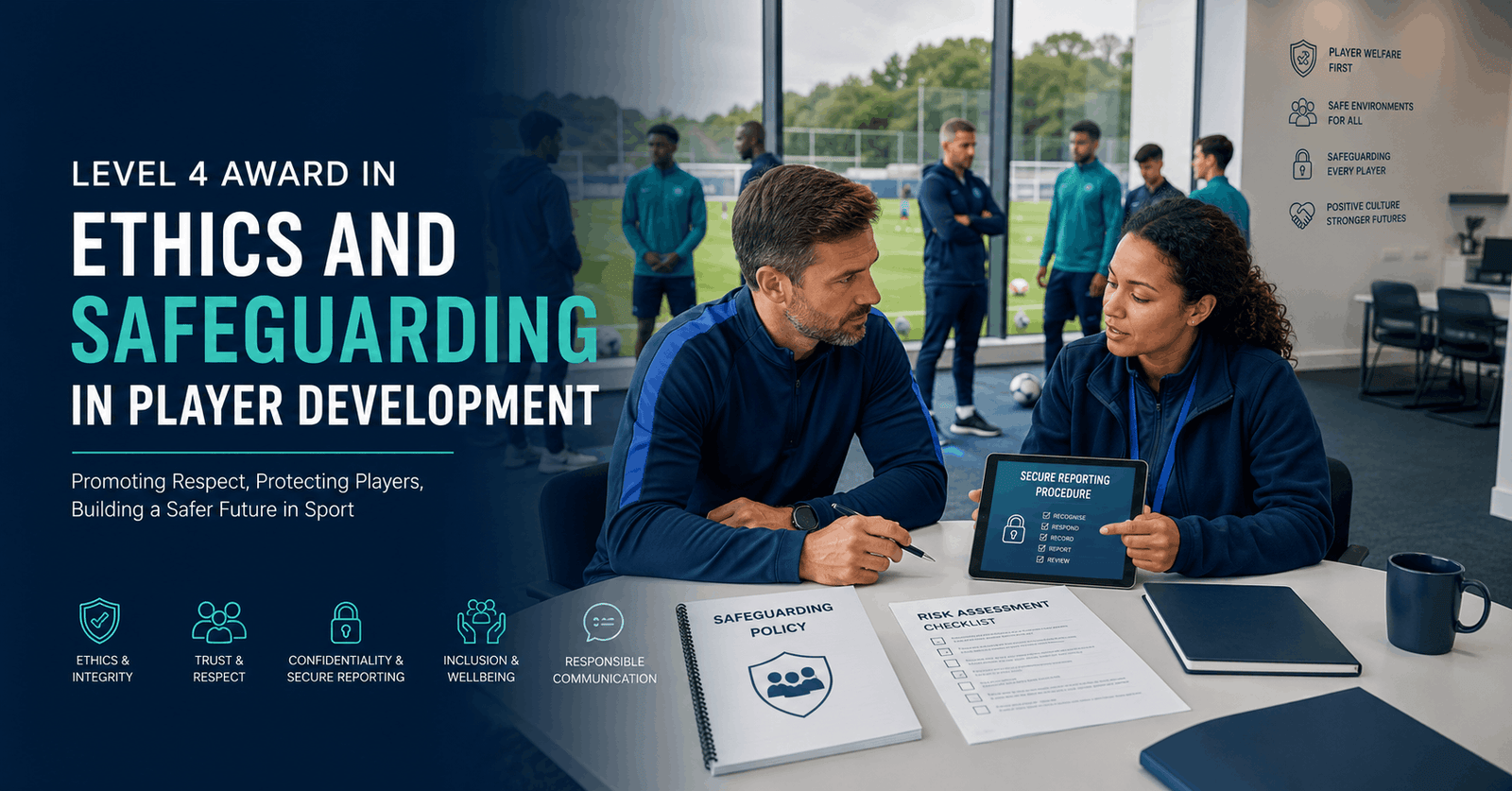
Safeguarding in Sport is fundamental to creating player development environments built on safety, respect, integrity and responsible professional practice. The Level 4 Award in Ethics and Safeguarding in Player Development provides learners with structured knowledge of ethical responsibilities, welfare protection and appropriate approaches to recognising and responding to concerns within sporting settings.
The course begins by examining the meaning of ethics in sport and how professional values can influence decisions, relationships and organisational culture. Learners will consider ethical principles, common dilemmas and the importance of trust and integrity when supporting players. This foundation encourages thoughtful decision-making in situations where responsibilities, competing interests or professional boundaries may require careful consideration.
The programme then introduces core safeguarding principles, policies and procedures relevant to player development. Learners will explore UK legal frameworks and statutory guidance at an awareness level, alongside the responsibilities of coaches and staff. Attention is also given to recognising potential indicators of abuse or neglect, understanding different categories of harm and considering how risk assessment can contribute to safer development environments.
Positive player welfare extends beyond responding to concerns. The course therefore explores respect, inclusion, emotional well-being, anti-bullying approaches and conflict resolution. Learners will consider how clear communication and appropriate professional conduct can help create environments where individuals feel valued and supported.
The final part of the programme focuses on reporting, recording and responding to safeguarding concerns. Learners will examine reporting procedures, confidentiality, appropriate information sharing and cooperation with parents, guardians and relevant authorities. Case studies provide opportunities to consider how safeguarding principles and ethical judgement may be applied in realistic sporting contexts.
By completing the course, learners can strengthen their awareness of ethical conduct, player welfare, risk management and responsible safeguarding practice. This knowledge can support safer decision-making across coaching, player development and sports administration environments.
Learners will receive a free course completion certificate after successfully completing the course. Those seeking additional documentation can choose from multiple premium certificate and transcript options available for purchase. Students will also have access to 5-star rated support available 24/7 through email, providing assistance throughout their learning experience.Completing this course can support professional development in coaching, academy operations, player welfare, sports administration and development programmes. Learners may apply the knowledge gained in roles such as coaching assistant, academy support worker, sports development officer or welfare support professional, while pursuing further education or role-specific training in safeguarding, coaching or sports management.
Who is this course for?
Safeguarding in Sport is fundamental to creating player development environments built on safety, respect, integrity and responsible professional practice. The Level 4 Award in Ethics and Safeguarding in Player Development provides learners with structured knowledge of ethical responsibilities, welfare protection and appropriate approaches to recognising and responding to concerns within sporting settings.
The course begins by examining the meaning of ethics in sport and how professional values can influence decisions, relationships and organisational culture. Learners will consider ethical principles, common dilemmas and the importance of trust and integrity when supporting players. This foundation encourages thoughtful decision-making in situations where responsibilities, competing interests or professional boundaries may require careful consideration.
The programme then introduces core safeguarding principles, policies and procedures relevant to player development. Learners will explore UK legal frameworks and statutory guidance at an awareness level, alongside the responsibilities of coaches and staff. Attention is also given to recognising potential indicators of abuse or neglect, understanding different categories of harm and considering how risk assessment can contribute to safer development environments.
Positive player welfare extends beyond responding to concerns. The course therefore explores respect, inclusion, emotional well-being, anti-bullying approaches and conflict resolution. Learners will consider how clear communication and appropriate professional conduct can help create environments where individuals feel valued and supported.
The final part of the programme focuses on reporting, recording and responding to safeguarding concerns. Learners will examine reporting procedures, confidentiality, appropriate information sharing and cooperation with parents, guardians and relevant authorities. Case studies provide opportunities to consider how safeguarding principles and ethical judgement may be applied in realistic sporting contexts.
By completing the course, learners can strengthen their awareness of ethical conduct, player welfare, risk management and responsible safeguarding practice. This knowledge can support safer decision-making across coaching, player development and sports administration environments.
Learners will receive a free course completion certificate after successfully completing the course. Those seeking additional documentation can choose from multiple premium certificate and transcript options available for purchase. Students will also have access to 5-star rated support available 24/7 through email, providing assistance throughout their learning experience.Completing this course can support professional development in coaching, academy operations, player welfare, sports administration and development programmes. Learners may apply the knowledge gained in roles such as coaching assistant, academy support worker, sports development officer or welfare support professional, while pursuing further education or role-specific training in safeguarding, coaching or sports management.
Requirements
Safeguarding in Sport is fundamental to creating player development environments built on safety, respect, integrity and responsible professional practice. The Level 4 Award in Ethics and Safeguarding in Player Development provides learners with structured knowledge of ethical responsibilities, welfare protection and appropriate approaches to recognising and responding to concerns within sporting settings.
The course begins by examining the meaning of ethics in sport and how professional values can influence decisions, relationships and organisational culture. Learners will consider ethical principles, common dilemmas and the importance of trust and integrity when supporting players. This foundation encourages thoughtful decision-making in situations where responsibilities, competing interests or professional boundaries may require careful consideration.
The programme then introduces core safeguarding principles, policies and procedures relevant to player development. Learners will explore UK legal frameworks and statutory guidance at an awareness level, alongside the responsibilities of coaches and staff. Attention is also given to recognising potential indicators of abuse or neglect, understanding different categories of harm and considering how risk assessment can contribute to safer development environments.
Positive player welfare extends beyond responding to concerns. The course therefore explores respect, inclusion, emotional well-being, anti-bullying approaches and conflict resolution. Learners will consider how clear communication and appropriate professional conduct can help create environments where individuals feel valued and supported.
The final part of the programme focuses on reporting, recording and responding to safeguarding concerns. Learners will examine reporting procedures, confidentiality, appropriate information sharing and cooperation with parents, guardians and relevant authorities. Case studies provide opportunities to consider how safeguarding principles and ethical judgement may be applied in realistic sporting contexts.
By completing the course, learners can strengthen their awareness of ethical conduct, player welfare, risk management and responsible safeguarding practice. This knowledge can support safer decision-making across coaching, player development and sports administration environments.
Learners will receive a free course completion certificate after successfully completing the course. Those seeking additional documentation can choose from multiple premium certificate and transcript options available for purchase. Students will also have access to 5-star rated support available 24/7 through email, providing assistance throughout their learning experience.Completing this course can support professional development in coaching, academy operations, player welfare, sports administration and development programmes. Learners may apply the knowledge gained in roles such as coaching assistant, academy support worker, sports development officer or welfare support professional, while pursuing further education or role-specific training in safeguarding, coaching or sports management.
Career path
Safeguarding in Sport is fundamental to creating player development environments built on safety, respect, integrity and responsible professional practice. The Level 4 Award in Ethics and Safeguarding in Player Development provides learners with structured knowledge of ethical responsibilities, welfare protection and appropriate approaches to recognising and responding to concerns within sporting settings.
The course begins by examining the meaning of ethics in sport and how professional values can influence decisions, relationships and organisational culture. Learners will consider ethical principles, common dilemmas and the importance of trust and integrity when supporting players. This foundation encourages thoughtful decision-making in situations where responsibilities, competing interests or professional boundaries may require careful consideration.
The programme then introduces core safeguarding principles, policies and procedures relevant to player development. Learners will explore UK legal frameworks and statutory guidance at an awareness level, alongside the responsibilities of coaches and staff. Attention is also given to recognising potential indicators of abuse or neglect, understanding different categories of harm and considering how risk assessment can contribute to safer development environments.
Positive player welfare extends beyond responding to concerns. The course therefore explores respect, inclusion, emotional well-being, anti-bullying approaches and conflict resolution. Learners will consider how clear communication and appropriate professional conduct can help create environments where individuals feel valued and supported.
The final part of the programme focuses on reporting, recording and responding to safeguarding concerns. Learners will examine reporting procedures, confidentiality, appropriate information sharing and cooperation with parents, guardians and relevant authorities. Case studies provide opportunities to consider how safeguarding principles and ethical judgement may be applied in realistic sporting contexts.
By completing the course, learners can strengthen their awareness of ethical conduct, player welfare, risk management and responsible safeguarding practice. This knowledge can support safer decision-making across coaching, player development and sports administration environments.
Learners will receive a free course completion certificate after successfully completing the course. Those seeking additional documentation can choose from multiple premium certificate and transcript options available for purchase. Students will also have access to 5-star rated support available 24/7 through email, providing assistance throughout their learning experience.Completing this course can support professional development in coaching, academy operations, player welfare, sports administration and development programmes. Learners may apply the knowledge gained in roles such as coaching assistant, academy support worker, sports development officer or welfare support professional, while pursuing further education or role-specific training in safeguarding, coaching or sports management.
-
-
- Premium Certificate 00:15:00

No Reviews found for this course.
Is this certificate recognized?
Yes, our premium certificate and transcript are widely recognized and accepted by embassies worldwide, particularly by the UK embassy. This adds credibility to your qualification and enhances its value for professional and academic purposes.
I am a beginner. Is this course suitable for me?
Yes, this course is designed for learners of all levels, including beginners. The content is structured to provide step-by-step guidance, ensuring that even those with no prior experience can follow along and gain valuable knowledge.
I am a professional. Is this course suitable for me?
Yes, professionals will also benefit from this course. It covers advanced concepts, practical applications, and industry insights that can help enhance existing skills and knowledge. Whether you are looking to refine your expertise or expand your qualifications, this course provides valuable learning.
Does this course have an expiry date?
No, you have lifetime access to the course. Once enrolled, you can revisit the materials at any time as long as the course remains available. Additionally, we regularly update our content to ensure it stays relevant and up to date.
How do I claim my free certificate?
I trust you’re in good health. Your free certificate can be located in the Achievement section. The option to purchase a CPD certificate is available but entirely optional, and you may choose to skip it. Please be aware that it’s crucial to click the “Complete” button to ensure the certificate is generated, as this process is entirely automated.
Does this course have assessments and assignments?
Yes, the course includes both assessments and assignments. Your final marks will be determined by a combination of 20% from assignments and 80% from assessments. These evaluations are designed to test your understanding and ensure you have grasped the key concepts effectively.
Is this course accredited?
We are a recognized course provider with CPD, UKRLP, and AOHT membership. The logos of these accreditation bodies will be featured on your premium certificate and transcript, ensuring credibility and professional recognition.
Will I receive a certificate upon completion?
Yes, you will receive a free digital certificate automatically once you complete the course. If you would like a premium CPD-accredited certificate, either in digital or physical format, you can upgrade for a small fee.
Course Features
Price
Study Method
Online | Self-paced
Course Format
Interactive PDFs, Articles & Learning Resources
Duration
15 minutes
Qualification
Professional Skills Development Course
Assessment
Final MCQ Exam (included in price)
Certificate
Verifiable Digital Certificate - Free
Additional info
Lifetime Access | Start Instantly
- Share

Project Procurement Management: From Planning to Delivery
Course Line238$935.47Original price was: $935.47.$28.62Current price is: $28.62.Dental Nurse Level 5 Advanced Diploma
Course Line238$935.47Original price was: $935.47.$28.62Current price is: $28.62.Certification in Color Therapy for Chakra Healing: Integrative Energy Balance
Course Line237$935.47Original price was: $935.47.$28.62Current price is: $28.62.



Related Courses
Level 3 Youth Award in Football: Coaching, Performance and Leadership
$935.47Original price was: $935.47.$28.62Current price is: $28.62.237Level 2 Youth Award in Football: Fundamentals, Skills & Team Play
$935.47Original price was: $935.47.$28.62Current price is: $28.62.237Level 5 Youth Development Officer Course in Football
$935.47Original price was: $935.47.$28.62Current price is: $28.62.238




Related Courses
Level 3 Youth Award in Football: Coaching, Performance and Leadership
$935.47Original price was: $935.47.$28.62Current price is: $28.62.237Level 2 Youth Award in Football: Fundamentals, Skills & Team Play
$935.47Original price was: $935.47.$28.62Current price is: $28.62.237Level 5 Youth Development Officer Course in Football
$935.47Original price was: $935.47.$28.62Current price is: $28.62.238

