Course Features
Price
Study Method
Online | Self-paced
Course Format
Reading Material - PDF, article
Duration
5 hours, 15 minutes
Qualification
No formal qualification
Certificate
At completion
Additional info
Coming soon
- Share
Overview
The Middle Ages, spanning from the fall of the Roman Empire to the dawn of the Renaissance, shaped the foundations of modern political, social, and cultural institutions. The Medieval History Level 8 Advanced Diploma offers an extensive study of the medieval world, exploring its governance, wars, intellectual movements, and transformative events.
The course begins with an Introduction to Medieval History, where learners will define the medieval period, examine historical sources and methodologies, and explore how the decline of Rome led to the emergence of the Middle Ages.
The Political Systems and Governance module covers the rise of feudalism, the power of the Church in medieval politics, and the development of monarchies across Europe. This section provides a detailed look at medieval rulers, their policies, and the feudal system that shaped medieval life.
Understanding Social Structures and Daily Life is essential to comprehending medieval society. This module explores the rigid social hierarchy, the role of women, religious influence, education, and medieval artistic expression.
Key historical events are covered in Key Events and Developments, including the Crusades, the Hundred Years' War, and the Black Death, analyzing their profound impact on medieval Europe and beyond.
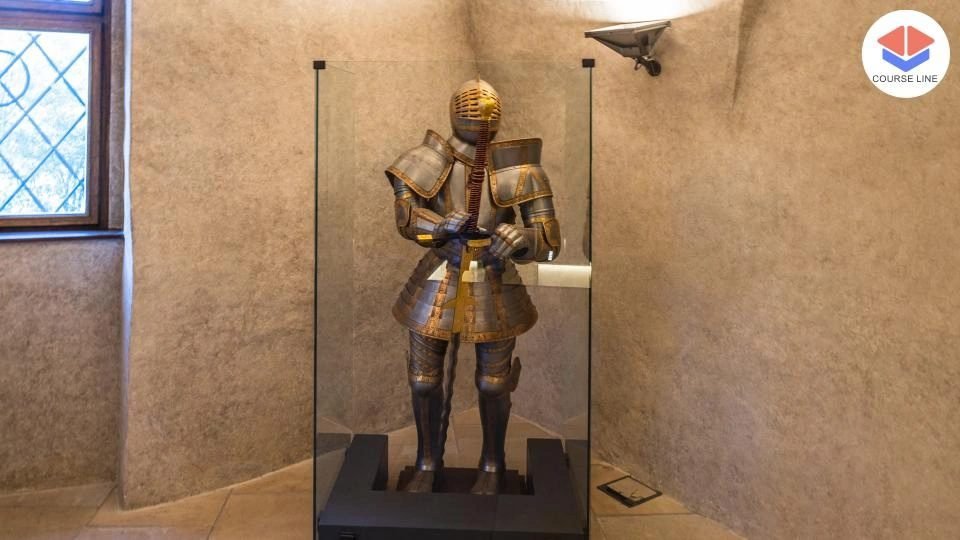
In Medieval Warfare and Military Technology, learners will gain insight into battlefield strategies, the evolution of medieval weaponry, and the significance of knighthood and chivalry in shaping medieval military culture.
The Rise and Fall of Empires module examines the Holy Roman Empire, the Byzantine Empire, and the Mongol conquests, exploring their political power, territorial expansion, and eventual decline.
Medieval Europe was also a time of intellectual and cultural growth. The Cultural and Intellectual Movements section covers scholasticism, medieval literature, philosophy, and how the Renaissance found its roots in the late Middle Ages.
The transition from medieval to modern history is explored in The End of the Middle Ages, covering the fall of Constantinople, the decline of feudalism, and the emergence of the early modern period.
The course concludes with Key Themes in Medieval History and Revision, reinforcing major historical developments, historiographical debates, and effective study techniques for medieval history research.
By the end of this diploma, learners will be well-versed in medieval politics, warfare, social structures, and cultural developments, making them highly knowledgeable in historical research, education, and medieval studies.
Graduates of this diploma can pursue careers as historians, museum curators, history educators, authors, researchers, and medieval studies specialists. The course also provides a strong foundation for further studies in history, archaeology, and historical consultancy.
Who is this course for?
The Middle Ages, spanning from the fall of the Roman Empire to the dawn of the Renaissance, shaped the foundations of modern political, social, and cultural institutions. The Medieval History Level 8 Advanced Diploma offers an extensive study of the medieval world, exploring its governance, wars, intellectual movements, and transformative events.
The course begins with an Introduction to Medieval History, where learners will define the medieval period, examine historical sources and methodologies, and explore how the decline of Rome led to the emergence of the Middle Ages.
The Political Systems and Governance module covers the rise of feudalism, the power of the Church in medieval politics, and the development of monarchies across Europe. This section provides a detailed look at medieval rulers, their policies, and the feudal system that shaped medieval life.
Understanding Social Structures and Daily Life is essential to comprehending medieval society. This module explores the rigid social hierarchy, the role of women, religious influence, education, and medieval artistic expression.
Key historical events are covered in Key Events and Developments, including the Crusades, the Hundred Years' War, and the Black Death, analyzing their profound impact on medieval Europe and beyond.
In Medieval Warfare and Military Technology, learners will gain insight into battlefield strategies, the evolution of medieval weaponry, and the significance of knighthood and chivalry in shaping medieval military culture.
The Rise and Fall of Empires module examines the Holy Roman Empire, the Byzantine Empire, and the Mongol conquests, exploring their political power, territorial expansion, and eventual decline.
Medieval Europe was also a time of intellectual and cultural growth. The Cultural and Intellectual Movements section covers scholasticism, medieval literature, philosophy, and how the Renaissance found its roots in the late Middle Ages.
The transition from medieval to modern history is explored in The End of the Middle Ages, covering the fall of Constantinople, the decline of feudalism, and the emergence of the early modern period.
The course concludes with Key Themes in Medieval History and Revision, reinforcing major historical developments, historiographical debates, and effective study techniques for medieval history research.
By the end of this diploma, learners will be well-versed in medieval politics, warfare, social structures, and cultural developments, making them highly knowledgeable in historical research, education, and medieval studies.
Graduates of this diploma can pursue careers as historians, museum curators, history educators, authors, researchers, and medieval studies specialists. The course also provides a strong foundation for further studies in history, archaeology, and historical consultancy.
Requirements
The Middle Ages, spanning from the fall of the Roman Empire to the dawn of the Renaissance, shaped the foundations of modern political, social, and cultural institutions. The Medieval History Level 8 Advanced Diploma offers an extensive study of the medieval world, exploring its governance, wars, intellectual movements, and transformative events.
The course begins with an Introduction to Medieval History, where learners will define the medieval period, examine historical sources and methodologies, and explore how the decline of Rome led to the emergence of the Middle Ages.
The Political Systems and Governance module covers the rise of feudalism, the power of the Church in medieval politics, and the development of monarchies across Europe. This section provides a detailed look at medieval rulers, their policies, and the feudal system that shaped medieval life.
Understanding Social Structures and Daily Life is essential to comprehending medieval society. This module explores the rigid social hierarchy, the role of women, religious influence, education, and medieval artistic expression.
Key historical events are covered in Key Events and Developments, including the Crusades, the Hundred Years' War, and the Black Death, analyzing their profound impact on medieval Europe and beyond.
In Medieval Warfare and Military Technology, learners will gain insight into battlefield strategies, the evolution of medieval weaponry, and the significance of knighthood and chivalry in shaping medieval military culture.
The Rise and Fall of Empires module examines the Holy Roman Empire, the Byzantine Empire, and the Mongol conquests, exploring their political power, territorial expansion, and eventual decline.
Medieval Europe was also a time of intellectual and cultural growth. The Cultural and Intellectual Movements section covers scholasticism, medieval literature, philosophy, and how the Renaissance found its roots in the late Middle Ages.
The transition from medieval to modern history is explored in The End of the Middle Ages, covering the fall of Constantinople, the decline of feudalism, and the emergence of the early modern period.
The course concludes with Key Themes in Medieval History and Revision, reinforcing major historical developments, historiographical debates, and effective study techniques for medieval history research.
By the end of this diploma, learners will be well-versed in medieval politics, warfare, social structures, and cultural developments, making them highly knowledgeable in historical research, education, and medieval studies.
Graduates of this diploma can pursue careers as historians, museum curators, history educators, authors, researchers, and medieval studies specialists. The course also provides a strong foundation for further studies in history, archaeology, and historical consultancy.
Career path
The Middle Ages, spanning from the fall of the Roman Empire to the dawn of the Renaissance, shaped the foundations of modern political, social, and cultural institutions. The Medieval History Level 8 Advanced Diploma offers an extensive study of the medieval world, exploring its governance, wars, intellectual movements, and transformative events.
The course begins with an Introduction to Medieval History, where learners will define the medieval period, examine historical sources and methodologies, and explore how the decline of Rome led to the emergence of the Middle Ages.
The Political Systems and Governance module covers the rise of feudalism, the power of the Church in medieval politics, and the development of monarchies across Europe. This section provides a detailed look at medieval rulers, their policies, and the feudal system that shaped medieval life.
Understanding Social Structures and Daily Life is essential to comprehending medieval society. This module explores the rigid social hierarchy, the role of women, religious influence, education, and medieval artistic expression.
Key historical events are covered in Key Events and Developments, including the Crusades, the Hundred Years' War, and the Black Death, analyzing their profound impact on medieval Europe and beyond.
In Medieval Warfare and Military Technology, learners will gain insight into battlefield strategies, the evolution of medieval weaponry, and the significance of knighthood and chivalry in shaping medieval military culture.
The Rise and Fall of Empires module examines the Holy Roman Empire, the Byzantine Empire, and the Mongol conquests, exploring their political power, territorial expansion, and eventual decline.
Medieval Europe was also a time of intellectual and cultural growth. The Cultural and Intellectual Movements section covers scholasticism, medieval literature, philosophy, and how the Renaissance found its roots in the late Middle Ages.
The transition from medieval to modern history is explored in The End of the Middle Ages, covering the fall of Constantinople, the decline of feudalism, and the emergence of the early modern period.
The course concludes with Key Themes in Medieval History and Revision, reinforcing major historical developments, historiographical debates, and effective study techniques for medieval history research.
By the end of this diploma, learners will be well-versed in medieval politics, warfare, social structures, and cultural developments, making them highly knowledgeable in historical research, education, and medieval studies.
Graduates of this diploma can pursue careers as historians, museum curators, history educators, authors, researchers, and medieval studies specialists. The course also provides a strong foundation for further studies in history, archaeology, and historical consultancy.
-
- Defining the Medieval Period 00:10:00
- Sources and Methodology in Medieval History 00:10:00
- The Decline of the Roman Empire and the Rise of the Middle Ages 00:10:00
-
- Feudalism in Medieval Europe 00:10:00
- The Role of the Church in Governance 00:10:00
- Monarchies and Kingdoms in the Middle Ages 00:10:00
- The Structure of Medieval Society 00:10:00
- The Role of Women in Medieval Society 00:10:00
- Religion, Education, and the Arts 00:10:00
- Medieval Warfare Strategies and Tactics 00:10:00
- Advances in Military Technology 00:10:00
- Chivalry and Knighthood 00:10:00
- Scholasticism and Medieval Philosophy 00:10:00
- The Renaissance’s Roots in the Middle Ages 00:10:00
- Medieval Literature and Intellectual Life 00:10:00
- Key Themes in Medieval History 00:10:00
- Revision Techniques for Medieval History 00:10:00
- Premium Certificate 00:15:00

No Reviews found for this course.
Is this certificate recognized?
Yes, our premium certificate and transcript are widely recognized and accepted by embassies worldwide, particularly by the UK embassy. This adds credibility to your qualification and enhances its value for professional and academic purposes.
I am a beginner. Is this course suitable for me?
Yes, this course is designed for learners of all levels, including beginners. The content is structured to provide step-by-step guidance, ensuring that even those with no prior experience can follow along and gain valuable knowledge.
I am a professional. Is this course suitable for me?
Yes, professionals will also benefit from this course. It covers advanced concepts, practical applications, and industry insights that can help enhance existing skills and knowledge. Whether you are looking to refine your expertise or expand your qualifications, this course provides valuable learning.
Does this course have an expiry date?
No, you have lifetime access to the course. Once enrolled, you can revisit the materials at any time as long as the course remains available. Additionally, we regularly update our content to ensure it stays relevant and up to date.
How do I claim my free certificate?
I trust you’re in good health. Your free certificate can be located in the Achievement section. The option to purchase a CPD certificate is available but entirely optional, and you may choose to skip it. Please be aware that it’s crucial to click the “Complete” button to ensure the certificate is generated, as this process is entirely automated.
Does this course have assessments and assignments?
Yes, the course includes both assessments and assignments. Your final marks will be determined by a combination of 20% from assignments and 80% from assessments. These evaluations are designed to test your understanding and ensure you have grasped the key concepts effectively.
Is this course accredited?
We are a recognized course provider with CPD, UKRLP, and AOHT membership. The logos of these accreditation bodies will be featured on your premium certificate and transcript, ensuring credibility and professional recognition.
Will I receive a certificate upon completion?
Yes, you will receive a free digital certificate automatically once you complete the course. If you would like a premium CPD-accredited certificate, either in digital or physical format, you can upgrade for a small fee.
Course Features
Price
Study Method
Online | Self-paced
Course Format
Reading Material - PDF, article
Duration
5 hours, 15 minutes
Qualification
No formal qualification
Certificate
At completion
Additional info
Coming soon
- Share

Non-Clinical Front Of House & Admin
Course Line241£490.00Original price was: £490.00.£14.99Current price is: £14.99.Assessment Principles & Practices Level 3 Advanced Diploma
Course Line238£490.00Original price was: £490.00.£14.99Current price is: £14.99.Elderly Care Worker
Course Line242£490.00Original price was: £490.00.£14.99Current price is: £14.99.