
Course Features
Price
Study Method
Online | Self-paced
Course Format
Interactive PDFs, Articles & Learning Resources
Duration
7 hours, 45 minutes
Qualification
Professional Skills Development Course
Assessment
Final MCQ Exam (included in price)
Certificate
Verifiable Digital Certificate - Free
Additional info
Lifetime Access | Start Instantly
- Share
Overview
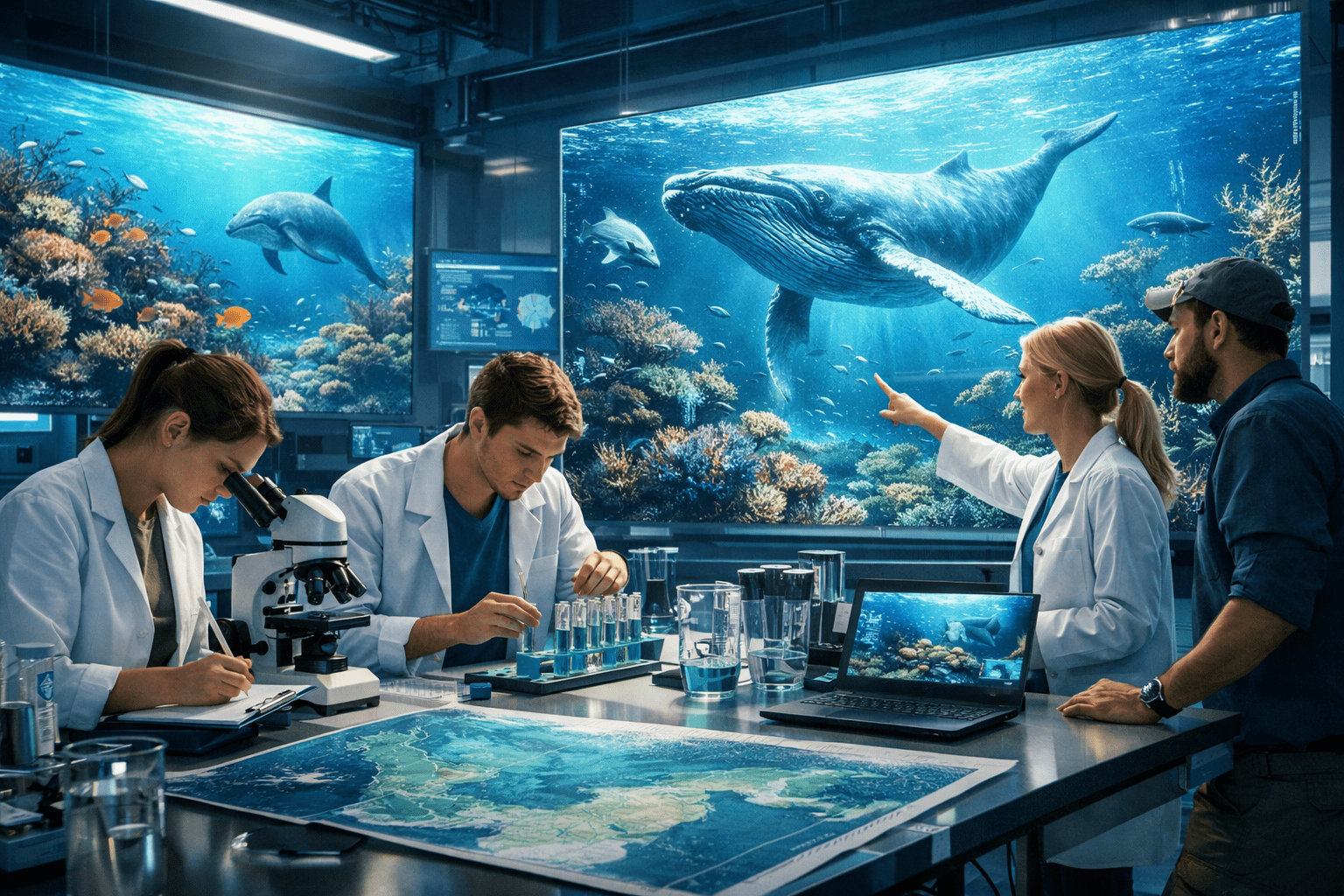
Marine biology diploma learners gain a thorough foundation in ocean science, marine ecosystems, and the living organisms that inhabit our seas. This Level 3 Advanced Diploma is designed to introduce you to the core principles of marine biology, from the physical and chemical properties of seawater to the complex relationships that shape marine food webs. You will explore diverse marine environments, including coral reefs, estuaries, deep-sea habitats, and open oceans, building a clear understanding of how these systems function and why they matter.
Throughout the course, you will develop essential scientific and analytical skills. You will learn how to identify marine species, understand their adaptations, and examine how environmental and human pressures affect biodiversity. Dedicated modules on marine conservation, fisheries management, and sustainable aquaculture help you understand how marine resources can be protected and responsibly used. You will also be introduced to marine mammals, gaining insight into their behaviour, physiology, and conservation needs.
A strong emphasis is placed on research methods and practical learning. You will study experimental design, field sampling, data analysis, and scientific communication, preparing you for further academic study or entry-level roles in marine science and conservation. The course also covers current global issues such as climate change, ocean acidification, marine pollution, and invasive species, ensuring that your knowledge reflects the real challenges facing today’s oceans.
By the end of this diploma, you will have a well-rounded understanding of marine biology and the confidence to discuss marine science topics with clarity and accuracy. You will also have developed transferable skills in observation, reporting, and critical thinking that are valuable across many scientific and environmental careers.
All learners who successfully complete the course will receive a free course completion certificate. Multiple premium certificate and transcript options are also available for purchase if you wish to enhance your professional profile. Students also benefit from 5-star rated support available 24/7 through email, ensuring help is always at hand throughout your learning journey.
This course is ideal for students, nature lovers, and aspiring marine scientists who want to explore life in the oceans. It suits school leavers, adult learners, and career changers who are interested in marine conservation, environmental science, or working with marine wildlife in a professional or academic setting.
Who is this course for?
Marine biology diploma learners gain a thorough foundation in ocean science, marine ecosystems, and the living organisms that inhabit our seas. This Level 3 Advanced Diploma is designed to introduce you to the core principles of marine biology, from the physical and chemical properties of seawater to the complex relationships that shape marine food webs. You will explore diverse marine environments, including coral reefs, estuaries, deep-sea habitats, and open oceans, building a clear understanding of how these systems function and why they matter.
Throughout the course, you will develop essential scientific and analytical skills. You will learn how to identify marine species, understand their adaptations, and examine how environmental and human pressures affect biodiversity. Dedicated modules on marine conservation, fisheries management, and sustainable aquaculture help you understand how marine resources can be protected and responsibly used. You will also be introduced to marine mammals, gaining insight into their behaviour, physiology, and conservation needs.
A strong emphasis is placed on research methods and practical learning. You will study experimental design, field sampling, data analysis, and scientific communication, preparing you for further academic study or entry-level roles in marine science and conservation. The course also covers current global issues such as climate change, ocean acidification, marine pollution, and invasive species, ensuring that your knowledge reflects the real challenges facing today’s oceans.
By the end of this diploma, you will have a well-rounded understanding of marine biology and the confidence to discuss marine science topics with clarity and accuracy. You will also have developed transferable skills in observation, reporting, and critical thinking that are valuable across many scientific and environmental careers.
All learners who successfully complete the course will receive a free course completion certificate. Multiple premium certificate and transcript options are also available for purchase if you wish to enhance your professional profile. Students also benefit from 5-star rated support available 24/7 through email, ensuring help is always at hand throughout your learning journey.
This course is ideal for students, nature lovers, and aspiring marine scientists who want to explore life in the oceans. It suits school leavers, adult learners, and career changers who are interested in marine conservation, environmental science, or working with marine wildlife in a professional or academic setting.
Requirements
Marine biology diploma learners gain a thorough foundation in ocean science, marine ecosystems, and the living organisms that inhabit our seas. This Level 3 Advanced Diploma is designed to introduce you to the core principles of marine biology, from the physical and chemical properties of seawater to the complex relationships that shape marine food webs. You will explore diverse marine environments, including coral reefs, estuaries, deep-sea habitats, and open oceans, building a clear understanding of how these systems function and why they matter.
Throughout the course, you will develop essential scientific and analytical skills. You will learn how to identify marine species, understand their adaptations, and examine how environmental and human pressures affect biodiversity. Dedicated modules on marine conservation, fisheries management, and sustainable aquaculture help you understand how marine resources can be protected and responsibly used. You will also be introduced to marine mammals, gaining insight into their behaviour, physiology, and conservation needs.
A strong emphasis is placed on research methods and practical learning. You will study experimental design, field sampling, data analysis, and scientific communication, preparing you for further academic study or entry-level roles in marine science and conservation. The course also covers current global issues such as climate change, ocean acidification, marine pollution, and invasive species, ensuring that your knowledge reflects the real challenges facing today’s oceans.
By the end of this diploma, you will have a well-rounded understanding of marine biology and the confidence to discuss marine science topics with clarity and accuracy. You will also have developed transferable skills in observation, reporting, and critical thinking that are valuable across many scientific and environmental careers.
All learners who successfully complete the course will receive a free course completion certificate. Multiple premium certificate and transcript options are also available for purchase if you wish to enhance your professional profile. Students also benefit from 5-star rated support available 24/7 through email, ensuring help is always at hand throughout your learning journey.
This course is ideal for students, nature lovers, and aspiring marine scientists who want to explore life in the oceans. It suits school leavers, adult learners, and career changers who are interested in marine conservation, environmental science, or working with marine wildlife in a professional or academic setting.
Career path
Marine biology diploma learners gain a thorough foundation in ocean science, marine ecosystems, and the living organisms that inhabit our seas. This Level 3 Advanced Diploma is designed to introduce you to the core principles of marine biology, from the physical and chemical properties of seawater to the complex relationships that shape marine food webs. You will explore diverse marine environments, including coral reefs, estuaries, deep-sea habitats, and open oceans, building a clear understanding of how these systems function and why they matter.
Throughout the course, you will develop essential scientific and analytical skills. You will learn how to identify marine species, understand their adaptations, and examine how environmental and human pressures affect biodiversity. Dedicated modules on marine conservation, fisheries management, and sustainable aquaculture help you understand how marine resources can be protected and responsibly used. You will also be introduced to marine mammals, gaining insight into their behaviour, physiology, and conservation needs.
A strong emphasis is placed on research methods and practical learning. You will study experimental design, field sampling, data analysis, and scientific communication, preparing you for further academic study or entry-level roles in marine science and conservation. The course also covers current global issues such as climate change, ocean acidification, marine pollution, and invasive species, ensuring that your knowledge reflects the real challenges facing today’s oceans.
By the end of this diploma, you will have a well-rounded understanding of marine biology and the confidence to discuss marine science topics with clarity and accuracy. You will also have developed transferable skills in observation, reporting, and critical thinking that are valuable across many scientific and environmental careers.
All learners who successfully complete the course will receive a free course completion certificate. Multiple premium certificate and transcript options are also available for purchase if you wish to enhance your professional profile. Students also benefit from 5-star rated support available 24/7 through email, ensuring help is always at hand throughout your learning journey.
This course is ideal for students, nature lovers, and aspiring marine scientists who want to explore life in the oceans. It suits school leavers, adult learners, and career changers who are interested in marine conservation, environmental science, or working with marine wildlife in a professional or academic setting.
-
- Overview of marine ecosystems 00:10:00
- Introduction to marine biodiversity 00:10:00
- Physical and chemical properties of seawater 00:10:00
- Principles of oceanography 00:10:00
- Introduction to marine organisms and their adaptations 00:10:00
-
- Ecological concepts and principles 00:10:00
- Trophic relationships in marine food webs 00:10:00
- Biotic and abiotic factors influencing marine communities 00:10:00
- Estuarine and coastal ecosystems 00:10:00
- Deep-sea and open-ocean ecosystems 00:10:00
- Threats to marine biodiversity 00:10:00
- Conservation strategies and practices 00:10:00
- Marine protected areas and their management 00:10:00
- Sustainable fishing practices 00:10:00
- Environmental impact assessment 00:10:00
- Introduction to marine mammals 00:10:00
- Anatomy, physiology, and behaviour of marine mammals 00:10:00
- Marine mammal conservation and management 00:10:00
- Marine mammal research techniques 00:10:00
- Whales, dolphins, seals, and sea lions 00:10:00
- Field trips to coastal and marine environments 00:10:00
- Collection and analysis of field data 00:10:00
- Identification of marine organisms 00:10:00
- Laboratory techniques and experiments 00:10:00
- Research project design and implementation 00:10:00
- Exam of Marine Biology Level 3 Advanced Diploma 00:50:00

No Reviews found for this course.
Is this certificate recognized?
Yes, our premium certificate and transcript are widely recognized and accepted by embassies worldwide, particularly by the UK embassy. This adds credibility to your qualification and enhances its value for professional and academic purposes.
I am a beginner. Is this course suitable for me?
Yes, this course is designed for learners of all levels, including beginners. The content is structured to provide step-by-step guidance, ensuring that even those with no prior experience can follow along and gain valuable knowledge.
I am a professional. Is this course suitable for me?
Yes, professionals will also benefit from this course. It covers advanced concepts, practical applications, and industry insights that can help enhance existing skills and knowledge. Whether you are looking to refine your expertise or expand your qualifications, this course provides valuable learning.
Does this course have an expiry date?
No, you have lifetime access to the course. Once enrolled, you can revisit the materials at any time as long as the course remains available. Additionally, we regularly update our content to ensure it stays relevant and up to date.
How do I claim my free certificate?
I trust you’re in good health. Your free certificate can be located in the Achievement section. The option to purchase a CPD certificate is available but entirely optional, and you may choose to skip it. Please be aware that it’s crucial to click the “Complete” button to ensure the certificate is generated, as this process is entirely automated.
Does this course have assessments and assignments?
Yes, the course includes both assessments and assignments. Your final marks will be determined by a combination of 20% from assignments and 80% from assessments. These evaluations are designed to test your understanding and ensure you have grasped the key concepts effectively.
Is this course accredited?
We are a recognized course provider with CPD, UKRLP, and AOHT membership. The logos of these accreditation bodies will be featured on your premium certificate and transcript, ensuring credibility and professional recognition.
Will I receive a certificate upon completion?
Yes, you will receive a free digital certificate automatically once you complete the course. If you would like a premium CPD-accredited certificate, either in digital or physical format, you can upgrade for a small fee.
Course Features
Price
Study Method
Online | Self-paced
Course Format
Interactive PDFs, Articles & Learning Resources
Duration
7 hours, 45 minutes
Qualification
Professional Skills Development Course
Assessment
Final MCQ Exam (included in price)
Certificate
Verifiable Digital Certificate - Free
Additional info
Lifetime Access | Start Instantly
- Share

Ceramic Processing and Forming Level 3 Advanced Diploma
Course Line238$652.66Original price was: $652.66.$19.97Current price is: $19.97.Instrumentation Engineering Level 3 Advanced Diploma
Course Line239$652.66Original price was: $652.66.$19.97Current price is: $19.97.Financial Modelling in Excel: Build Forecasting & Budget Models
Course Line237$652.66Original price was: $652.66.$19.97Current price is: $19.97.



Related Courses
Waste Management Level 8 Advanced Diploma
$652.66Original price was: $652.66.$19.97Current price is: $19.97.238Pet Training & Behaviour Mastery: Dogs, Cats, Rabbits & Pet First Aid
$652.66Original price was: $652.66.$19.97Current price is: $19.97.237Level 7 Advanced Diploma in Veterinary Science
$652.66Original price was: $652.66.$19.97Current price is: $19.97.238


Related Courses
Waste Management Level 8 Advanced Diploma
$652.66Original price was: $652.66.$19.97Current price is: $19.97.238Pet Training & Behaviour Mastery: Dogs, Cats, Rabbits & Pet First Aid
$652.66Original price was: $652.66.$19.97Current price is: $19.97.237Level 7 Advanced Diploma in Veterinary Science
$652.66Original price was: $652.66.$19.97Current price is: $19.97.238

