
Course Features
Price
Study Method
Online | Self-paced
Course Format
Interactive PDFs, Articles & Learning Resources
Duration
2 hours, 5 minutes
Qualification
Professional Skills Development Course
Assessment
Final MCQ Exam (included in price)
Certificate
Verifiable Digital Certificate - Free
Additional info
Lifetime Access | Start Instantly
- Share
Overview
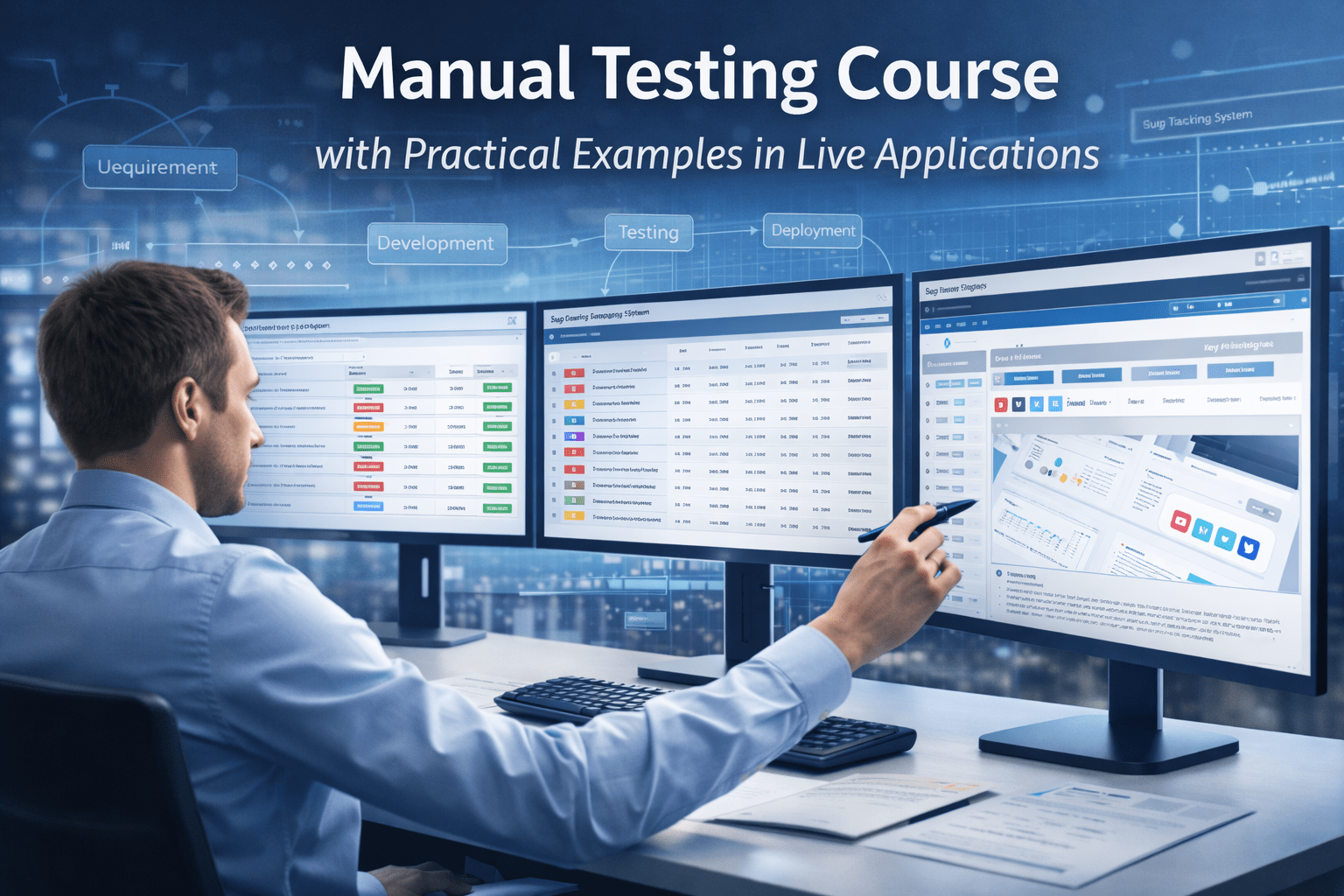
Manual Testing Course provides a practical and career-focused introduction to software quality assurance using real-life application scenarios. This course is designed to help learners understand how software is built, tested, and released by guiding them through the full testing lifecycle in a clear, structured way. You will start with the Software Development Life Cycle (SDLC), learning how testing fits into every stage of product and project delivery.
As the course progresses, you will explore different testing environments and approaches, including white box testing, black box testing, and user acceptance testing. These concepts are explained using simple examples so you can see how each method is applied in real projects. You will also learn how to define testing objectives, identify when testing should begin and end, and ensure that software meets quality expectations before it goes live.
A key strength of this Manual Testing Course is its focus on industry tools and professional practices. You will be introduced to Quality Center (QC) and Application Lifecycle Management (ALM), two widely used systems for managing test cases, tracking defects, and coordinating testing activities across teams. This helps you develop the organisational and reporting skills that employers look for in entry-level and junior QA roles.
By combining theory with practical examples, the course builds your ability to analyse applications, identify risks, and report issues clearly. You will gain the confidence to understand requirements, design effective test cases, and communicate results in a professional testing environment. These skills are essential for working in software companies, IT departments, and digital product teams.
On completion, you will be able to participate meaningfully in testing cycles, support developers with accurate feedback, and contribute to improving software quality. Learners will receive a free course completion certificate, and multiple premium certificate and transcript options are also available for purchase if required for employment or academic purposes. You will also have access to 5-star rated support available 24/7 via email, ensuring guidance is always available whenever you need help.
Who is this course for?
Manual Testing Course provides a practical and career-focused introduction to software quality assurance using real-life application scenarios. This course is designed to help learners understand how software is built, tested, and released by guiding them through the full testing lifecycle in a clear, structured way. You will start with the Software Development Life Cycle (SDLC), learning how testing fits into every stage of product and project delivery.
As the course progresses, you will explore different testing environments and approaches, including white box testing, black box testing, and user acceptance testing. These concepts are explained using simple examples so you can see how each method is applied in real projects. You will also learn how to define testing objectives, identify when testing should begin and end, and ensure that software meets quality expectations before it goes live.
A key strength of this Manual Testing Course is its focus on industry tools and professional practices. You will be introduced to Quality Center (QC) and Application Lifecycle Management (ALM), two widely used systems for managing test cases, tracking defects, and coordinating testing activities across teams. This helps you develop the organisational and reporting skills that employers look for in entry-level and junior QA roles.
By combining theory with practical examples, the course builds your ability to analyse applications, identify risks, and report issues clearly. You will gain the confidence to understand requirements, design effective test cases, and communicate results in a professional testing environment. These skills are essential for working in software companies, IT departments, and digital product teams.
On completion, you will be able to participate meaningfully in testing cycles, support developers with accurate feedback, and contribute to improving software quality. Learners will receive a free course completion certificate, and multiple premium certificate and transcript options are also available for purchase if required for employment or academic purposes. You will also have access to 5-star rated support available 24/7 via email, ensuring guidance is always available whenever you need help.
Requirements
Manual Testing Course provides a practical and career-focused introduction to software quality assurance using real-life application scenarios. This course is designed to help learners understand how software is built, tested, and released by guiding them through the full testing lifecycle in a clear, structured way. You will start with the Software Development Life Cycle (SDLC), learning how testing fits into every stage of product and project delivery.
As the course progresses, you will explore different testing environments and approaches, including white box testing, black box testing, and user acceptance testing. These concepts are explained using simple examples so you can see how each method is applied in real projects. You will also learn how to define testing objectives, identify when testing should begin and end, and ensure that software meets quality expectations before it goes live.
A key strength of this Manual Testing Course is its focus on industry tools and professional practices. You will be introduced to Quality Center (QC) and Application Lifecycle Management (ALM), two widely used systems for managing test cases, tracking defects, and coordinating testing activities across teams. This helps you develop the organisational and reporting skills that employers look for in entry-level and junior QA roles.
By combining theory with practical examples, the course builds your ability to analyse applications, identify risks, and report issues clearly. You will gain the confidence to understand requirements, design effective test cases, and communicate results in a professional testing environment. These skills are essential for working in software companies, IT departments, and digital product teams.
On completion, you will be able to participate meaningfully in testing cycles, support developers with accurate feedback, and contribute to improving software quality. Learners will receive a free course completion certificate, and multiple premium certificate and transcript options are also available for purchase if required for employment or academic purposes. You will also have access to 5-star rated support available 24/7 via email, ensuring guidance is always available whenever you need help.
Career path
Manual Testing Course provides a practical and career-focused introduction to software quality assurance using real-life application scenarios. This course is designed to help learners understand how software is built, tested, and released by guiding them through the full testing lifecycle in a clear, structured way. You will start with the Software Development Life Cycle (SDLC), learning how testing fits into every stage of product and project delivery.
As the course progresses, you will explore different testing environments and approaches, including white box testing, black box testing, and user acceptance testing. These concepts are explained using simple examples so you can see how each method is applied in real projects. You will also learn how to define testing objectives, identify when testing should begin and end, and ensure that software meets quality expectations before it goes live.
A key strength of this Manual Testing Course is its focus on industry tools and professional practices. You will be introduced to Quality Center (QC) and Application Lifecycle Management (ALM), two widely used systems for managing test cases, tracking defects, and coordinating testing activities across teams. This helps you develop the organisational and reporting skills that employers look for in entry-level and junior QA roles.
By combining theory with practical examples, the course builds your ability to analyse applications, identify risks, and report issues clearly. You will gain the confidence to understand requirements, design effective test cases, and communicate results in a professional testing environment. These skills are essential for working in software companies, IT departments, and digital product teams.
On completion, you will be able to participate meaningfully in testing cycles, support developers with accurate feedback, and contribute to improving software quality. Learners will receive a free course completion certificate, and multiple premium certificate and transcript options are also available for purchase if required for employment or academic purposes. You will also have access to 5-star rated support available 24/7 via email, ensuring guidance is always available whenever you need help.
-
- Software Development Life Cycle – Overview and Phases 00:10:00
-
- Introduction to Environment Types and White Box Testing (WBT) 00:10:00
- Environment Types Continued 00:10:00
- Understanding Product vs Project in Software Testing 00:10:00
- Objectives of Software Testing 00:10:00
- Exam of Manual Testing with Practical Examples in Live Applications 00:50:00

No Reviews found for this course.
Is this certificate recognized?
Yes, our premium certificate and transcript are widely recognized and accepted by embassies worldwide, particularly by the UK embassy. This adds credibility to your qualification and enhances its value for professional and academic purposes.
I am a beginner. Is this course suitable for me?
Yes, this course is designed for learners of all levels, including beginners. The content is structured to provide step-by-step guidance, ensuring that even those with no prior experience can follow along and gain valuable knowledge.
I am a professional. Is this course suitable for me?
Yes, professionals will also benefit from this course. It covers advanced concepts, practical applications, and industry insights that can help enhance existing skills and knowledge. Whether you are looking to refine your expertise or expand your qualifications, this course provides valuable learning.
Does this course have an expiry date?
No, you have lifetime access to the course. Once enrolled, you can revisit the materials at any time as long as the course remains available. Additionally, we regularly update our content to ensure it stays relevant and up to date.
How do I claim my free certificate?
I trust you’re in good health. Your free certificate can be located in the Achievement section. The option to purchase a CPD certificate is available but entirely optional, and you may choose to skip it. Please be aware that it’s crucial to click the “Complete” button to ensure the certificate is generated, as this process is entirely automated.
Does this course have assessments and assignments?
Yes, the course includes both assessments and assignments. Your final marks will be determined by a combination of 20% from assignments and 80% from assessments. These evaluations are designed to test your understanding and ensure you have grasped the key concepts effectively.
Is this course accredited?
We are a recognized course provider with CPD, UKRLP, and AOHT membership. The logos of these accreditation bodies will be featured on your premium certificate and transcript, ensuring credibility and professional recognition.
Will I receive a certificate upon completion?
Yes, you will receive a free digital certificate automatically once you complete the course. If you would like a premium CPD-accredited certificate, either in digital or physical format, you can upgrade for a small fee.
Course Features
Price
Study Method
Online | Self-paced
Course Format
Interactive PDFs, Articles & Learning Resources
Duration
2 hours, 5 minutes
Qualification
Professional Skills Development Course
Assessment
Final MCQ Exam (included in price)
Certificate
Verifiable Digital Certificate - Free
Additional info
Lifetime Access | Start Instantly
- Share

Advanced Machine Learning: Trees, Ensembles, and Clustering
Course Line239€573.69Original price was: €573.69.€17.55Current price is: €17.55.Fire Protection Engineering Level 3 Advanced Diploma
Course Line251€573.69Original price was: €573.69.€17.55Current price is: €17.55.



Related Courses
PRINCE2 in Practice: Simulated Projects & Case Studies
€573.69Original price was: €573.69.€17.55Current price is: €17.55.237PRINCE2 Risk Management: Identifying, Assessing & Controlling Risk
€573.69Original price was: €573.69.€17.55Current price is: €17.55.237PRINCE2 Roles & Responsibilities: Managing Teams in a PRINCE2 Environment
€573.69Original price was: €573.69.€17.55Current price is: €17.55.237

Related Courses
PRINCE2 in Practice: Simulated Projects & Case Studies
€573.69Original price was: €573.69.€17.55Current price is: €17.55.237PRINCE2 Risk Management: Identifying, Assessing & Controlling Risk
€573.69Original price was: €573.69.€17.55Current price is: €17.55.237PRINCE2 Roles & Responsibilities: Managing Teams in a PRINCE2 Environment
€573.69Original price was: €573.69.€17.55Current price is: €17.55.237

