
Course Features
Price
Study Method
Online | Self-paced
Course Format
Interactive PDFs, Articles & Learning Resources
Duration
20 hours, 45 minutes
Qualification
Professional Skills Development Course
Assessment
Final MCQ Exam (included in price)
Certificate
Verifiable Digital Certificate - Free
Additional info
Lifetime Access | Start Instantly
- Share
Overview
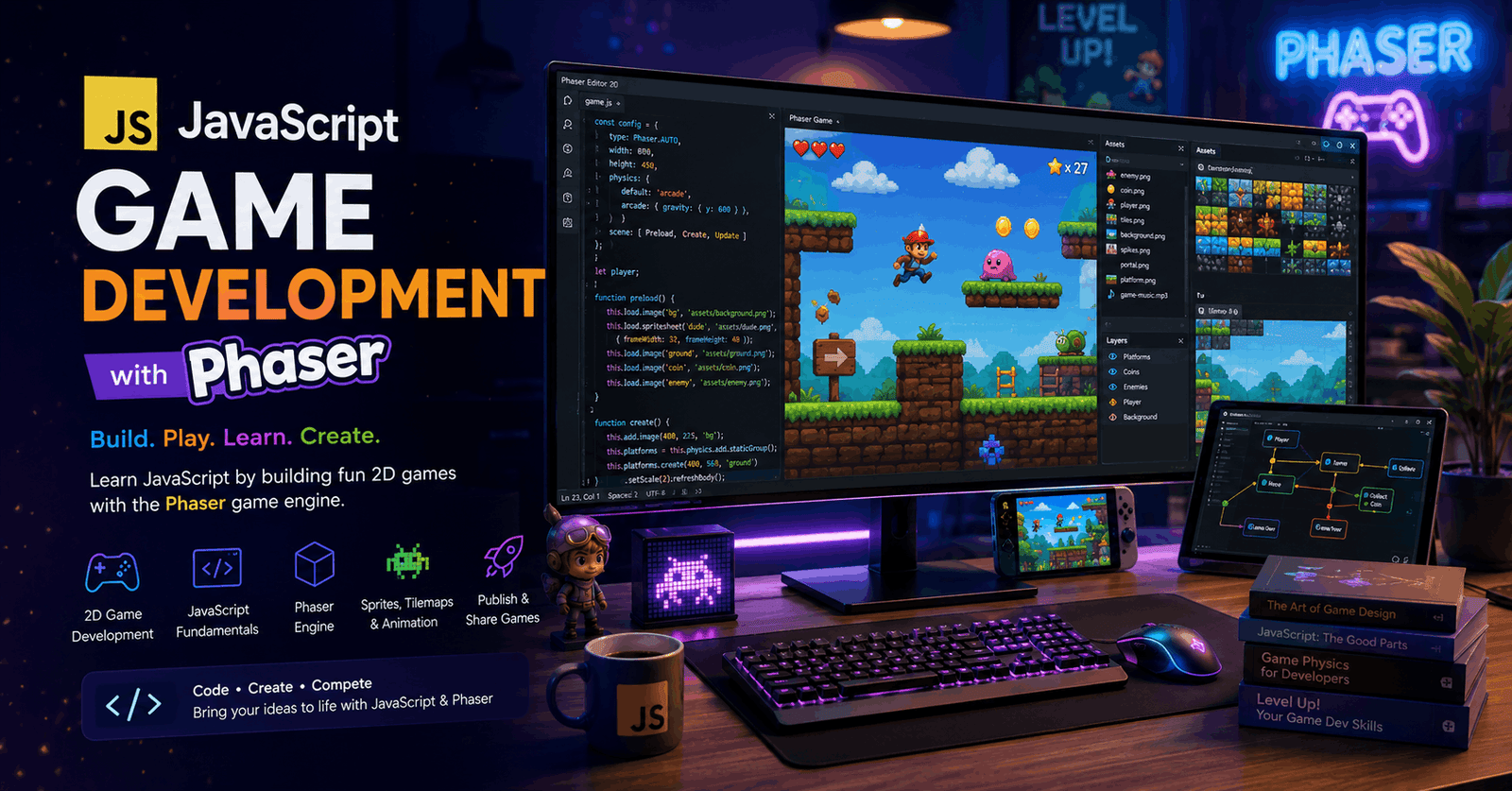
JavaScript Game Development is a practical, project-based learning programme designed to help beginners understand how modern browser-based games are created using JavaScript, Phaser, and essential game development techniques. This course takes learners from the fundamentals of programming to building complete 2D games with interactive gameplay, animations, physics, and real-world features.
You will begin by establishing a strong foundation in JavaScript, learning important programming concepts such as variables, data types, functions, objects, control flow, loops, classes, and object-oriented programming. The course also introduces TypeScript concepts, helping you understand modern coding practices used in professional game development workflows.
As you progress, you will explore the Phaser game framework and learn how to create game scenes, configure projects, load assets, add images, implement animations, include audio, and make objects interactive. You will also discover how physics systems work by adding movement, collisions, player controls, and dynamic game behaviours.
The course focuses heavily on practical creation through complete game projects. You will build a 2D platformer while learning essential development skills such as tilemaps, player systems, levels, enemies, collectibles, backgrounds, and gameplay mechanics. You will also create a hill climbing style project, exploring custom graphics, SVG elements, terrain creation, vehicle movement, and interactive game environments.
By following these hands-on projects, you will gain experience in organising game code, solving development challenges, and transforming creative ideas into playable experiences. The skills learned throughout this course can help you create your own games, strengthen your programming portfolio, and build a foundation for further study in game development, software engineering, and interactive media.
This course is designed to make game development accessible for beginners while still introducing professional concepts used in real projects. Whether you want to create games as a hobby, develop portfolio projects, or explore a career in the gaming industry, this training provides practical knowledge and confidence to take your first steps.
After successfully completing the course, learners will receive a free course completion certificate. Those who want additional credentials can also choose from multiple premium certificate and transcript options available for purchase. Students receive dedicated assistance through 5-star rated support available 24/7 via email, ensuring guidance whenever they need help during their learning journey.Who is this course for?
JavaScript Game Development is a practical, project-based learning programme designed to help beginners understand how modern browser-based games are created using JavaScript, Phaser, and essential game development techniques. This course takes learners from the fundamentals of programming to building complete 2D games with interactive gameplay, animations, physics, and real-world features.
You will begin by establishing a strong foundation in JavaScript, learning important programming concepts such as variables, data types, functions, objects, control flow, loops, classes, and object-oriented programming. The course also introduces TypeScript concepts, helping you understand modern coding practices used in professional game development workflows.
As you progress, you will explore the Phaser game framework and learn how to create game scenes, configure projects, load assets, add images, implement animations, include audio, and make objects interactive. You will also discover how physics systems work by adding movement, collisions, player controls, and dynamic game behaviours.
The course focuses heavily on practical creation through complete game projects. You will build a 2D platformer while learning essential development skills such as tilemaps, player systems, levels, enemies, collectibles, backgrounds, and gameplay mechanics. You will also create a hill climbing style project, exploring custom graphics, SVG elements, terrain creation, vehicle movement, and interactive game environments.
By following these hands-on projects, you will gain experience in organising game code, solving development challenges, and transforming creative ideas into playable experiences. The skills learned throughout this course can help you create your own games, strengthen your programming portfolio, and build a foundation for further study in game development, software engineering, and interactive media.
This course is designed to make game development accessible for beginners while still introducing professional concepts used in real projects. Whether you want to create games as a hobby, develop portfolio projects, or explore a career in the gaming industry, this training provides practical knowledge and confidence to take your first steps.
After successfully completing the course, learners will receive a free course completion certificate. Those who want additional credentials can also choose from multiple premium certificate and transcript options available for purchase. Students receive dedicated assistance through 5-star rated support available 24/7 via email, ensuring guidance whenever they need help during their learning journey.Requirements
JavaScript Game Development is a practical, project-based learning programme designed to help beginners understand how modern browser-based games are created using JavaScript, Phaser, and essential game development techniques. This course takes learners from the fundamentals of programming to building complete 2D games with interactive gameplay, animations, physics, and real-world features.
You will begin by establishing a strong foundation in JavaScript, learning important programming concepts such as variables, data types, functions, objects, control flow, loops, classes, and object-oriented programming. The course also introduces TypeScript concepts, helping you understand modern coding practices used in professional game development workflows.
As you progress, you will explore the Phaser game framework and learn how to create game scenes, configure projects, load assets, add images, implement animations, include audio, and make objects interactive. You will also discover how physics systems work by adding movement, collisions, player controls, and dynamic game behaviours.
The course focuses heavily on practical creation through complete game projects. You will build a 2D platformer while learning essential development skills such as tilemaps, player systems, levels, enemies, collectibles, backgrounds, and gameplay mechanics. You will also create a hill climbing style project, exploring custom graphics, SVG elements, terrain creation, vehicle movement, and interactive game environments.
By following these hands-on projects, you will gain experience in organising game code, solving development challenges, and transforming creative ideas into playable experiences. The skills learned throughout this course can help you create your own games, strengthen your programming portfolio, and build a foundation for further study in game development, software engineering, and interactive media.
This course is designed to make game development accessible for beginners while still introducing professional concepts used in real projects. Whether you want to create games as a hobby, develop portfolio projects, or explore a career in the gaming industry, this training provides practical knowledge and confidence to take your first steps.
After successfully completing the course, learners will receive a free course completion certificate. Those who want additional credentials can also choose from multiple premium certificate and transcript options available for purchase. Students receive dedicated assistance through 5-star rated support available 24/7 via email, ensuring guidance whenever they need help during their learning journey.Career path
JavaScript Game Development is a practical, project-based learning programme designed to help beginners understand how modern browser-based games are created using JavaScript, Phaser, and essential game development techniques. This course takes learners from the fundamentals of programming to building complete 2D games with interactive gameplay, animations, physics, and real-world features.
You will begin by establishing a strong foundation in JavaScript, learning important programming concepts such as variables, data types, functions, objects, control flow, loops, classes, and object-oriented programming. The course also introduces TypeScript concepts, helping you understand modern coding practices used in professional game development workflows.
As you progress, you will explore the Phaser game framework and learn how to create game scenes, configure projects, load assets, add images, implement animations, include audio, and make objects interactive. You will also discover how physics systems work by adding movement, collisions, player controls, and dynamic game behaviours.
The course focuses heavily on practical creation through complete game projects. You will build a 2D platformer while learning essential development skills such as tilemaps, player systems, levels, enemies, collectibles, backgrounds, and gameplay mechanics. You will also create a hill climbing style project, exploring custom graphics, SVG elements, terrain creation, vehicle movement, and interactive game environments.
By following these hands-on projects, you will gain experience in organising game code, solving development challenges, and transforming creative ideas into playable experiences. The skills learned throughout this course can help you create your own games, strengthen your programming portfolio, and build a foundation for further study in game development, software engineering, and interactive media.
This course is designed to make game development accessible for beginners while still introducing professional concepts used in real projects. Whether you want to create games as a hobby, develop portfolio projects, or explore a career in the gaming industry, this training provides practical knowledge and confidence to take your first steps.
After successfully completing the course, learners will receive a free course completion certificate. Those who want additional credentials can also choose from multiple premium certificate and transcript options available for purchase. Students receive dedicated assistance through 5-star rated support available 24/7 via email, ensuring guidance whenever they need help during their learning journey.-
- Course Overview 00:10:00
- Project Files 00:10:00
-
- Installing Node.js 00:10:00
- Installing Visual Studio Code 00:10:00
- Using the script Tag 00:10:00
- Variables in JavaScript 00:10:00
- Adding Comments in Code 00:10:00
- JavaScript Object Types 00:10:00
- Understanding null and undefined 00:10:00
- JavaScript Arrays 00:10:00
- Core Data Types in JavaScript 00:10:00
- Switch Statements 00:10:00
- Writing Functions in JavaScript 00:10:00
- If–Else Statements 00:10:00
- The for Loop 00:10:00
- The while Loop 00:10:00
- JavaScript Strict Mode 00:10:00
- The this Keyword 00:10:00
- What is Webpack? 00:10:00
- Why Use Webpack 00:10:00
- Setting Up Animation Boilerplate 00:10:00
- Loading Sprite Sheets 00:10:00
- Creating Animations 00:10:00
- Adding Tweens to Animations 00:10:00
- Adding Audio to the Game 00:10:00
- Loading Tilemaps 00:10:00
- Creating Tilemaps 00:10:00
- Adding a Player to the Scene 00:10:00
- Making the Camera Follow the Player 00:10:00
- Introduction to the Hill Climb Game 00:10:00
- Introduction to SVG Graphics 00:10:00
- Displaying SVGs in the Game 00:10:00
- Understanding the SVG Coordinate System 00:10:00
- Working with the SVG Path Element (Important) 00:10:00
- Game Elements Overview 00:10:00
- Setting Up Boilerplate Code 00:10:00
- Creating a Custom Canvas 00:10:00
- Adding Project Dependencies 00:10:00
- Configuring the Game 00:10:00
- Creating a Preload Scene 00:10:00
- Designing the Background 00:10:00
- Defining the Car Object 00:10:00
- Creating Car Wheels 00:10:00
- Creating Gas Pickups 00:10:00
- Creating the GUI Scene Class 00:10:00
- Building the Main Scene 00:10:00
- Making the Wheels Move 00:10:00
- Adding Car Body and Wheels 00:10:00
- Testing the Code 00:10:00
- Creating Terrain 00:10:00
- Normalising Vertex Sets 00:10:00
- Using SVGs for Terrain Display 00:10:00
- Creating the Terrain Body 00:10:00
- Ensuring the Car Does Not Break 00:10:00
- Adding Grass to the Terrain 00:10:00
- Premium Certificate 00:15:00

No Reviews found for this course.
Is this certificate recognized?
Yes, our premium certificate and transcript are widely recognized and accepted by embassies worldwide, particularly by the UK embassy. This adds credibility to your qualification and enhances its value for professional and academic purposes.
I am a beginner. Is this course suitable for me?
Yes, this course is designed for learners of all levels, including beginners. The content is structured to provide step-by-step guidance, ensuring that even those with no prior experience can follow along and gain valuable knowledge.
I am a professional. Is this course suitable for me?
Yes, professionals will also benefit from this course. It covers advanced concepts, practical applications, and industry insights that can help enhance existing skills and knowledge. Whether you are looking to refine your expertise or expand your qualifications, this course provides valuable learning.
Does this course have an expiry date?
No, you have lifetime access to the course. Once enrolled, you can revisit the materials at any time as long as the course remains available. Additionally, we regularly update our content to ensure it stays relevant and up to date.
How do I claim my free certificate?
I trust you’re in good health. Your free certificate can be located in the Achievement section. The option to purchase a CPD certificate is available but entirely optional, and you may choose to skip it. Please be aware that it’s crucial to click the “Complete” button to ensure the certificate is generated, as this process is entirely automated.
Does this course have assessments and assignments?
Yes, the course includes both assessments and assignments. Your final marks will be determined by a combination of 20% from assignments and 80% from assessments. These evaluations are designed to test your understanding and ensure you have grasped the key concepts effectively.
Is this course accredited?
We are a recognized course provider with CPD, UKRLP, and AOHT membership. The logos of these accreditation bodies will be featured on your premium certificate and transcript, ensuring credibility and professional recognition.
Will I receive a certificate upon completion?
Yes, you will receive a free digital certificate automatically once you complete the course. If you would like a premium CPD-accredited certificate, either in digital or physical format, you can upgrade for a small fee.
Course Features
Price
Study Method
Online | Self-paced
Course Format
Interactive PDFs, Articles & Learning Resources
Duration
20 hours, 45 minutes
Qualification
Professional Skills Development Course
Assessment
Final MCQ Exam (included in price)
Certificate
Verifiable Digital Certificate - Free
Additional info
Lifetime Access | Start Instantly
- Share

Business Writing Level 3 Advanced Diploma
Course Line238£490.00Original price was: £490.00.£14.99Current price is: £14.99.Level 5 Funeral Services Director including Embalming
Course Line237£490.00Original price was: £490.00.£14.99Current price is: £14.99.Fundamentals of Amino Acids & Proteins: Structure, Function & Analysis
Course Line237£490.00Original price was: £490.00.£14.99Current price is: £14.99.



Related Courses
AutoCAD Floor Plan Rendering in Photoshop: Architectural Visualisation Professional Training
£490.00Original price was: £490.00.£14.99Current price is: £14.99.237C++ Programming for Beginners: From Zero to AI-Ready Developer
£490.00Original price was: £490.00.£14.99Current price is: £14.99.237Microsoft SQL Server & T-SQL Certification Training: Beginner to Advanced
£490.00Original price was: £490.00.£14.99Current price is: £14.99.237




Related Courses
AutoCAD Floor Plan Rendering in Photoshop: Architectural Visualisation Professional Training
£490.00Original price was: £490.00.£14.99Current price is: £14.99.237C++ Programming for Beginners: From Zero to AI-Ready Developer
£490.00Original price was: £490.00.£14.99Current price is: £14.99.237Microsoft SQL Server & T-SQL Certification Training: Beginner to Advanced
£490.00Original price was: £490.00.£14.99Current price is: £14.99.237

