
Course Features
Price
Study Method
Online | Self-paced
Course Format
Interactive PDFs, Articles & Learning Resources
Duration
8 hours, 25 minutes
Qualification
Professional Skills Development Course
Assessment
Final MCQ Exam (included in price)
Certificate
Verifiable Digital Certificate - Free
Additional info
Lifetime Access | Start Instantly
- Share
Overview
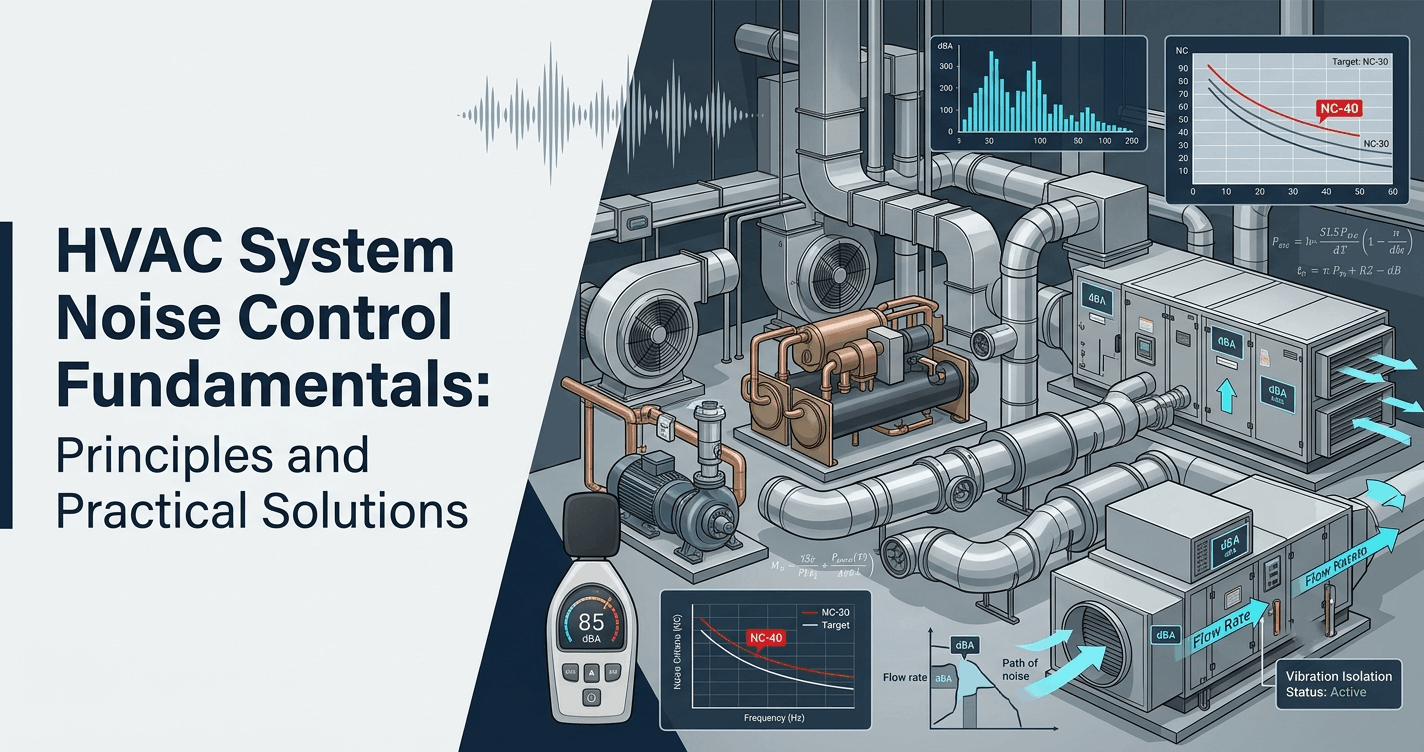
HVAC Noise Control is an essential area of engineering focused on identifying, analysing, and reducing unwanted sound generated by heating, ventilation, and air conditioning systems. In modern buildings, controlling mechanical noise is critical for maintaining comfort, meeting acoustic standards, and improving the overall quality of indoor and outdoor environments. This course provides a practical and structured understanding of noise control principles used in HVAC system design, installation, and performance evaluation.
The course begins by introducing the major sources of noise within HVAC systems, including fans, pumps, chillers, cooling towers, generators, and air conditioning units. You will learn how different components contribute to airborne and structure-borne sound, helping you better understand where noise problems commonly originate.
A major focus of this course is understanding how HVAC noise is measured and evaluated. You will explore important acoustic concepts such as sound pressure levels, A-weighted decibel scales, noise rating curves, and noise criterion standards. These principles help engineers assess system performance and determine acceptable noise levels in different environments.
You will also develop practical knowledge of noise attenuation methods used to control sound in HVAC systems. Key solutions such as silencers, lined ductwork, plenum chambers, and optimized airflow design are explained in detail. The course also covers regenerated noise, airflow velocity limits, and best practices in fan and ductwork design to improve acoustic performance.
Advanced sections explore noise transmission to outdoor environments, indoor occupied spaces, and piped services. You will also examine mechanical equipment room design, construction considerations, and system commissioning strategies for effective long-term noise control. Real-world examples and calculation methods are included to help reinforce practical understanding.
By completing this course, learners will gain valuable engineering knowledge for designing quieter, more efficient HVAC systems in residential, commercial, and industrial projects.
Learners who complete this course will receive a free course completion certificate. Multiple premium certificate and transcript options are also available for purchase if desired. Students also receive access to 5-star rated support available 24/7 through email.Who is this course for?
HVAC Noise Control is an essential area of engineering focused on identifying, analysing, and reducing unwanted sound generated by heating, ventilation, and air conditioning systems. In modern buildings, controlling mechanical noise is critical for maintaining comfort, meeting acoustic standards, and improving the overall quality of indoor and outdoor environments. This course provides a practical and structured understanding of noise control principles used in HVAC system design, installation, and performance evaluation.
The course begins by introducing the major sources of noise within HVAC systems, including fans, pumps, chillers, cooling towers, generators, and air conditioning units. You will learn how different components contribute to airborne and structure-borne sound, helping you better understand where noise problems commonly originate.
A major focus of this course is understanding how HVAC noise is measured and evaluated. You will explore important acoustic concepts such as sound pressure levels, A-weighted decibel scales, noise rating curves, and noise criterion standards. These principles help engineers assess system performance and determine acceptable noise levels in different environments.
You will also develop practical knowledge of noise attenuation methods used to control sound in HVAC systems. Key solutions such as silencers, lined ductwork, plenum chambers, and optimized airflow design are explained in detail. The course also covers regenerated noise, airflow velocity limits, and best practices in fan and ductwork design to improve acoustic performance.
Advanced sections explore noise transmission to outdoor environments, indoor occupied spaces, and piped services. You will also examine mechanical equipment room design, construction considerations, and system commissioning strategies for effective long-term noise control. Real-world examples and calculation methods are included to help reinforce practical understanding.
By completing this course, learners will gain valuable engineering knowledge for designing quieter, more efficient HVAC systems in residential, commercial, and industrial projects.
Learners who complete this course will receive a free course completion certificate. Multiple premium certificate and transcript options are also available for purchase if desired. Students also receive access to 5-star rated support available 24/7 through email.Requirements
HVAC Noise Control is an essential area of engineering focused on identifying, analysing, and reducing unwanted sound generated by heating, ventilation, and air conditioning systems. In modern buildings, controlling mechanical noise is critical for maintaining comfort, meeting acoustic standards, and improving the overall quality of indoor and outdoor environments. This course provides a practical and structured understanding of noise control principles used in HVAC system design, installation, and performance evaluation.
The course begins by introducing the major sources of noise within HVAC systems, including fans, pumps, chillers, cooling towers, generators, and air conditioning units. You will learn how different components contribute to airborne and structure-borne sound, helping you better understand where noise problems commonly originate.
A major focus of this course is understanding how HVAC noise is measured and evaluated. You will explore important acoustic concepts such as sound pressure levels, A-weighted decibel scales, noise rating curves, and noise criterion standards. These principles help engineers assess system performance and determine acceptable noise levels in different environments.
You will also develop practical knowledge of noise attenuation methods used to control sound in HVAC systems. Key solutions such as silencers, lined ductwork, plenum chambers, and optimized airflow design are explained in detail. The course also covers regenerated noise, airflow velocity limits, and best practices in fan and ductwork design to improve acoustic performance.
Advanced sections explore noise transmission to outdoor environments, indoor occupied spaces, and piped services. You will also examine mechanical equipment room design, construction considerations, and system commissioning strategies for effective long-term noise control. Real-world examples and calculation methods are included to help reinforce practical understanding.
By completing this course, learners will gain valuable engineering knowledge for designing quieter, more efficient HVAC systems in residential, commercial, and industrial projects.
Learners who complete this course will receive a free course completion certificate. Multiple premium certificate and transcript options are also available for purchase if desired. Students also receive access to 5-star rated support available 24/7 through email.Career path
HVAC Noise Control is an essential area of engineering focused on identifying, analysing, and reducing unwanted sound generated by heating, ventilation, and air conditioning systems. In modern buildings, controlling mechanical noise is critical for maintaining comfort, meeting acoustic standards, and improving the overall quality of indoor and outdoor environments. This course provides a practical and structured understanding of noise control principles used in HVAC system design, installation, and performance evaluation.
The course begins by introducing the major sources of noise within HVAC systems, including fans, pumps, chillers, cooling towers, generators, and air conditioning units. You will learn how different components contribute to airborne and structure-borne sound, helping you better understand where noise problems commonly originate.
A major focus of this course is understanding how HVAC noise is measured and evaluated. You will explore important acoustic concepts such as sound pressure levels, A-weighted decibel scales, noise rating curves, and noise criterion standards. These principles help engineers assess system performance and determine acceptable noise levels in different environments.
You will also develop practical knowledge of noise attenuation methods used to control sound in HVAC systems. Key solutions such as silencers, lined ductwork, plenum chambers, and optimized airflow design are explained in detail. The course also covers regenerated noise, airflow velocity limits, and best practices in fan and ductwork design to improve acoustic performance.
Advanced sections explore noise transmission to outdoor environments, indoor occupied spaces, and piped services. You will also examine mechanical equipment room design, construction considerations, and system commissioning strategies for effective long-term noise control. Real-world examples and calculation methods are included to help reinforce practical understanding.
By completing this course, learners will gain valuable engineering knowledge for designing quieter, more efficient HVAC systems in residential, commercial, and industrial projects.
Learners who complete this course will receive a free course completion certificate. Multiple premium certificate and transcript options are also available for purchase if desired. Students also receive access to 5-star rated support available 24/7 through email.-
- Types of HVAC Systems and Components 00:10:00
- Approach to Assessing Noise in HVAC Systems 00:10:00
-
- Overview of HVAC Noise Sources 00:10:00
- Fan Noise 00:10:00
- Packaged Air Conditioning Units (PACs) 00:10:00
- Fan Coil Units (FCUs) 00:10:00
- Standby Generators 00:10:00
- Chillers and Cooling Towers 00:10:00
- Pumps and Boilers 00:10:00
- Examples of Manufacturers’ Noise Data 00:10:00
- Noise Data Parameters 00:10:00
- Describing Sound Sources 00:10:00
- Overview of Noise Attenuating Elements 00:10:00
- Attenuators (Silencers) 00:10:00
- Acoustically Lined Ductwork 00:10:00
- Plenum Chambers 00:10:00
- Regenerated Noise from Attenuators 00:10:00
- Causes and Mechanisms of Regenerated Noise 00:10:00
- Regenerated Noise from Ductwork 00:10:00
- Noise from Other System Elements 00:10:00
- Maximum Allowable Airflow Velocities 00:10:00
- Best Practices in Fan and Ductwork Design 00:10:00
- Sources of Noise in Piped Services 00:10:00
- Noise from Pumps 00:10:00
- Effects of Turbulence and Thermal Changes 00:10:00
- Review of Noise Calculation Approaches 00:10:00
- Case Study and Calculation Example 00:10:00
- Exam of HVAC System Noise Control Fundamentals: Principles and Practical Solutions 00:50:00

No Reviews found for this course.
Is this certificate recognized?
Yes, our premium certificate and transcript are widely recognized and accepted by embassies worldwide, particularly by the UK embassy. This adds credibility to your qualification and enhances its value for professional and academic purposes.
I am a beginner. Is this course suitable for me?
Yes, this course is designed for learners of all levels, including beginners. The content is structured to provide step-by-step guidance, ensuring that even those with no prior experience can follow along and gain valuable knowledge.
I am a professional. Is this course suitable for me?
Yes, professionals will also benefit from this course. It covers advanced concepts, practical applications, and industry insights that can help enhance existing skills and knowledge. Whether you are looking to refine your expertise or expand your qualifications, this course provides valuable learning.
Does this course have an expiry date?
No, you have lifetime access to the course. Once enrolled, you can revisit the materials at any time as long as the course remains available. Additionally, we regularly update our content to ensure it stays relevant and up to date.
How do I claim my free certificate?
I trust you’re in good health. Your free certificate can be located in the Achievement section. The option to purchase a CPD certificate is available but entirely optional, and you may choose to skip it. Please be aware that it’s crucial to click the “Complete” button to ensure the certificate is generated, as this process is entirely automated.
Does this course have assessments and assignments?
Yes, the course includes both assessments and assignments. Your final marks will be determined by a combination of 20% from assignments and 80% from assessments. These evaluations are designed to test your understanding and ensure you have grasped the key concepts effectively.
Is this course accredited?
We are a recognized course provider with CPD, UKRLP, and AOHT membership. The logos of these accreditation bodies will be featured on your premium certificate and transcript, ensuring credibility and professional recognition.
Will I receive a certificate upon completion?
Yes, you will receive a free digital certificate automatically once you complete the course. If you would like a premium CPD-accredited certificate, either in digital or physical format, you can upgrade for a small fee.
Course Features
Price
Study Method
Online | Self-paced
Course Format
Interactive PDFs, Articles & Learning Resources
Duration
8 hours, 25 minutes
Qualification
Professional Skills Development Course
Assessment
Final MCQ Exam (included in price)
Certificate
Verifiable Digital Certificate - Free
Additional info
Lifetime Access | Start Instantly
- Share

EPC Contracts and Legal Aspects Level 3 Advanced Diploma
Course Line239د.إ2,400.17Original price was: د.إ2,400.17.د.إ73.43Current price is: د.إ73.43.Permanent Makeup Level 3 Advanced Diploma
Course Line238د.إ2,400.17Original price was: د.إ2,400.17.د.إ73.43Current price is: د.إ73.43.Social Media Marketing Masterclass 2025: Facebook, Instagram, YouTube, Funnels & Ads
Course Line237د.إ2,400.17Original price was: د.إ2,400.17.د.إ73.43Current price is: د.إ73.43.



Related Courses
AutoCAD Floor Plan Rendering in Photoshop: Architectural Visualisation Professional Training
د.إ2,400.17Original price was: د.إ2,400.17.د.إ73.43Current price is: د.إ73.43.237Engineering Mathematics Level 5 Advanced Diploma
د.إ2,400.17Original price was: د.إ2,400.17.د.إ73.43Current price is: د.إ73.43.237Civil Engineering Building Construction Fundamentals: Site, Codes & Quantity Skills
د.إ2,400.17Original price was: د.إ2,400.17.د.إ73.43Current price is: د.إ73.43.2385



Related Courses
AutoCAD Floor Plan Rendering in Photoshop: Architectural Visualisation Professional Training
د.إ2,400.17Original price was: د.إ2,400.17.د.إ73.43Current price is: د.إ73.43.237Engineering Mathematics Level 5 Advanced Diploma
د.إ2,400.17Original price was: د.إ2,400.17.د.إ73.43Current price is: د.إ73.43.237Civil Engineering Building Construction Fundamentals: Site, Codes & Quantity Skills
د.إ2,400.17Original price was: د.إ2,400.17.د.إ73.43Current price is: د.إ73.43.2385

