
Course Features
Price
Study Method
Online | Self-paced
Course Format
Interactive PDFs, Articles & Learning Resources
Duration
1 hour, 5 minutes
Qualification
Professional Skills Development Course
Assessment
Final MCQ Exam (included in price)
Certificate
Verifiable Digital Certificate - Free
Additional info
Lifetime Access | Start Instantly
- Share
Overview
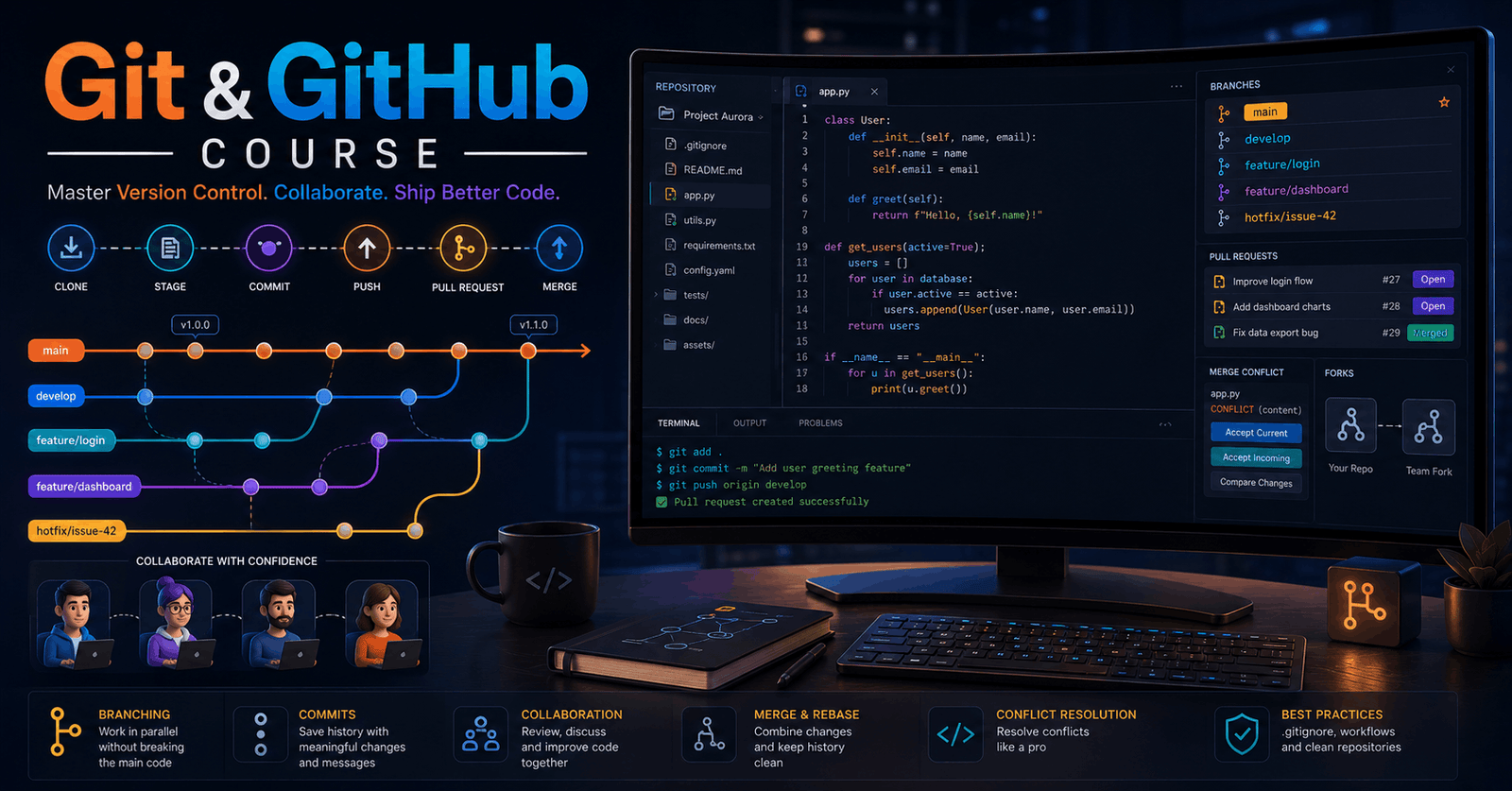
Git and GitHub Course training provides beginners with a practical introduction to version control and collaborative development workflows. Designed to make essential concepts accessible, the course explains how developers track changes, organise code, manage different versions of a project and collaborate more effectively using Git and GitHub.
The course begins by establishing the purpose of Git and GitHub and explaining why version control is important in modern software development. Learners gain an understanding of how Git records changes locally and how GitHub can support repository hosting and collaboration. This foundation helps clarify the role each tool plays within a typical development workflow.
Learners then explore how to create and clone repositories, providing practical experience with starting new projects and working with existing codebases. The course introduces the core sequence of staging changes, creating commits and pushing updates, helping students understand how project history is built and maintained over time.
Branching is covered as an important technique for developing features or testing changes without immediately affecting the main version of a project. Learners explore merging, pull requests and common approaches to bringing separate lines of development together. These skills provide useful preparation for collaborative projects where multiple contributors may work on the same codebase.
The course also addresses practical challenges that developers may encounter. Learners are introduced to merge conflicts and approaches for resolving competing changes. The use of .gitignore is covered to help prevent unnecessary or sensitive local files from being included in a repository. Forking is also introduced as a way to create independent copies of repositories for contribution or experimentation.
By completing the course, learners can develop a clearer understanding of the version control workflow used across many software projects. These skills can support more organised personal development work and provide a foundation for participating in collaborative coding environments.
The course offers flexible online study, allowing learners to progress at their own pace and revisit lessons when needed. Students also have access to 5-star rated support available 24/7 through email.
Upon successful completion, learners receive a free course completion certificate. Those seeking additional documentation can also choose from multiple premium certificate and transcript options available for purchase.Who is this course for?
Git and GitHub Course training provides beginners with a practical introduction to version control and collaborative development workflows. Designed to make essential concepts accessible, the course explains how developers track changes, organise code, manage different versions of a project and collaborate more effectively using Git and GitHub.
The course begins by establishing the purpose of Git and GitHub and explaining why version control is important in modern software development. Learners gain an understanding of how Git records changes locally and how GitHub can support repository hosting and collaboration. This foundation helps clarify the role each tool plays within a typical development workflow.
Learners then explore how to create and clone repositories, providing practical experience with starting new projects and working with existing codebases. The course introduces the core sequence of staging changes, creating commits and pushing updates, helping students understand how project history is built and maintained over time.
Branching is covered as an important technique for developing features or testing changes without immediately affecting the main version of a project. Learners explore merging, pull requests and common approaches to bringing separate lines of development together. These skills provide useful preparation for collaborative projects where multiple contributors may work on the same codebase.
The course also addresses practical challenges that developers may encounter. Learners are introduced to merge conflicts and approaches for resolving competing changes. The use of .gitignore is covered to help prevent unnecessary or sensitive local files from being included in a repository. Forking is also introduced as a way to create independent copies of repositories for contribution or experimentation.
By completing the course, learners can develop a clearer understanding of the version control workflow used across many software projects. These skills can support more organised personal development work and provide a foundation for participating in collaborative coding environments.
The course offers flexible online study, allowing learners to progress at their own pace and revisit lessons when needed. Students also have access to 5-star rated support available 24/7 through email.
Upon successful completion, learners receive a free course completion certificate. Those seeking additional documentation can also choose from multiple premium certificate and transcript options available for purchase.Requirements
Git and GitHub Course training provides beginners with a practical introduction to version control and collaborative development workflows. Designed to make essential concepts accessible, the course explains how developers track changes, organise code, manage different versions of a project and collaborate more effectively using Git and GitHub.
The course begins by establishing the purpose of Git and GitHub and explaining why version control is important in modern software development. Learners gain an understanding of how Git records changes locally and how GitHub can support repository hosting and collaboration. This foundation helps clarify the role each tool plays within a typical development workflow.
Learners then explore how to create and clone repositories, providing practical experience with starting new projects and working with existing codebases. The course introduces the core sequence of staging changes, creating commits and pushing updates, helping students understand how project history is built and maintained over time.
Branching is covered as an important technique for developing features or testing changes without immediately affecting the main version of a project. Learners explore merging, pull requests and common approaches to bringing separate lines of development together. These skills provide useful preparation for collaborative projects where multiple contributors may work on the same codebase.
The course also addresses practical challenges that developers may encounter. Learners are introduced to merge conflicts and approaches for resolving competing changes. The use of .gitignore is covered to help prevent unnecessary or sensitive local files from being included in a repository. Forking is also introduced as a way to create independent copies of repositories for contribution or experimentation.
By completing the course, learners can develop a clearer understanding of the version control workflow used across many software projects. These skills can support more organised personal development work and provide a foundation for participating in collaborative coding environments.
The course offers flexible online study, allowing learners to progress at their own pace and revisit lessons when needed. Students also have access to 5-star rated support available 24/7 through email.
Upon successful completion, learners receive a free course completion certificate. Those seeking additional documentation can also choose from multiple premium certificate and transcript options available for purchase.Career path
Git and GitHub Course training provides beginners with a practical introduction to version control and collaborative development workflows. Designed to make essential concepts accessible, the course explains how developers track changes, organise code, manage different versions of a project and collaborate more effectively using Git and GitHub.
The course begins by establishing the purpose of Git and GitHub and explaining why version control is important in modern software development. Learners gain an understanding of how Git records changes locally and how GitHub can support repository hosting and collaboration. This foundation helps clarify the role each tool plays within a typical development workflow.
Learners then explore how to create and clone repositories, providing practical experience with starting new projects and working with existing codebases. The course introduces the core sequence of staging changes, creating commits and pushing updates, helping students understand how project history is built and maintained over time.
Branching is covered as an important technique for developing features or testing changes without immediately affecting the main version of a project. Learners explore merging, pull requests and common approaches to bringing separate lines of development together. These skills provide useful preparation for collaborative projects where multiple contributors may work on the same codebase.
The course also addresses practical challenges that developers may encounter. Learners are introduced to merge conflicts and approaches for resolving competing changes. The use of .gitignore is covered to help prevent unnecessary or sensitive local files from being included in a repository. Forking is also introduced as a way to create independent copies of repositories for contribution or experimentation.
By completing the course, learners can develop a clearer understanding of the version control workflow used across many software projects. These skills can support more organised personal development work and provide a foundation for participating in collaborative coding environments.
The course offers flexible online study, allowing learners to progress at their own pace and revisit lessons when needed. Students also have access to 5-star rated support available 24/7 through email.
Upon successful completion, learners receive a free course completion certificate. Those seeking additional documentation can also choose from multiple premium certificate and transcript options available for purchase.-
-
- Premium Certificate 00:15:00
- Exam of Git & GitHub Essentials: Complete Beginner’s Guide to Version Control 00:50:00

No Reviews found for this course.
Is this certificate recognized?
Yes, our premium certificate and transcript are widely recognized and accepted by embassies worldwide, particularly by the UK embassy. This adds credibility to your qualification and enhances its value for professional and academic purposes.
I am a beginner. Is this course suitable for me?
Yes, this course is designed for learners of all levels, including beginners. The content is structured to provide step-by-step guidance, ensuring that even those with no prior experience can follow along and gain valuable knowledge.
I am a professional. Is this course suitable for me?
Yes, professionals will also benefit from this course. It covers advanced concepts, practical applications, and industry insights that can help enhance existing skills and knowledge. Whether you are looking to refine your expertise or expand your qualifications, this course provides valuable learning.
Does this course have an expiry date?
No, you have lifetime access to the course. Once enrolled, you can revisit the materials at any time as long as the course remains available. Additionally, we regularly update our content to ensure it stays relevant and up to date.
How do I claim my free certificate?
I trust you’re in good health. Your free certificate can be located in the Achievement section. The option to purchase a CPD certificate is available but entirely optional, and you may choose to skip it. Please be aware that it’s crucial to click the “Complete” button to ensure the certificate is generated, as this process is entirely automated.
Does this course have assessments and assignments?
Yes, the course includes both assessments and assignments. Your final marks will be determined by a combination of 20% from assignments and 80% from assessments. These evaluations are designed to test your understanding and ensure you have grasped the key concepts effectively.
Is this course accredited?
We are a recognized course provider with CPD, UKRLP, and AOHT membership. The logos of these accreditation bodies will be featured on your premium certificate and transcript, ensuring credibility and professional recognition.
Will I receive a certificate upon completion?
Yes, you will receive a free digital certificate automatically once you complete the course. If you would like a premium CPD-accredited certificate, either in digital or physical format, you can upgrade for a small fee.
Course Features
Price
Study Method
Online | Self-paced
Course Format
Interactive PDFs, Articles & Learning Resources
Duration
1 hour, 5 minutes
Qualification
Professional Skills Development Course
Assessment
Final MCQ Exam (included in price)
Certificate
Verifiable Digital Certificate - Free
Additional info
Lifetime Access | Start Instantly
- Share

Green Screen Editing Masterclass: Premiere Pro, Final Cut & After Effects
Course Line237₽51,352.54Original price was: ₽51,352.54.₽1,570.97Current price is: ₽1,570.97.Forensic Accounting
Course Line237₽51,352.54Original price was: ₽51,352.54.₽1,570.97Current price is: ₽1,570.97.Document Control Level 3 Advanced Diploma
Course Line241₽51,352.54Original price was: ₽51,352.54.₽1,570.97Current price is: ₽1,570.97.



Related Courses
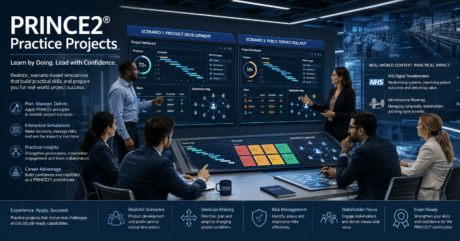
PRINCE2 in Practice: Simulated Projects & Case Studies
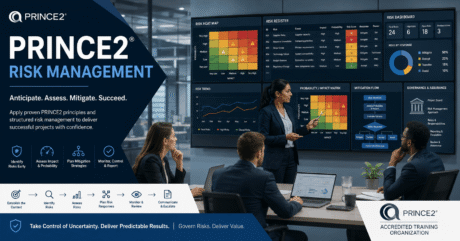
₽51,352.54Original price was: ₽51,352.54.₽1,570.97Current price is: ₽1,570.97.237PRINCE2 Risk Management: Identifying, Assessing & Controlling Risk
₽51,352.54Original price was: ₽51,352.54.₽1,570.97Current price is: ₽1,570.97.237PRINCE2 Roles & Responsibilities: Managing Teams in a PRINCE2 Environment
₽51,352.54Original price was: ₽51,352.54.₽1,570.97Current price is: ₽1,570.97.237


Related Courses
PRINCE2 in Practice: Simulated Projects & Case Studies
₽51,352.54Original price was: ₽51,352.54.₽1,570.97Current price is: ₽1,570.97.237PRINCE2 Risk Management: Identifying, Assessing & Controlling Risk
₽51,352.54Original price was: ₽51,352.54.₽1,570.97Current price is: ₽1,570.97.237PRINCE2 Roles & Responsibilities: Managing Teams in a PRINCE2 Environment
₽51,352.54Original price was: ₽51,352.54.₽1,570.97Current price is: ₽1,570.97.237

