
Course Features
Price
Study Method
Online | Self-paced
Course Format
Reading Material - PDF, article
Duration
6 hours, 35 minutes
Qualification
No formal qualification
Certificate
At completion
Additional info
Coming soon
- Share
Overview
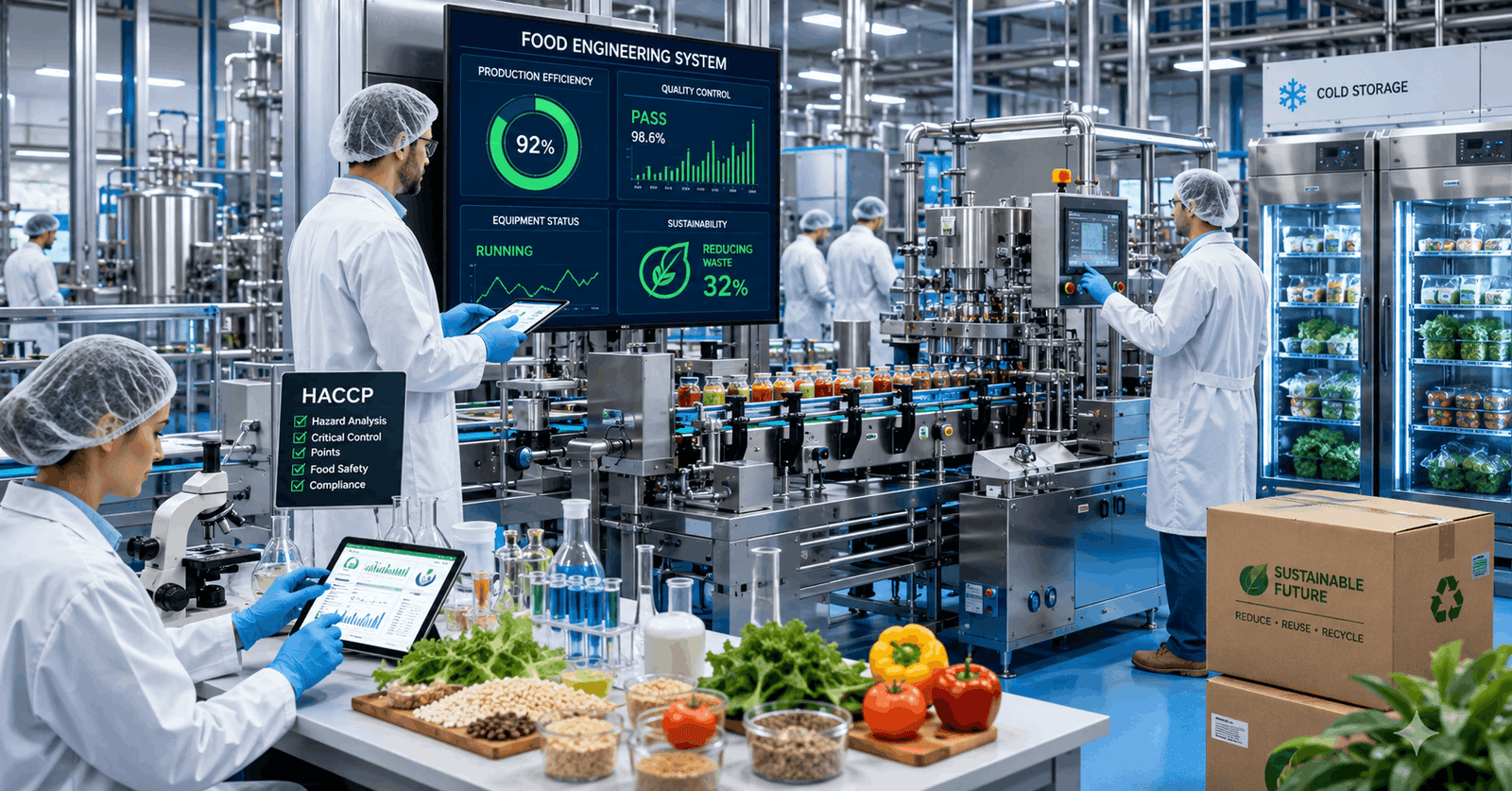
Food Engineering Course is a comprehensive programme designed to provide learners with a strong understanding of modern food production, processing technologies, quality assurance systems, and food manufacturing operations. This advanced diploma explores the scientific, technical, and operational principles that support the safe, efficient, and sustainable production of food products in today's global industry.
Throughout the course, learners will develop knowledge of food processing methods, including heat transfer, mass transfer, refrigeration, freezing, preservation techniques, and modern packaging solutions. The curriculum also examines the critical role of quality control and food safety management, covering HACCP principles, food microbiology, hygiene practices, traceability systems, and regulatory requirements relevant to the food sector.
In addition, learners will gain valuable insight into food product development, from formulation and ingredient functionality to packaging design, costing, pricing, and commercialisation strategies. The programme further explores food manufacturing technologies, plant design, automation systems, equipment maintenance, energy efficiency, and sustainable production practices that are increasingly important within modern food businesses.
Practical learning opportunities are integrated throughout the course, enabling students to understand how engineering principles can be applied to real-world food industry challenges. By studying process optimisation, product innovation, manufacturing efficiency, and emerging industry trends, learners will build skills that can support both professional development and academic progression.
Whether you are seeking to enter the food manufacturing sector, enhance your technical knowledge, or broaden your understanding of food engineering systems, this course offers a structured pathway to develop relevant and industry-focused expertise.
Upon successful completion, learners will receive a free course completion certificate. Multiple premium certificate and transcript options are also available for purchase for those who require additional documentation. Students will also benefit from 5-star rated support available 24/7 via email, ensuring assistance is always available throughout their learning journey.Completing this course can support progression into roles such as Food Production Technician, Food Technologist, Quality Assurance Officer, Food Safety Coordinator, Process Improvement Assistant, Manufacturing Supervisor, Product Development Assistant, or Food Processing Operative. It may also provide a foundation for further study in food engineering, food science, or manufacturing management.
Who is this course for?
Food Engineering Course is a comprehensive programme designed to provide learners with a strong understanding of modern food production, processing technologies, quality assurance systems, and food manufacturing operations. This advanced diploma explores the scientific, technical, and operational principles that support the safe, efficient, and sustainable production of food products in today's global industry.
Throughout the course, learners will develop knowledge of food processing methods, including heat transfer, mass transfer, refrigeration, freezing, preservation techniques, and modern packaging solutions. The curriculum also examines the critical role of quality control and food safety management, covering HACCP principles, food microbiology, hygiene practices, traceability systems, and regulatory requirements relevant to the food sector.
In addition, learners will gain valuable insight into food product development, from formulation and ingredient functionality to packaging design, costing, pricing, and commercialisation strategies. The programme further explores food manufacturing technologies, plant design, automation systems, equipment maintenance, energy efficiency, and sustainable production practices that are increasingly important within modern food businesses.
Practical learning opportunities are integrated throughout the course, enabling students to understand how engineering principles can be applied to real-world food industry challenges. By studying process optimisation, product innovation, manufacturing efficiency, and emerging industry trends, learners will build skills that can support both professional development and academic progression.
Whether you are seeking to enter the food manufacturing sector, enhance your technical knowledge, or broaden your understanding of food engineering systems, this course offers a structured pathway to develop relevant and industry-focused expertise.
Upon successful completion, learners will receive a free course completion certificate. Multiple premium certificate and transcript options are also available for purchase for those who require additional documentation. Students will also benefit from 5-star rated support available 24/7 via email, ensuring assistance is always available throughout their learning journey.Completing this course can support progression into roles such as Food Production Technician, Food Technologist, Quality Assurance Officer, Food Safety Coordinator, Process Improvement Assistant, Manufacturing Supervisor, Product Development Assistant, or Food Processing Operative. It may also provide a foundation for further study in food engineering, food science, or manufacturing management.
Requirements
Food Engineering Course is a comprehensive programme designed to provide learners with a strong understanding of modern food production, processing technologies, quality assurance systems, and food manufacturing operations. This advanced diploma explores the scientific, technical, and operational principles that support the safe, efficient, and sustainable production of food products in today's global industry.
Throughout the course, learners will develop knowledge of food processing methods, including heat transfer, mass transfer, refrigeration, freezing, preservation techniques, and modern packaging solutions. The curriculum also examines the critical role of quality control and food safety management, covering HACCP principles, food microbiology, hygiene practices, traceability systems, and regulatory requirements relevant to the food sector.
In addition, learners will gain valuable insight into food product development, from formulation and ingredient functionality to packaging design, costing, pricing, and commercialisation strategies. The programme further explores food manufacturing technologies, plant design, automation systems, equipment maintenance, energy efficiency, and sustainable production practices that are increasingly important within modern food businesses.
Practical learning opportunities are integrated throughout the course, enabling students to understand how engineering principles can be applied to real-world food industry challenges. By studying process optimisation, product innovation, manufacturing efficiency, and emerging industry trends, learners will build skills that can support both professional development and academic progression.
Whether you are seeking to enter the food manufacturing sector, enhance your technical knowledge, or broaden your understanding of food engineering systems, this course offers a structured pathway to develop relevant and industry-focused expertise.
Upon successful completion, learners will receive a free course completion certificate. Multiple premium certificate and transcript options are also available for purchase for those who require additional documentation. Students will also benefit from 5-star rated support available 24/7 via email, ensuring assistance is always available throughout their learning journey.Completing this course can support progression into roles such as Food Production Technician, Food Technologist, Quality Assurance Officer, Food Safety Coordinator, Process Improvement Assistant, Manufacturing Supervisor, Product Development Assistant, or Food Processing Operative. It may also provide a foundation for further study in food engineering, food science, or manufacturing management.
Career path
Food Engineering Course is a comprehensive programme designed to provide learners with a strong understanding of modern food production, processing technologies, quality assurance systems, and food manufacturing operations. This advanced diploma explores the scientific, technical, and operational principles that support the safe, efficient, and sustainable production of food products in today's global industry.
Throughout the course, learners will develop knowledge of food processing methods, including heat transfer, mass transfer, refrigeration, freezing, preservation techniques, and modern packaging solutions. The curriculum also examines the critical role of quality control and food safety management, covering HACCP principles, food microbiology, hygiene practices, traceability systems, and regulatory requirements relevant to the food sector.
In addition, learners will gain valuable insight into food product development, from formulation and ingredient functionality to packaging design, costing, pricing, and commercialisation strategies. The programme further explores food manufacturing technologies, plant design, automation systems, equipment maintenance, energy efficiency, and sustainable production practices that are increasingly important within modern food businesses.
Practical learning opportunities are integrated throughout the course, enabling students to understand how engineering principles can be applied to real-world food industry challenges. By studying process optimisation, product innovation, manufacturing efficiency, and emerging industry trends, learners will build skills that can support both professional development and academic progression.
Whether you are seeking to enter the food manufacturing sector, enhance your technical knowledge, or broaden your understanding of food engineering systems, this course offers a structured pathway to develop relevant and industry-focused expertise.
Upon successful completion, learners will receive a free course completion certificate. Multiple premium certificate and transcript options are also available for purchase for those who require additional documentation. Students will also benefit from 5-star rated support available 24/7 via email, ensuring assistance is always available throughout their learning journey.Completing this course can support progression into roles such as Food Production Technician, Food Technologist, Quality Assurance Officer, Food Safety Coordinator, Process Improvement Assistant, Manufacturing Supervisor, Product Development Assistant, or Food Processing Operative. It may also provide a foundation for further study in food engineering, food science, or manufacturing management.
-
- Introduction to Food Engineering 00:10:00
- Heat Transfer in Food Processing 00:10:00
- Mass Transfer in Food Processing 00:10:00
- Food Preservation Techniques 00:10:00
- Thermal Processing and Pasteurization 00:10:00
- Refrigeration and Freezing Processes 00:10:00
- Advanced Techniques in Food Packaging 00:10:00
-
- Principles of Quality Assurance in Food Industry 00:10:00
- Food Safety Standards and Regulations (UK and EU) 00:10:00
- Hazard Analysis and Critical Control Points (HACCP) 00:10:00
- Sensory Evaluation and Quality Assessment 00:10:00
- Food Microbiology and Hygiene 00:10:00
- Statistical Process Control in Food Production 00:10:00
- Food Traceability and Recall Procedures 00:10:00
- Product Development Lifecycle 00:10:00
- Formulation and Recipe Development 00:10:00
- Food Ingredient Functionality 00:10:00
- Food Product Sensory Analysis 00:10:00
- Food Product Costing and Pricing 00:10:00
- Food Labeling and Packaging Design 00:10:00
- Food Product Commercialization 00:10:00
- Group Project: Design and Optimization of a Food Process 00:10:00
- Individual Project: Food Product Development and Commercialization 00:10:00
- Research and Analysis of Emerging Trends in Food Engineering 00:10:00
- Exam of Food Engineering Level 3 Advanced Diploma 00:50:00

No Reviews found for this course.
Is this certificate recognized?
Yes, our premium certificate and transcript are widely recognized and accepted by embassies worldwide, particularly by the UK embassy. This adds credibility to your qualification and enhances its value for professional and academic purposes.
I am a beginner. Is this course suitable for me?
Yes, this course is designed for learners of all levels, including beginners. The content is structured to provide step-by-step guidance, ensuring that even those with no prior experience can follow along and gain valuable knowledge.
I am a professional. Is this course suitable for me?
Yes, professionals will also benefit from this course. It covers advanced concepts, practical applications, and industry insights that can help enhance existing skills and knowledge. Whether you are looking to refine your expertise or expand your qualifications, this course provides valuable learning.
Does this course have an expiry date?
No, you have lifetime access to the course. Once enrolled, you can revisit the materials at any time as long as the course remains available. Additionally, we regularly update our content to ensure it stays relevant and up to date.
How do I claim my free certificate?
I trust you’re in good health. Your free certificate can be located in the Achievement section. The option to purchase a CPD certificate is available but entirely optional, and you may choose to skip it. Please be aware that it’s crucial to click the “Complete” button to ensure the certificate is generated, as this process is entirely automated.
Does this course have assessments and assignments?
Yes, the course includes both assessments and assignments. Your final marks will be determined by a combination of 20% from assignments and 80% from assessments. These evaluations are designed to test your understanding and ensure you have grasped the key concepts effectively.
Is this course accredited?
We are a recognized course provider with CPD, UKRLP, and AOHT membership. The logos of these accreditation bodies will be featured on your premium certificate and transcript, ensuring credibility and professional recognition.
Will I receive a certificate upon completion?
Yes, you will receive a free digital certificate automatically once you complete the course. If you would like a premium CPD-accredited certificate, either in digital or physical format, you can upgrade for a small fee.
Course Features
Price
Study Method
Online | Self-paced
Course Format
Reading Material - PDF, article
Duration
6 hours, 35 minutes
Qualification
No formal qualification
Certificate
At completion
Additional info
Coming soon
- Share

Essential Academic English Prefixes & Suffixes – Learn English for IELTS, TOEFL, and Beyond
Course Line237$837.50Original price was: $837.50.$25.62Current price is: $25.62.Becoming an NVQ Trainer: Instructional Design & Delivery Techniques
Course Line239$837.50Original price was: $837.50.$25.62Current price is: $25.62.Tarot Essentials Training
Course Line241$837.50Original price was: $837.50.$25.62Current price is: $25.62.



Related Courses
AutoCAD Floor Plan Rendering in Photoshop: Architectural Visualisation Professional Training
$837.50Original price was: $837.50.$25.62Current price is: $25.62.237Waste Management Level 8 Advanced Diploma
$837.50Original price was: $837.50.$25.62Current price is: $25.62.238




Related Courses
AutoCAD Floor Plan Rendering in Photoshop: Architectural Visualisation Professional Training
$837.50Original price was: $837.50.$25.62Current price is: $25.62.237Waste Management Level 8 Advanced Diploma
$837.50Original price was: $837.50.$25.62Current price is: $25.62.238

