
Course Features
Price
Study Method
Online | Self-paced
Course Format
Reading Material - PDF, article
Duration
5 hours, 55 minutes
Qualification
No formal qualification
Certificate
At completion
Additional info
Coming soon
- Share
Overview
Environmental Acoustics Diploma provides specialist training for understanding, measuring, and managing noise in modern environments. This Level 3 programme equips learners with the scientific, technical, and regulatory knowledge needed to assess environmental noise and support healthier, more sustainable communities.
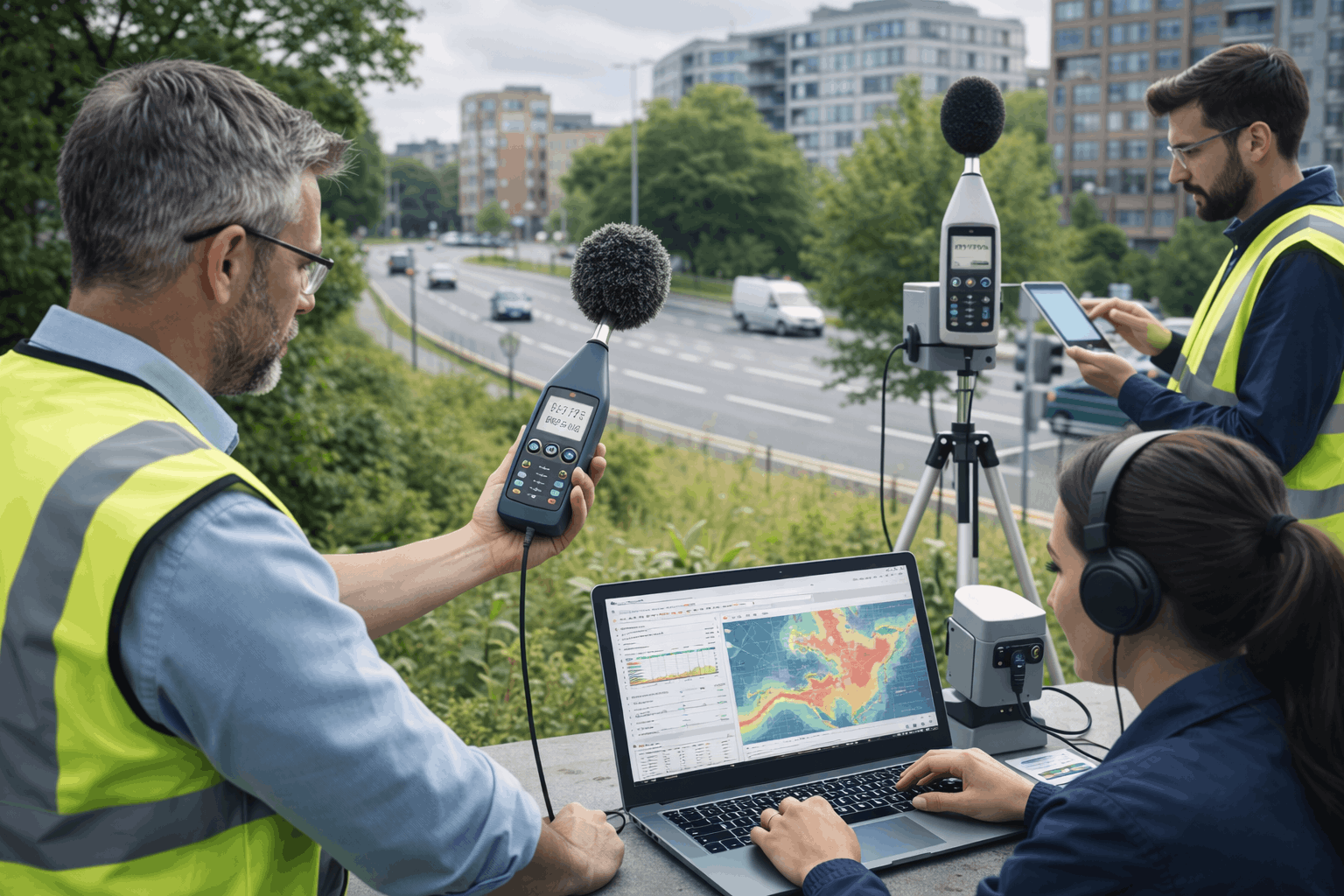
Throughout the course, students explore how sound behaves in outdoor and built environments and how different noise sources, such as transport, industry, and construction, affect people and ecosystems. You will learn how to use professional instruments to measure sound levels, collect and analyse data, and apply recognised noise metrics and standards. The programme also introduces noise mapping and predictive modelling, enabling learners to visualise how sound travels and impacts different locations.
A major focus of the diploma is environmental impact assessment. Learners develop the ability to evaluate how noise affects residential, industrial, and mixed-use areas, and how mitigation strategies can be designed to reduce disturbance. You will study practical solutions such as noise barriers, building design features, and quieter infrastructure, as well as how these measures are applied in real-world projects.
The course also covers UK environmental noise policy, local authority responsibilities, and legal frameworks, helping learners understand how acoustics fits into planning, development, and compliance. Research and project work further strengthen analytical and reporting skills, allowing students to present findings clearly and professionally.
By the end of the programme, learners will be able to support noise surveys, environmental assessments, and acoustic planning activities with confidence. These skills are increasingly in demand across construction, transport, environmental consultancy, and public sector organisations.
At completion, learners receive a free course completion certificate, with the option to purchase multiple premium certificates and official transcripts for professional or academic use. Students also benefit from 5-star rated support available 24/7 via email, ensuring guidance and assistance whenever required.
There are no formal academic requirements. A basic understanding of maths, science, or environmental studies is helpful. Learners should be comfortable using a computer and willing to work with data, technical equipment, and analytical reports.
Who is this course for?
Environmental Acoustics Diploma provides specialist training for understanding, measuring, and managing noise in modern environments. This Level 3 programme equips learners with the scientific, technical, and regulatory knowledge needed to assess environmental noise and support healthier, more sustainable communities.
Throughout the course, students explore how sound behaves in outdoor and built environments and how different noise sources, such as transport, industry, and construction, affect people and ecosystems. You will learn how to use professional instruments to measure sound levels, collect and analyse data, and apply recognised noise metrics and standards. The programme also introduces noise mapping and predictive modelling, enabling learners to visualise how sound travels and impacts different locations.
A major focus of the diploma is environmental impact assessment. Learners develop the ability to evaluate how noise affects residential, industrial, and mixed-use areas, and how mitigation strategies can be designed to reduce disturbance. You will study practical solutions such as noise barriers, building design features, and quieter infrastructure, as well as how these measures are applied in real-world projects.
The course also covers UK environmental noise policy, local authority responsibilities, and legal frameworks, helping learners understand how acoustics fits into planning, development, and compliance. Research and project work further strengthen analytical and reporting skills, allowing students to present findings clearly and professionally.
By the end of the programme, learners will be able to support noise surveys, environmental assessments, and acoustic planning activities with confidence. These skills are increasingly in demand across construction, transport, environmental consultancy, and public sector organisations.
At completion, learners receive a free course completion certificate, with the option to purchase multiple premium certificates and official transcripts for professional or academic use. Students also benefit from 5-star rated support available 24/7 via email, ensuring guidance and assistance whenever required.
There are no formal academic requirements. A basic understanding of maths, science, or environmental studies is helpful. Learners should be comfortable using a computer and willing to work with data, technical equipment, and analytical reports.
Requirements
Environmental Acoustics Diploma provides specialist training for understanding, measuring, and managing noise in modern environments. This Level 3 programme equips learners with the scientific, technical, and regulatory knowledge needed to assess environmental noise and support healthier, more sustainable communities.
Throughout the course, students explore how sound behaves in outdoor and built environments and how different noise sources, such as transport, industry, and construction, affect people and ecosystems. You will learn how to use professional instruments to measure sound levels, collect and analyse data, and apply recognised noise metrics and standards. The programme also introduces noise mapping and predictive modelling, enabling learners to visualise how sound travels and impacts different locations.
A major focus of the diploma is environmental impact assessment. Learners develop the ability to evaluate how noise affects residential, industrial, and mixed-use areas, and how mitigation strategies can be designed to reduce disturbance. You will study practical solutions such as noise barriers, building design features, and quieter infrastructure, as well as how these measures are applied in real-world projects.
The course also covers UK environmental noise policy, local authority responsibilities, and legal frameworks, helping learners understand how acoustics fits into planning, development, and compliance. Research and project work further strengthen analytical and reporting skills, allowing students to present findings clearly and professionally.
By the end of the programme, learners will be able to support noise surveys, environmental assessments, and acoustic planning activities with confidence. These skills are increasingly in demand across construction, transport, environmental consultancy, and public sector organisations.
At completion, learners receive a free course completion certificate, with the option to purchase multiple premium certificates and official transcripts for professional or academic use. Students also benefit from 5-star rated support available 24/7 via email, ensuring guidance and assistance whenever required.
There are no formal academic requirements. A basic understanding of maths, science, or environmental studies is helpful. Learners should be comfortable using a computer and willing to work with data, technical equipment, and analytical reports.
Career path
Environmental Acoustics Diploma provides specialist training for understanding, measuring, and managing noise in modern environments. This Level 3 programme equips learners with the scientific, technical, and regulatory knowledge needed to assess environmental noise and support healthier, more sustainable communities.
Throughout the course, students explore how sound behaves in outdoor and built environments and how different noise sources, such as transport, industry, and construction, affect people and ecosystems. You will learn how to use professional instruments to measure sound levels, collect and analyse data, and apply recognised noise metrics and standards. The programme also introduces noise mapping and predictive modelling, enabling learners to visualise how sound travels and impacts different locations.
A major focus of the diploma is environmental impact assessment. Learners develop the ability to evaluate how noise affects residential, industrial, and mixed-use areas, and how mitigation strategies can be designed to reduce disturbance. You will study practical solutions such as noise barriers, building design features, and quieter infrastructure, as well as how these measures are applied in real-world projects.
The course also covers UK environmental noise policy, local authority responsibilities, and legal frameworks, helping learners understand how acoustics fits into planning, development, and compliance. Research and project work further strengthen analytical and reporting skills, allowing students to present findings clearly and professionally.
By the end of the programme, learners will be able to support noise surveys, environmental assessments, and acoustic planning activities with confidence. These skills are increasingly in demand across construction, transport, environmental consultancy, and public sector organisations.
At completion, learners receive a free course completion certificate, with the option to purchase multiple premium certificates and official transcripts for professional or academic use. Students also benefit from 5-star rated support available 24/7 via email, ensuring guidance and assistance whenever required.
There are no formal academic requirements. A basic understanding of maths, science, or environmental studies is helpful. Learners should be comfortable using a computer and willing to work with data, technical equipment, and analytical reports.
-
- Overview of Environmental Acoustics 00:10:00
- Environmental Noise Sources 00:10:00
- Acoustic Measurement Techniques 00:10:00
- Noise Metrics and Standards (e.g., ISO, BS, WHO) 00:10:00
- Regulatory Framework in the UK (e.g., Environmental Noise Regulations) 00:10:00
-
- Instrumentation for Noise Measurement 00:10:00
- Data Collection and Analysis 00:10:00
- Noise Mapping and Modeling 00:10:00
- Remote Sensing and Telemetry 00:10:00
- Case Studies and Practical Exercises 00:10:00
- Environmental Impact Assessment (EIA) 00:10:00
- Predictive Modeling for Noise Impact 00:10:00
- Assessment Methods for Different Environments 00:10:00
- Mitigation Strategies 00:10:00
- Legal and Ethical Considerations 00:10:00
- UK Environmental Noise Policy 00:10:00
- Local Authority Responsibilities 00:10:00
- Planning and Development Control 00:10:00
- Noise Abatement Orders 00:10:00
- Case Law and Legal Precedents 00:10:00
- Exam of Environmental Acoustics Level 3 Advanced Diploma 00:50:00

No Reviews found for this course.
Is this certificate recognized?
Yes, our premium certificate and transcript are widely recognized and accepted by embassies worldwide, particularly by the UK embassy. This adds credibility to your qualification and enhances its value for professional and academic purposes.
I am a beginner. Is this course suitable for me?
Yes, this course is designed for learners of all levels, including beginners. The content is structured to provide step-by-step guidance, ensuring that even those with no prior experience can follow along and gain valuable knowledge.
I am a professional. Is this course suitable for me?
Yes, professionals will also benefit from this course. It covers advanced concepts, practical applications, and industry insights that can help enhance existing skills and knowledge. Whether you are looking to refine your expertise or expand your qualifications, this course provides valuable learning.
Does this course have an expiry date?
No, you have lifetime access to the course. Once enrolled, you can revisit the materials at any time as long as the course remains available. Additionally, we regularly update our content to ensure it stays relevant and up to date.
How do I claim my free certificate?
I trust you’re in good health. Your free certificate can be located in the Achievement section. The option to purchase a CPD certificate is available but entirely optional, and you may choose to skip it. Please be aware that it’s crucial to click the “Complete” button to ensure the certificate is generated, as this process is entirely automated.
Does this course have assessments and assignments?
Yes, the course includes both assessments and assignments. Your final marks will be determined by a combination of 20% from assignments and 80% from assessments. These evaluations are designed to test your understanding and ensure you have grasped the key concepts effectively.
Is this course accredited?
We are a recognized course provider with CPD, UKRLP, and AOHT membership. The logos of these accreditation bodies will be featured on your premium certificate and transcript, ensuring credibility and professional recognition.
Will I receive a certificate upon completion?
Yes, you will receive a free digital certificate automatically once you complete the course. If you would like a premium CPD-accredited certificate, either in digital or physical format, you can upgrade for a small fee.
Course Features
Price
Study Method
Online | Self-paced
Course Format
Reading Material - PDF, article
Duration
5 hours, 55 minutes
Qualification
No formal qualification
Certificate
At completion
Additional info
Coming soon
- Share

ABRSM Sight Reading Bootcamp: Piano, Voice & Strings
Course Line237$899.04Original price was: $899.04.$27.50Current price is: $27.50.Mastering English Grammar for IELTS 7+: Essential Rules & Practice
Course Line237$899.04Original price was: $899.04.$27.50Current price is: $27.50.Alcohol & Drug Addictions: Psychological Understanding and Treatment
Course Line251$899.04Original price was: $899.04.$27.50Current price is: $27.50.


Related Courses
AutoCAD Floor Plan Rendering in Photoshop: Architectural Visualisation Professional Training
$899.04Original price was: $899.04.$27.50Current price is: $27.50.237Waste Management Level 8 Advanced Diploma
$899.04Original price was: $899.04.$27.50Current price is: $27.50.238Engineering Mathematics Level 5 Advanced Diploma
$899.04Original price was: $899.04.$27.50Current price is: $27.50.237




Related Courses
AutoCAD Floor Plan Rendering in Photoshop: Architectural Visualisation Professional Training
$899.04Original price was: $899.04.$27.50Current price is: $27.50.237Waste Management Level 8 Advanced Diploma
$899.04Original price was: $899.04.$27.50Current price is: $27.50.238Engineering Mathematics Level 5 Advanced Diploma
$899.04Original price was: $899.04.$27.50Current price is: $27.50.237

