
Course Features
Price
Study Method
Online | Self-paced
Course Format
Interactive PDFs, Articles & Learning Resources
Duration
8 hours, 25 minutes
Qualification
Professional Skills Development Course
Assessment
Final MCQ Exam (included in price)
Certificate
Verifiable Digital Certificate - Free
Additional info
Lifetime Access | Start Instantly
- Share
Overview
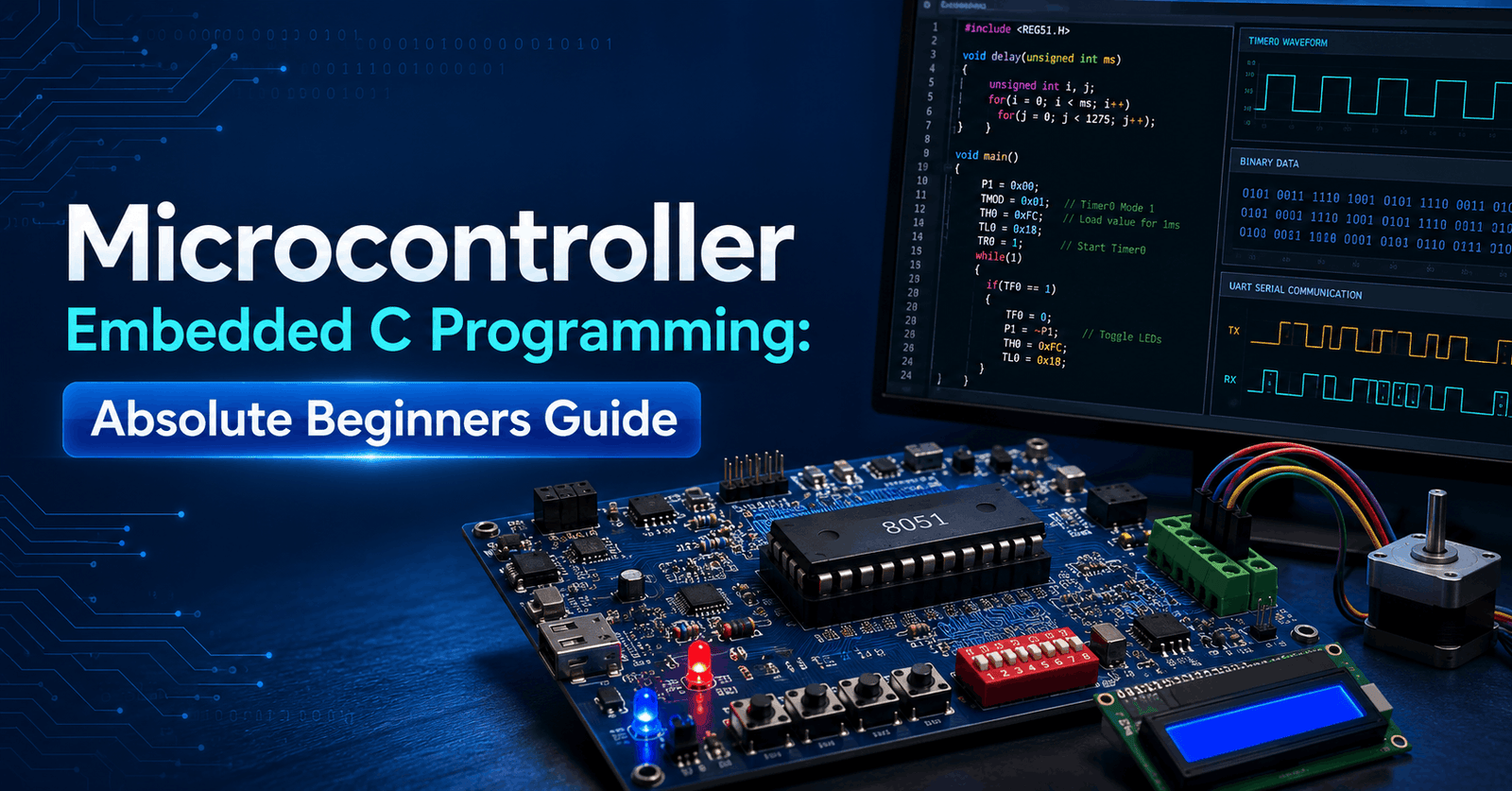
Embedded C Programming provides a practical introduction to programming microcontrollers and developing software for embedded systems. Designed for beginners, this course builds a clear understanding of how C programming is applied to hardware-focused projects, using the 8051 microcontroller family as a foundation for learning essential embedded development concepts.
The course begins by exploring the fundamentals of embedded C, including processor selection, programming language choices, operating system considerations and the typical embedded software development process. Learners then examine the architecture of the 8051 microcontroller, covering external interfaces, clock frequency, memory organisation, 8-bit processing, 16-bit addressing, interrupt handling and power consumption.
As the course progresses, learners move from theory into practical programming. They will explore how to write and structure an embedded C program, create bit variables, read switch inputs and control individual bits. The course also introduces techniques for organising larger codebases through header files and structured programming approaches, helping learners develop cleaner and more manageable embedded software.
Real-time behaviour is another important area of study. Learners will discover how hardware timers work, how timer registers are used and how to implement hardware timeouts. The course then introduces the principles behind a simple embedded operating system, including kernel concepts, task scheduling, task control and alternative system architectures.
Further topics include multi-state system design, traffic light sequencing, asynchronous serial communication, baud rates, UART and RS-232 communication. A practical intruder alarm case study demonstrates how multiple concepts can be brought together within a realistic embedded system application. The final lessons introduce advanced directions and time-triggered embedded system design patterns, providing a foundation for continued learning.
By completing this course, learners can develop a stronger understanding of the relationship between software and microcontroller hardware while building practical skills relevant to embedded systems development. Students also receive access to 5-star rated support available 24/7 through email whenever assistance is needed. Upon successful completion, learners will receive a free course completion certificate. Multiple premium certificate and transcript options are also available for purchase for those who wish to obtain additional documentation.Completing this course can provide useful foundational knowledge for further study or entry-level opportunities related to embedded systems, firmware, electronics and microcontroller programming. Learners may continue developing skills towards roles such as Embedded Systems Developer, Junior Firmware Engineer, Embedded Software Engineer or IoT Developer, alongside further education in electronics, robotics and real-time systems.
Who is this course for?
Embedded C Programming provides a practical introduction to programming microcontrollers and developing software for embedded systems. Designed for beginners, this course builds a clear understanding of how C programming is applied to hardware-focused projects, using the 8051 microcontroller family as a foundation for learning essential embedded development concepts.
The course begins by exploring the fundamentals of embedded C, including processor selection, programming language choices, operating system considerations and the typical embedded software development process. Learners then examine the architecture of the 8051 microcontroller, covering external interfaces, clock frequency, memory organisation, 8-bit processing, 16-bit addressing, interrupt handling and power consumption.
As the course progresses, learners move from theory into practical programming. They will explore how to write and structure an embedded C program, create bit variables, read switch inputs and control individual bits. The course also introduces techniques for organising larger codebases through header files and structured programming approaches, helping learners develop cleaner and more manageable embedded software.
Real-time behaviour is another important area of study. Learners will discover how hardware timers work, how timer registers are used and how to implement hardware timeouts. The course then introduces the principles behind a simple embedded operating system, including kernel concepts, task scheduling, task control and alternative system architectures.
Further topics include multi-state system design, traffic light sequencing, asynchronous serial communication, baud rates, UART and RS-232 communication. A practical intruder alarm case study demonstrates how multiple concepts can be brought together within a realistic embedded system application. The final lessons introduce advanced directions and time-triggered embedded system design patterns, providing a foundation for continued learning.
By completing this course, learners can develop a stronger understanding of the relationship between software and microcontroller hardware while building practical skills relevant to embedded systems development. Students also receive access to 5-star rated support available 24/7 through email whenever assistance is needed. Upon successful completion, learners will receive a free course completion certificate. Multiple premium certificate and transcript options are also available for purchase for those who wish to obtain additional documentation.Completing this course can provide useful foundational knowledge for further study or entry-level opportunities related to embedded systems, firmware, electronics and microcontroller programming. Learners may continue developing skills towards roles such as Embedded Systems Developer, Junior Firmware Engineer, Embedded Software Engineer or IoT Developer, alongside further education in electronics, robotics and real-time systems.
Requirements
Embedded C Programming provides a practical introduction to programming microcontrollers and developing software for embedded systems. Designed for beginners, this course builds a clear understanding of how C programming is applied to hardware-focused projects, using the 8051 microcontroller family as a foundation for learning essential embedded development concepts.
The course begins by exploring the fundamentals of embedded C, including processor selection, programming language choices, operating system considerations and the typical embedded software development process. Learners then examine the architecture of the 8051 microcontroller, covering external interfaces, clock frequency, memory organisation, 8-bit processing, 16-bit addressing, interrupt handling and power consumption.
As the course progresses, learners move from theory into practical programming. They will explore how to write and structure an embedded C program, create bit variables, read switch inputs and control individual bits. The course also introduces techniques for organising larger codebases through header files and structured programming approaches, helping learners develop cleaner and more manageable embedded software.
Real-time behaviour is another important area of study. Learners will discover how hardware timers work, how timer registers are used and how to implement hardware timeouts. The course then introduces the principles behind a simple embedded operating system, including kernel concepts, task scheduling, task control and alternative system architectures.
Further topics include multi-state system design, traffic light sequencing, asynchronous serial communication, baud rates, UART and RS-232 communication. A practical intruder alarm case study demonstrates how multiple concepts can be brought together within a realistic embedded system application. The final lessons introduce advanced directions and time-triggered embedded system design patterns, providing a foundation for continued learning.
By completing this course, learners can develop a stronger understanding of the relationship between software and microcontroller hardware while building practical skills relevant to embedded systems development. Students also receive access to 5-star rated support available 24/7 through email whenever assistance is needed. Upon successful completion, learners will receive a free course completion certificate. Multiple premium certificate and transcript options are also available for purchase for those who wish to obtain additional documentation.Completing this course can provide useful foundational knowledge for further study or entry-level opportunities related to embedded systems, firmware, electronics and microcontroller programming. Learners may continue developing skills towards roles such as Embedded Systems Developer, Junior Firmware Engineer, Embedded Software Engineer or IoT Developer, alongside further education in electronics, robotics and real-time systems.
Career path
Embedded C Programming provides a practical introduction to programming microcontrollers and developing software for embedded systems. Designed for beginners, this course builds a clear understanding of how C programming is applied to hardware-focused projects, using the 8051 microcontroller family as a foundation for learning essential embedded development concepts.
The course begins by exploring the fundamentals of embedded C, including processor selection, programming language choices, operating system considerations and the typical embedded software development process. Learners then examine the architecture of the 8051 microcontroller, covering external interfaces, clock frequency, memory organisation, 8-bit processing, 16-bit addressing, interrupt handling and power consumption.
As the course progresses, learners move from theory into practical programming. They will explore how to write and structure an embedded C program, create bit variables, read switch inputs and control individual bits. The course also introduces techniques for organising larger codebases through header files and structured programming approaches, helping learners develop cleaner and more manageable embedded software.
Real-time behaviour is another important area of study. Learners will discover how hardware timers work, how timer registers are used and how to implement hardware timeouts. The course then introduces the principles behind a simple embedded operating system, including kernel concepts, task scheduling, task control and alternative system architectures.
Further topics include multi-state system design, traffic light sequencing, asynchronous serial communication, baud rates, UART and RS-232 communication. A practical intruder alarm case study demonstrates how multiple concepts can be brought together within a realistic embedded system application. The final lessons introduce advanced directions and time-triggered embedded system design patterns, providing a foundation for continued learning.
By completing this course, learners can develop a stronger understanding of the relationship between software and microcontroller hardware while building practical skills relevant to embedded systems development. Students also receive access to 5-star rated support available 24/7 through email whenever assistance is needed. Upon successful completion, learners will receive a free course completion certificate. Multiple premium certificate and transcript options are also available for purchase for those who wish to obtain additional documentation.Completing this course can provide useful foundational knowledge for further study or entry-level opportunities related to embedded systems, firmware, electronics and microcontroller programming. Learners may continue developing skills towards roles such as Embedded Systems Developer, Junior Firmware Engineer, Embedded Software Engineer or IoT Developer, alongside further education in electronics, robotics and real-time systems.
-
- Course Introduction and Overview 00:10:00
-
- Introduction to Embedded C Programming 00:10:00
- Choosing the Right Processor 00:10:00
- Selecting the Programming Language 00:10:00
- Operating System Choices for Embedded Systems 00:10:00
- Overview of Embedded Software Development Process 00:10:00
- Introduction to the 8051 Microcontroller Family 00:10:00
- External Interfaces of the Standard 8051 00:10:00
- Clock Frequency and Performance Considerations 00:10:00
- Memory Architecture and Issues 00:10:00
- 8-bit Architecture & 16-bit Address Space 00:10:00
- Interrupt Handling in 8051 00:10:00
- Power Consumption in Embedded Systems 00:10:00
- Basics of Reading Switch Inputs 00:10:00
- Reading and Writing Bits – Generic Example 00:10:00
- Basic Code Example for Reading Switch Inputs 00:10:00
- Understanding Real-Time Constraints 00:10:00
- Hardware Delays Using Timer 0 & Timer 1 00:10:00
- Reasons to Avoid Timer 2 00:10:00
- Implementing Hardware Timeouts 00:10:00
- Designing Multi-State Systems 00:10:00
- Traffic Light Sequencing Example 00:10:00
- Implementing Multi-State (InputTimed) Systems 00:10:00
- Practical Case Study: Building an Intruder Alarm 00:10:00
- Exam of Microcontroller Embedded C Programming: Absolute Beginners Guide 2023 00:50:00

No Reviews found for this course.
Is this certificate recognized?
Yes, our premium certificate and transcript are widely recognized and accepted by embassies worldwide, particularly by the UK embassy. This adds credibility to your qualification and enhances its value for professional and academic purposes.
I am a beginner. Is this course suitable for me?
Yes, this course is designed for learners of all levels, including beginners. The content is structured to provide step-by-step guidance, ensuring that even those with no prior experience can follow along and gain valuable knowledge.
I am a professional. Is this course suitable for me?
Yes, professionals will also benefit from this course. It covers advanced concepts, practical applications, and industry insights that can help enhance existing skills and knowledge. Whether you are looking to refine your expertise or expand your qualifications, this course provides valuable learning.
Does this course have an expiry date?
No, you have lifetime access to the course. Once enrolled, you can revisit the materials at any time as long as the course remains available. Additionally, we regularly update our content to ensure it stays relevant and up to date.
How do I claim my free certificate?
I trust you’re in good health. Your free certificate can be located in the Achievement section. The option to purchase a CPD certificate is available but entirely optional, and you may choose to skip it. Please be aware that it’s crucial to click the “Complete” button to ensure the certificate is generated, as this process is entirely automated.
Does this course have assessments and assignments?
Yes, the course includes both assessments and assignments. Your final marks will be determined by a combination of 20% from assignments and 80% from assessments. These evaluations are designed to test your understanding and ensure you have grasped the key concepts effectively.
Is this course accredited?
We are a recognized course provider with CPD, UKRLP, and AOHT membership. The logos of these accreditation bodies will be featured on your premium certificate and transcript, ensuring credibility and professional recognition.
Will I receive a certificate upon completion?
Yes, you will receive a free digital certificate automatically once you complete the course. If you would like a premium CPD-accredited certificate, either in digital or physical format, you can upgrade for a small fee.
Course Features
Price
Study Method
Online | Self-paced
Course Format
Interactive PDFs, Articles & Learning Resources
Duration
8 hours, 25 minutes
Qualification
Professional Skills Development Course
Assessment
Final MCQ Exam (included in price)
Certificate
Verifiable Digital Certificate - Free
Additional info
Lifetime Access | Start Instantly
- Share

Dental Hygienist Level 8 Advanced Diploma
Course Line238£490.00Original price was: £490.00.£14.99Current price is: £14.99.Environmental Sustainability Level 3 Advanced Diploma
Course Line242£490.00Original price was: £490.00.£14.99Current price is: £14.99.Accident Investigation Level 7 Advanced Diploma
Course Line239£490.00Original price was: £490.00.£14.99Current price is: £14.99.


Related Courses
PRINCE2 in Practice: Simulated Projects & Case Studies
£490.00Original price was: £490.00.£14.99Current price is: £14.99.237PRINCE2 for Beginners: An Introduction to Project Governance
£490.00Original price was: £490.00.£14.99Current price is: £14.99.237PRINCE2 Project Documentation: Templates & Best Practice
£490.00Original price was: £490.00.£14.99Current price is: £14.99.237




Related Courses
PRINCE2 in Practice: Simulated Projects & Case Studies
£490.00Original price was: £490.00.£14.99Current price is: £14.99.237PRINCE2 for Beginners: An Introduction to Project Governance
£490.00Original price was: £490.00.£14.99Current price is: £14.99.237PRINCE2 Project Documentation: Templates & Best Practice
£490.00Original price was: £490.00.£14.99Current price is: £14.99.237

