
Course Features
Price
Study Method
Online | Self-paced
Course Format
Interactive PDFs, Articles & Learning Resources
Duration
6 hours, 45 minutes
Qualification
Professional Skills Development Course
Assessment
Final MCQ Exam (included in price)
Certificate
Verifiable Digital Certificate - Free
Additional info
Lifetime Access | Start Instantly
- Share
Overview
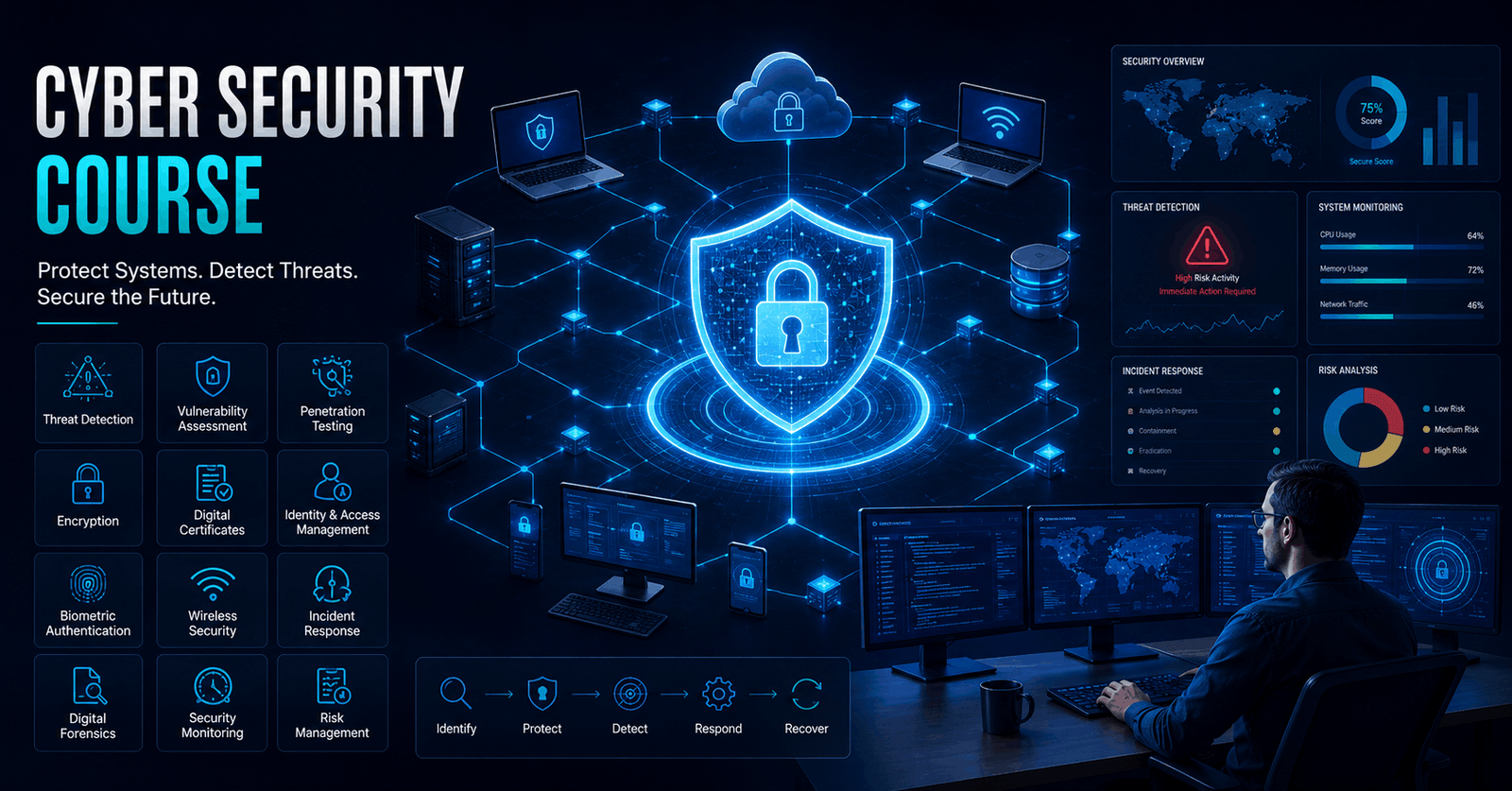
Cyber Security Course training provides absolute beginners with a structured introduction to the essential concepts used to understand digital threats, protect information and support secure technology environments. The course develops broad foundational knowledge across cyber attacks, vulnerabilities, security architecture, implementation, incident response, governance and risk management, creating a useful starting point for further cybersecurity learning.
Learners begin by exploring information security roles, responsibilities, security controls and recognised industry frameworks. The course examines common threat actors, attack vectors and the role of threat intelligence in understanding emerging risks. It also introduces network assessment concepts, basic commands, vulnerability identification and scanning methods. Social engineering and malware are examined to help learners recognise how technical weaknesses and human behaviour can both contribute to security incidents.
The course then introduces penetration testing from an educational and defensive perspective. Learners explore the typical stages of an authorised security assessment, including information gathering, reconnaissance, scanning, identifying weaknesses, post-assessment concepts, reporting and remediation planning. This provides insight into how security professionals evaluate systems and communicate findings responsibly.
Security architecture topics include encryption, digital signatures, certificates and Public Key Infrastructure (PKI). Learners also examine identity, authentication and access control, including knowledge-based methods, secure authentication technologies and biometrics. Further lessons address wireless security, Identity and Access Management (IAM), cloud computing, virtualisation, BYOD considerations and organisational security policies.
The operational side of cybersecurity is introduced through incident management and digital forensics fundamentals. Learners gain an understanding of how organisations prepare for, respond to and investigate security events. The final areas of study focus on information security governance, security programme management and risk management methodologies, helping connect technical protection with wider organisational responsibilities.
This beginner-friendly online course offers flexible, self-paced learning, allowing students to revisit important concepts as they build their understanding. Students also have access to 5-star rated support available 24/7 through email throughout their learning experience.
Upon successful completion, learners will receive a free course completion certificate. Those who want additional documentation for professional, educational or personal development purposes may also choose from multiple premium certificate and transcript options available for purchase.Who is this course for?
Cyber Security Course training provides absolute beginners with a structured introduction to the essential concepts used to understand digital threats, protect information and support secure technology environments. The course develops broad foundational knowledge across cyber attacks, vulnerabilities, security architecture, implementation, incident response, governance and risk management, creating a useful starting point for further cybersecurity learning.
Learners begin by exploring information security roles, responsibilities, security controls and recognised industry frameworks. The course examines common threat actors, attack vectors and the role of threat intelligence in understanding emerging risks. It also introduces network assessment concepts, basic commands, vulnerability identification and scanning methods. Social engineering and malware are examined to help learners recognise how technical weaknesses and human behaviour can both contribute to security incidents.
The course then introduces penetration testing from an educational and defensive perspective. Learners explore the typical stages of an authorised security assessment, including information gathering, reconnaissance, scanning, identifying weaknesses, post-assessment concepts, reporting and remediation planning. This provides insight into how security professionals evaluate systems and communicate findings responsibly.
Security architecture topics include encryption, digital signatures, certificates and Public Key Infrastructure (PKI). Learners also examine identity, authentication and access control, including knowledge-based methods, secure authentication technologies and biometrics. Further lessons address wireless security, Identity and Access Management (IAM), cloud computing, virtualisation, BYOD considerations and organisational security policies.
The operational side of cybersecurity is introduced through incident management and digital forensics fundamentals. Learners gain an understanding of how organisations prepare for, respond to and investigate security events. The final areas of study focus on information security governance, security programme management and risk management methodologies, helping connect technical protection with wider organisational responsibilities.
This beginner-friendly online course offers flexible, self-paced learning, allowing students to revisit important concepts as they build their understanding. Students also have access to 5-star rated support available 24/7 through email throughout their learning experience.
Upon successful completion, learners will receive a free course completion certificate. Those who want additional documentation for professional, educational or personal development purposes may also choose from multiple premium certificate and transcript options available for purchase.Requirements
Cyber Security Course training provides absolute beginners with a structured introduction to the essential concepts used to understand digital threats, protect information and support secure technology environments. The course develops broad foundational knowledge across cyber attacks, vulnerabilities, security architecture, implementation, incident response, governance and risk management, creating a useful starting point for further cybersecurity learning.
Learners begin by exploring information security roles, responsibilities, security controls and recognised industry frameworks. The course examines common threat actors, attack vectors and the role of threat intelligence in understanding emerging risks. It also introduces network assessment concepts, basic commands, vulnerability identification and scanning methods. Social engineering and malware are examined to help learners recognise how technical weaknesses and human behaviour can both contribute to security incidents.
The course then introduces penetration testing from an educational and defensive perspective. Learners explore the typical stages of an authorised security assessment, including information gathering, reconnaissance, scanning, identifying weaknesses, post-assessment concepts, reporting and remediation planning. This provides insight into how security professionals evaluate systems and communicate findings responsibly.
Security architecture topics include encryption, digital signatures, certificates and Public Key Infrastructure (PKI). Learners also examine identity, authentication and access control, including knowledge-based methods, secure authentication technologies and biometrics. Further lessons address wireless security, Identity and Access Management (IAM), cloud computing, virtualisation, BYOD considerations and organisational security policies.
The operational side of cybersecurity is introduced through incident management and digital forensics fundamentals. Learners gain an understanding of how organisations prepare for, respond to and investigate security events. The final areas of study focus on information security governance, security programme management and risk management methodologies, helping connect technical protection with wider organisational responsibilities.
This beginner-friendly online course offers flexible, self-paced learning, allowing students to revisit important concepts as they build their understanding. Students also have access to 5-star rated support available 24/7 through email throughout their learning experience.
Upon successful completion, learners will receive a free course completion certificate. Those who want additional documentation for professional, educational or personal development purposes may also choose from multiple premium certificate and transcript options available for purchase.Career path
Cyber Security Course training provides absolute beginners with a structured introduction to the essential concepts used to understand digital threats, protect information and support secure technology environments. The course develops broad foundational knowledge across cyber attacks, vulnerabilities, security architecture, implementation, incident response, governance and risk management, creating a useful starting point for further cybersecurity learning.
Learners begin by exploring information security roles, responsibilities, security controls and recognised industry frameworks. The course examines common threat actors, attack vectors and the role of threat intelligence in understanding emerging risks. It also introduces network assessment concepts, basic commands, vulnerability identification and scanning methods. Social engineering and malware are examined to help learners recognise how technical weaknesses and human behaviour can both contribute to security incidents.
The course then introduces penetration testing from an educational and defensive perspective. Learners explore the typical stages of an authorised security assessment, including information gathering, reconnaissance, scanning, identifying weaknesses, post-assessment concepts, reporting and remediation planning. This provides insight into how security professionals evaluate systems and communicate findings responsibly.
Security architecture topics include encryption, digital signatures, certificates and Public Key Infrastructure (PKI). Learners also examine identity, authentication and access control, including knowledge-based methods, secure authentication technologies and biometrics. Further lessons address wireless security, Identity and Access Management (IAM), cloud computing, virtualisation, BYOD considerations and organisational security policies.
The operational side of cybersecurity is introduced through incident management and digital forensics fundamentals. Learners gain an understanding of how organisations prepare for, respond to and investigate security events. The final areas of study focus on information security governance, security programme management and risk management methodologies, helping connect technical protection with wider organisational responsibilities.
This beginner-friendly online course offers flexible, self-paced learning, allowing students to revisit important concepts as they build their understanding. Students also have access to 5-star rated support available 24/7 through email throughout their learning experience.
Upon successful completion, learners will receive a free course completion certificate. Those who want additional documentation for professional, educational or personal development purposes may also choose from multiple premium certificate and transcript options available for purchase.-
- Understanding Information Security Roles and Responsibilities 00:10:00
- Types of Security Controls and Industry Frameworks 00:10:00
- Threat Actors and Common Attack Vectors 00:10:00
- Threat Intelligence and Cyber Threat Research 00:10:00
- Network Assessment Tools and Basic Commands 00:10:00
- Identifying and Addressing Security Vulnerabilities 00:10:00
- Vulnerability Scanning Methods and Tools 00:10:00
- Social Engineering Attacks and Psychological Tactics 00:10:00
- Malware Types, Behaviors, and Impact 00:10:00
-
- Penetration Testing: Key Concepts and Methodologies 00:10:00
- Information Gathering and Reconnaissance 00:10:00
- Network and Vulnerability Scanning Techniques 00:10:00
- Exploiting Security Weaknesses 00:10:00
- Post-Exploitation and Maintaining System Access 00:10:00
- Reporting Pen Test Results and Remediation Plans 00:10:00
- Introduction to Encryption and Cryptographic Techniques 00:10:00
- Digital Signatures and Their Role in Security 00:10:00
- Understanding Digital Certificates and Their Authorities 00:10:00
- Public Key Infrastructure (PKI) Basics 00:10:00
- PKI Lifecycle and Management Strategies 00:10:00
- Identity, Authentication, and Access Control Models 00:10:00
- Knowledge-Based Authentication Explained 00:10:00
- Secure Authentication Technologies 00:10:00
- Biometric Authentication and Use Cases 00:10:00
- Incident Management Lifecycle and Response Planning 00:10:00
- Introduction to Digital Forensics 00:10:00
- Exam of Cyber Security for Absolute Beginners: Essential Concepts and Fundamentals 00:50:00

No Reviews found for this course.
Is this certificate recognized?
Yes, our premium certificate and transcript are widely recognized and accepted by embassies worldwide, particularly by the UK embassy. This adds credibility to your qualification and enhances its value for professional and academic purposes.
I am a beginner. Is this course suitable for me?
Yes, this course is designed for learners of all levels, including beginners. The content is structured to provide step-by-step guidance, ensuring that even those with no prior experience can follow along and gain valuable knowledge.
I am a professional. Is this course suitable for me?
Yes, professionals will also benefit from this course. It covers advanced concepts, practical applications, and industry insights that can help enhance existing skills and knowledge. Whether you are looking to refine your expertise or expand your qualifications, this course provides valuable learning.
Does this course have an expiry date?
No, you have lifetime access to the course. Once enrolled, you can revisit the materials at any time as long as the course remains available. Additionally, we regularly update our content to ensure it stays relevant and up to date.
How do I claim my free certificate?
I trust you’re in good health. Your free certificate can be located in the Achievement section. The option to purchase a CPD certificate is available but entirely optional, and you may choose to skip it. Please be aware that it’s crucial to click the “Complete” button to ensure the certificate is generated, as this process is entirely automated.
Does this course have assessments and assignments?
Yes, the course includes both assessments and assignments. Your final marks will be determined by a combination of 20% from assignments and 80% from assessments. These evaluations are designed to test your understanding and ensure you have grasped the key concepts effectively.
Is this course accredited?
We are a recognized course provider with CPD, UKRLP, and AOHT membership. The logos of these accreditation bodies will be featured on your premium certificate and transcript, ensuring credibility and professional recognition.
Will I receive a certificate upon completion?
Yes, you will receive a free digital certificate automatically once you complete the course. If you would like a premium CPD-accredited certificate, either in digital or physical format, you can upgrade for a small fee.
Course Features
Price
Study Method
Online | Self-paced
Course Format
Interactive PDFs, Articles & Learning Resources
Duration
6 hours, 45 minutes
Qualification
Professional Skills Development Course
Assessment
Final MCQ Exam (included in price)
Certificate
Verifiable Digital Certificate - Free
Additional info
Lifetime Access | Start Instantly
- Share

CV Writing Masterclass
Course Line242£490.00Original price was: £490.00.£14.99Current price is: £14.99.Industrial Engineering Level 3 Advanced Diploma
Course Line237£490.00Original price was: £490.00.£14.99Current price is: £14.99.Shopify Developer Masterclass: Build Modern Stores with Next.js
Course Line237£490.00Original price was: £490.00.£14.99Current price is: £14.99.



Related Courses
PRINCE2 in Practice: Simulated Projects & Case Studies
£490.00Original price was: £490.00.£14.99Current price is: £14.99.237PRINCE2 Risk Management: Identifying, Assessing & Controlling Risk
£490.00Original price was: £490.00.£14.99Current price is: £14.99.237PRINCE2 Roles & Responsibilities: Managing Teams in a PRINCE2 Environment
£490.00Original price was: £490.00.£14.99Current price is: £14.99.237




Related Courses
PRINCE2 in Practice: Simulated Projects & Case Studies
£490.00Original price was: £490.00.£14.99Current price is: £14.99.237PRINCE2 Risk Management: Identifying, Assessing & Controlling Risk
£490.00Original price was: £490.00.£14.99Current price is: £14.99.237PRINCE2 Roles & Responsibilities: Managing Teams in a PRINCE2 Environment
£490.00Original price was: £490.00.£14.99Current price is: £14.99.237

