
Course Features
Price
Study Method
Online | Self-paced
Course Format
Reading Material - PDF, article
Duration
9 hours, 5 minutes
Qualification
No formal qualification
Certificate
At completion
Additional info
Coming soon
- Share
Overview
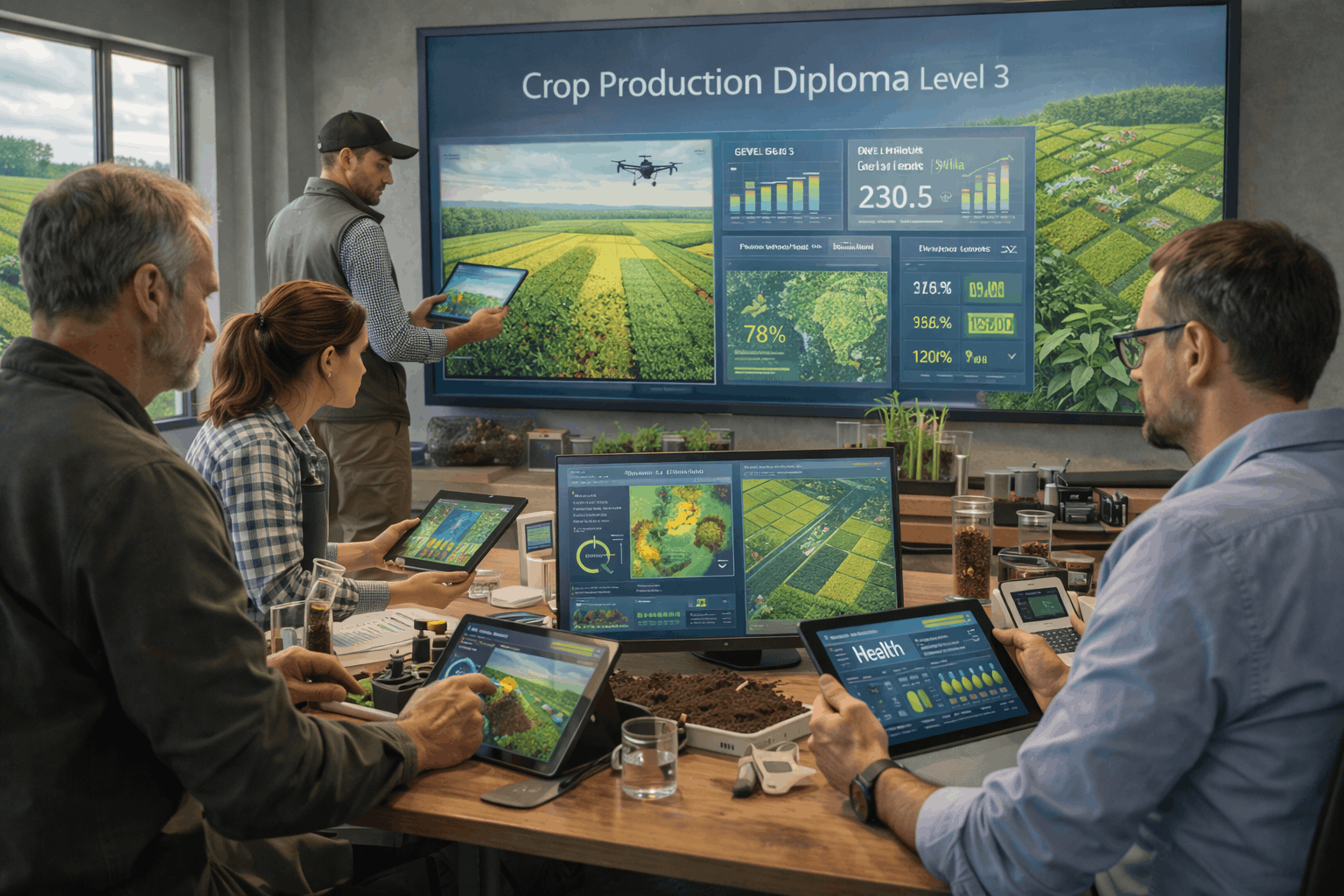
Crop production diploma training at Level 3 is designed to prepare learners for the modern, technology-driven world of agriculture. This programme combines advanced farming practices with scientific knowledge and digital tools, enabling students to grow healthy crops, increase yields, and manage agricultural operations in a sustainable and profitable way.
Learners gain a deep understanding of soil health, plant nutrition, and crop genetics, allowing them to select and manage high-performing crop varieties. The course explores how to test soil, balance nutrients, and apply both organic and inorganic fertilisers to support strong plant growth while protecting the environment. Students also learn how breeding, hybridisation, and pest-resistant crop varieties improve productivity and reduce losses.
A major focus of the programme is precision farming and technology integration. Learners are introduced to tools such as drones, remote sensing, data analytics, and automated irrigation systems that help farmers monitor crop health, manage water use, and optimise yields. These technologies allow agricultural professionals to make smarter, evidence-based decisions that save time, reduce costs, and increase sustainability.
The course also covers integrated pest and disease management, teaching learners how to identify problems early and apply biological, cultural, and chemical controls responsibly. Post-harvest handling, storage, and value addition are addressed to ensure that crops remain high quality from the field to the market. Climate-resilient farming strategies are explored, helping learners adapt to changing weather patterns and reduce risk in agricultural operations.
Business and entrepreneurship skills are included so that students can plan, finance, and market their crop production activities effectively. By the end of the programme, learners will have the confidence and knowledge to manage modern crop farms or work within professional agricultural organisations.
Upon successful completion, learners receive a free course completion certificate. Those who need formal documentation can choose from multiple premium certificate and transcript options available for purchase. Students also benefit from 5-star rated support available 24/7 through email, ensuring expert guidance whenever required.
There are no formal entry requirements. Learners should have basic literacy, numeracy, and computer skills. An interest in farming, sustainability, or agricultural technology is helpful, along with a willingness to learn how crops are grown, managed, and marketed.
Who is this course for?
Crop production diploma training at Level 3 is designed to prepare learners for the modern, technology-driven world of agriculture. This programme combines advanced farming practices with scientific knowledge and digital tools, enabling students to grow healthy crops, increase yields, and manage agricultural operations in a sustainable and profitable way.
Learners gain a deep understanding of soil health, plant nutrition, and crop genetics, allowing them to select and manage high-performing crop varieties. The course explores how to test soil, balance nutrients, and apply both organic and inorganic fertilisers to support strong plant growth while protecting the environment. Students also learn how breeding, hybridisation, and pest-resistant crop varieties improve productivity and reduce losses.
A major focus of the programme is precision farming and technology integration. Learners are introduced to tools such as drones, remote sensing, data analytics, and automated irrigation systems that help farmers monitor crop health, manage water use, and optimise yields. These technologies allow agricultural professionals to make smarter, evidence-based decisions that save time, reduce costs, and increase sustainability.
The course also covers integrated pest and disease management, teaching learners how to identify problems early and apply biological, cultural, and chemical controls responsibly. Post-harvest handling, storage, and value addition are addressed to ensure that crops remain high quality from the field to the market. Climate-resilient farming strategies are explored, helping learners adapt to changing weather patterns and reduce risk in agricultural operations.
Business and entrepreneurship skills are included so that students can plan, finance, and market their crop production activities effectively. By the end of the programme, learners will have the confidence and knowledge to manage modern crop farms or work within professional agricultural organisations.
Upon successful completion, learners receive a free course completion certificate. Those who need formal documentation can choose from multiple premium certificate and transcript options available for purchase. Students also benefit from 5-star rated support available 24/7 through email, ensuring expert guidance whenever required.
There are no formal entry requirements. Learners should have basic literacy, numeracy, and computer skills. An interest in farming, sustainability, or agricultural technology is helpful, along with a willingness to learn how crops are grown, managed, and marketed.
Requirements
Crop production diploma training at Level 3 is designed to prepare learners for the modern, technology-driven world of agriculture. This programme combines advanced farming practices with scientific knowledge and digital tools, enabling students to grow healthy crops, increase yields, and manage agricultural operations in a sustainable and profitable way.
Learners gain a deep understanding of soil health, plant nutrition, and crop genetics, allowing them to select and manage high-performing crop varieties. The course explores how to test soil, balance nutrients, and apply both organic and inorganic fertilisers to support strong plant growth while protecting the environment. Students also learn how breeding, hybridisation, and pest-resistant crop varieties improve productivity and reduce losses.
A major focus of the programme is precision farming and technology integration. Learners are introduced to tools such as drones, remote sensing, data analytics, and automated irrigation systems that help farmers monitor crop health, manage water use, and optimise yields. These technologies allow agricultural professionals to make smarter, evidence-based decisions that save time, reduce costs, and increase sustainability.
The course also covers integrated pest and disease management, teaching learners how to identify problems early and apply biological, cultural, and chemical controls responsibly. Post-harvest handling, storage, and value addition are addressed to ensure that crops remain high quality from the field to the market. Climate-resilient farming strategies are explored, helping learners adapt to changing weather patterns and reduce risk in agricultural operations.
Business and entrepreneurship skills are included so that students can plan, finance, and market their crop production activities effectively. By the end of the programme, learners will have the confidence and knowledge to manage modern crop farms or work within professional agricultural organisations.
Upon successful completion, learners receive a free course completion certificate. Those who need formal documentation can choose from multiple premium certificate and transcript options available for purchase. Students also benefit from 5-star rated support available 24/7 through email, ensuring expert guidance whenever required.
There are no formal entry requirements. Learners should have basic literacy, numeracy, and computer skills. An interest in farming, sustainability, or agricultural technology is helpful, along with a willingness to learn how crops are grown, managed, and marketed.
Career path
Crop production diploma training at Level 3 is designed to prepare learners for the modern, technology-driven world of agriculture. This programme combines advanced farming practices with scientific knowledge and digital tools, enabling students to grow healthy crops, increase yields, and manage agricultural operations in a sustainable and profitable way.
Learners gain a deep understanding of soil health, plant nutrition, and crop genetics, allowing them to select and manage high-performing crop varieties. The course explores how to test soil, balance nutrients, and apply both organic and inorganic fertilisers to support strong plant growth while protecting the environment. Students also learn how breeding, hybridisation, and pest-resistant crop varieties improve productivity and reduce losses.
A major focus of the programme is precision farming and technology integration. Learners are introduced to tools such as drones, remote sensing, data analytics, and automated irrigation systems that help farmers monitor crop health, manage water use, and optimise yields. These technologies allow agricultural professionals to make smarter, evidence-based decisions that save time, reduce costs, and increase sustainability.
The course also covers integrated pest and disease management, teaching learners how to identify problems early and apply biological, cultural, and chemical controls responsibly. Post-harvest handling, storage, and value addition are addressed to ensure that crops remain high quality from the field to the market. Climate-resilient farming strategies are explored, helping learners adapt to changing weather patterns and reduce risk in agricultural operations.
Business and entrepreneurship skills are included so that students can plan, finance, and market their crop production activities effectively. By the end of the programme, learners will have the confidence and knowledge to manage modern crop farms or work within professional agricultural organisations.
Upon successful completion, learners receive a free course completion certificate. Those who need formal documentation can choose from multiple premium certificate and transcript options available for purchase. Students also benefit from 5-star rated support available 24/7 through email, ensuring expert guidance whenever required.
There are no formal entry requirements. Learners should have basic literacy, numeracy, and computer skills. An interest in farming, sustainability, or agricultural technology is helpful, along with a willingness to learn how crops are grown, managed, and marketed.
-
- Understanding the Importance of Advanced Crop Production 00:10:00
- Sustainable Agriculture Practices 00:10:00
- Integration of Technology in Crop Management 00:10:00
-
- Soil Composition and Structure 00:10:00
- Soil Nutrients and Micronutrients 00:10:00
- Soil Testing and Analysis 00:10:00
- Organic and Inorganic Fertilizers 00:10:00
- Soil Health Improvement Strategies 00:10:00
- Plant Breeding Techniques 00:10:00
- Hybridization and Selection 00:10:00
- Genetic Modification in Crops 00:10:00
- Disease and Pest Resistance in Crops 00:10:00
- Identification of Common Crop Pests and Diseases 00:10:00
- Biological, Chemical, and Cultural Pest Management 00:10:00
- Pest-Resistant Crop Varieties 00:10:00
- Disease-Resistant Crop Varieties 00:10:00
- Importance of Proper Harvesting Techniques 00:10:00
- Storage Facilities and Conditions 00:10:00
- Pest Management in Stored Crops 00:10:00
- Value Addition and Processing of Agricultural Produce 00:10:00
- Understanding Climate Change Impacts 00:10:00
- Adaptation Strategies for Changing Climate 00:00:00
- Crop Selection for Resilience 00:10:00
- Disaster Preparedness and Risk Reduction 00:10:00
- Current Trends in Agricultural Research 00:10:00
- Participatory Research and Farmer Collaboration 00:10:00
- Innovation in Crop Breeding and Production Techniques 00:10:00
- Role of Agriculture in Addressing Global Challenges 00:10:00
- Exam of Crop Production and Management Level 3 Advanced Diploma 00:50:00

No Reviews found for this course.
Is this certificate recognized?
Yes, our premium certificate and transcript are widely recognized and accepted by embassies worldwide, particularly by the UK embassy. This adds credibility to your qualification and enhances its value for professional and academic purposes.
I am a beginner. Is this course suitable for me?
Yes, this course is designed for learners of all levels, including beginners. The content is structured to provide step-by-step guidance, ensuring that even those with no prior experience can follow along and gain valuable knowledge.
I am a professional. Is this course suitable for me?
Yes, professionals will also benefit from this course. It covers advanced concepts, practical applications, and industry insights that can help enhance existing skills and knowledge. Whether you are looking to refine your expertise or expand your qualifications, this course provides valuable learning.
Does this course have an expiry date?
No, you have lifetime access to the course. Once enrolled, you can revisit the materials at any time as long as the course remains available. Additionally, we regularly update our content to ensure it stays relevant and up to date.
How do I claim my free certificate?
I trust you’re in good health. Your free certificate can be located in the Achievement section. The option to purchase a CPD certificate is available but entirely optional, and you may choose to skip it. Please be aware that it’s crucial to click the “Complete” button to ensure the certificate is generated, as this process is entirely automated.
Does this course have assessments and assignments?
Yes, the course includes both assessments and assignments. Your final marks will be determined by a combination of 20% from assignments and 80% from assessments. These evaluations are designed to test your understanding and ensure you have grasped the key concepts effectively.
Is this course accredited?
We are a recognized course provider with CPD, UKRLP, and AOHT membership. The logos of these accreditation bodies will be featured on your premium certificate and transcript, ensuring credibility and professional recognition.
Will I receive a certificate upon completion?
Yes, you will receive a free digital certificate automatically once you complete the course. If you would like a premium CPD-accredited certificate, either in digital or physical format, you can upgrade for a small fee.
Course Features
Price
Study Method
Online | Self-paced
Course Format
Reading Material - PDF, article
Duration
9 hours, 5 minutes
Qualification
No formal qualification
Certificate
At completion
Additional info
Coming soon
- Share

Computer Science Level 8 Advanced Diploma
Course Line257£490.00Original price was: £490.00.£14.99Current price is: £14.99.Krita 5.0 for Beginners: Simple Digital Art Exercises & Tools
Course Line237£490.00Original price was: £490.00.£14.99Current price is: £14.99.Mental Health Nursing Level 5 Advanced Diploma
Course Line250£490.00Original price was: £490.00.£14.99Current price is: £14.99.



Related Courses
Waste Management Level 8 Advanced Diploma
£490.00Original price was: £490.00.£14.99Current price is: £14.99.238ISO-Conforming Life Management System Foundation: Leadership, Sustainability & Success
£490.00Original price was: £490.00.£14.99Current price is: £14.99.237Design of 100% Renewable Energy Systems: Off-Grid, On-Grid & Power Grid Integration
£490.00Original price was: £490.00.£14.99Current price is: £14.99.237



Related Courses
Waste Management Level 8 Advanced Diploma
£490.00Original price was: £490.00.£14.99Current price is: £14.99.238ISO-Conforming Life Management System Foundation: Leadership, Sustainability & Success
£490.00Original price was: £490.00.£14.99Current price is: £14.99.237Design of 100% Renewable Energy Systems: Off-Grid, On-Grid & Power Grid Integration
£490.00Original price was: £490.00.£14.99Current price is: £14.99.237

