
Course Features
Price
Study Method
Online | Self-paced
Course Format
Interactive PDFs, Articles & Learning Resources
Duration
7 hours, 35 minutes
Qualification
Professional Skills Development Course
Assessment
Final MCQ Exam (included in price)
Certificate
Verifiable Digital Certificate - Free
Additional info
Lifetime Access | Start Instantly
- Share
Overview
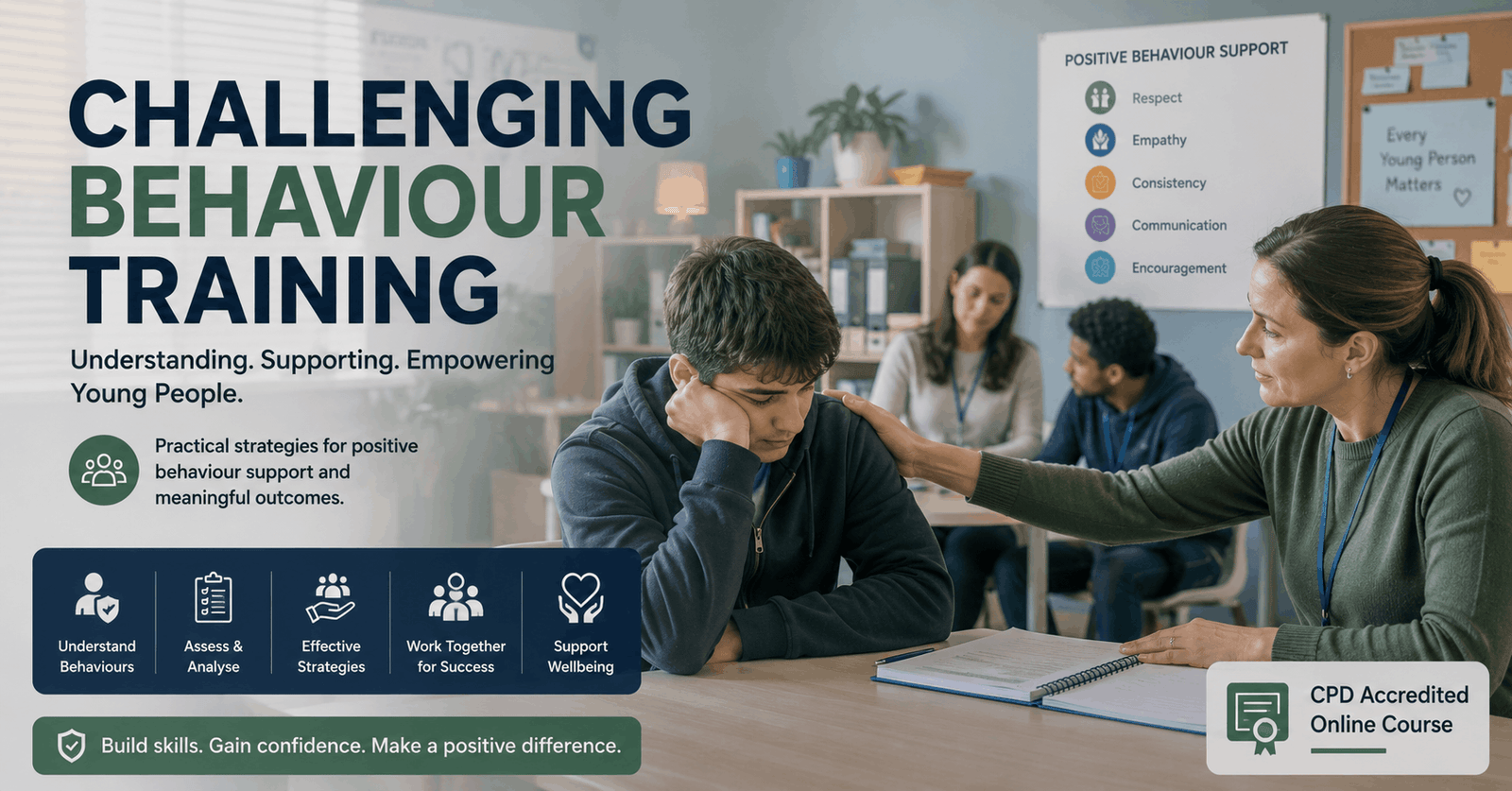
Challenging Behaviour Training is designed to help learners develop the knowledge, confidence, and practical strategies needed to support young people who display emotional, behavioural, or social difficulties in educational, care, and community settings. This professionally structured course explores the causes of challenging behaviour while promoting safe, respectful, and supportive approaches that encourage positive outcomes for young people.
Throughout the programme, learners will gain insight into the emotional, environmental, psychological, and situational factors that may contribute to challenging behaviour. The course introduces evidence-informed approaches to behaviour assessment, including identifying behavioural triggers, recognising patterns, and understanding how communication, relationships, and surroundings can influence behaviour. Learners will also explore practical intervention techniques designed to reduce conflict, encourage emotional regulation, and create more positive interactions.
A strong emphasis is placed on prevention strategies and supportive communication. Learners will study how to establish healthy boundaries, encourage positive reinforcement, and build trusting relationships with young people while maintaining professionalism and safeguarding standards. The course also examines collaboration with parents, caregivers, teachers, and multidisciplinary professionals to ensure consistent and effective support planning.
In addition to behavioural support techniques, the course addresses important legal, ethical, and professional responsibilities related to confidentiality, documentation, and the wellbeing of both young people and support staff. Learners will also explore stress management and self-care strategies to help maintain resilience when working in emotionally demanding environments.
Real-life case studies and scenario-based learning activities help learners apply theoretical concepts to practical situations, encouraging critical thinking and professional problem-solving skills. The flexible online format allows learners to study at their own pace while developing valuable knowledge that can support career progression across education, youth work, social care, and support services.
Learners who successfully complete the course will receive a free course completion certificate. Multiple premium certificate and transcript options are also available for purchase if desired. Students will also benefit from access to 5-star rated support available 24/7 through email.
Who is this course for?
Challenging Behaviour Training is designed to help learners develop the knowledge, confidence, and practical strategies needed to support young people who display emotional, behavioural, or social difficulties in educational, care, and community settings. This professionally structured course explores the causes of challenging behaviour while promoting safe, respectful, and supportive approaches that encourage positive outcomes for young people.
Throughout the programme, learners will gain insight into the emotional, environmental, psychological, and situational factors that may contribute to challenging behaviour. The course introduces evidence-informed approaches to behaviour assessment, including identifying behavioural triggers, recognising patterns, and understanding how communication, relationships, and surroundings can influence behaviour. Learners will also explore practical intervention techniques designed to reduce conflict, encourage emotional regulation, and create more positive interactions.
A strong emphasis is placed on prevention strategies and supportive communication. Learners will study how to establish healthy boundaries, encourage positive reinforcement, and build trusting relationships with young people while maintaining professionalism and safeguarding standards. The course also examines collaboration with parents, caregivers, teachers, and multidisciplinary professionals to ensure consistent and effective support planning.
In addition to behavioural support techniques, the course addresses important legal, ethical, and professional responsibilities related to confidentiality, documentation, and the wellbeing of both young people and support staff. Learners will also explore stress management and self-care strategies to help maintain resilience when working in emotionally demanding environments.
Real-life case studies and scenario-based learning activities help learners apply theoretical concepts to practical situations, encouraging critical thinking and professional problem-solving skills. The flexible online format allows learners to study at their own pace while developing valuable knowledge that can support career progression across education, youth work, social care, and support services.
Learners who successfully complete the course will receive a free course completion certificate. Multiple premium certificate and transcript options are also available for purchase if desired. Students will also benefit from access to 5-star rated support available 24/7 through email.
Requirements
Challenging Behaviour Training is designed to help learners develop the knowledge, confidence, and practical strategies needed to support young people who display emotional, behavioural, or social difficulties in educational, care, and community settings. This professionally structured course explores the causes of challenging behaviour while promoting safe, respectful, and supportive approaches that encourage positive outcomes for young people.
Throughout the programme, learners will gain insight into the emotional, environmental, psychological, and situational factors that may contribute to challenging behaviour. The course introduces evidence-informed approaches to behaviour assessment, including identifying behavioural triggers, recognising patterns, and understanding how communication, relationships, and surroundings can influence behaviour. Learners will also explore practical intervention techniques designed to reduce conflict, encourage emotional regulation, and create more positive interactions.
A strong emphasis is placed on prevention strategies and supportive communication. Learners will study how to establish healthy boundaries, encourage positive reinforcement, and build trusting relationships with young people while maintaining professionalism and safeguarding standards. The course also examines collaboration with parents, caregivers, teachers, and multidisciplinary professionals to ensure consistent and effective support planning.
In addition to behavioural support techniques, the course addresses important legal, ethical, and professional responsibilities related to confidentiality, documentation, and the wellbeing of both young people and support staff. Learners will also explore stress management and self-care strategies to help maintain resilience when working in emotionally demanding environments.
Real-life case studies and scenario-based learning activities help learners apply theoretical concepts to practical situations, encouraging critical thinking and professional problem-solving skills. The flexible online format allows learners to study at their own pace while developing valuable knowledge that can support career progression across education, youth work, social care, and support services.
Learners who successfully complete the course will receive a free course completion certificate. Multiple premium certificate and transcript options are also available for purchase if desired. Students will also benefit from access to 5-star rated support available 24/7 through email.
Career path
Challenging Behaviour Training is designed to help learners develop the knowledge, confidence, and practical strategies needed to support young people who display emotional, behavioural, or social difficulties in educational, care, and community settings. This professionally structured course explores the causes of challenging behaviour while promoting safe, respectful, and supportive approaches that encourage positive outcomes for young people.
Throughout the programme, learners will gain insight into the emotional, environmental, psychological, and situational factors that may contribute to challenging behaviour. The course introduces evidence-informed approaches to behaviour assessment, including identifying behavioural triggers, recognising patterns, and understanding how communication, relationships, and surroundings can influence behaviour. Learners will also explore practical intervention techniques designed to reduce conflict, encourage emotional regulation, and create more positive interactions.
A strong emphasis is placed on prevention strategies and supportive communication. Learners will study how to establish healthy boundaries, encourage positive reinforcement, and build trusting relationships with young people while maintaining professionalism and safeguarding standards. The course also examines collaboration with parents, caregivers, teachers, and multidisciplinary professionals to ensure consistent and effective support planning.
In addition to behavioural support techniques, the course addresses important legal, ethical, and professional responsibilities related to confidentiality, documentation, and the wellbeing of both young people and support staff. Learners will also explore stress management and self-care strategies to help maintain resilience when working in emotionally demanding environments.
Real-life case studies and scenario-based learning activities help learners apply theoretical concepts to practical situations, encouraging critical thinking and professional problem-solving skills. The flexible online format allows learners to study at their own pace while developing valuable knowledge that can support career progression across education, youth work, social care, and support services.
Learners who successfully complete the course will receive a free course completion certificate. Multiple premium certificate and transcript options are also available for purchase if desired. Students will also benefit from access to 5-star rated support available 24/7 through email.
-
- Introduction to challenging behaviour in young people 00:10:00
- Factors contributing to challenging behaviour 00:10:00
- The impact of challenging behaviour on individuals and their environment 00:10:00
- Common misconceptions and stereotypes about challenging behaviour 00:10:00
-
- Identifying underlying causes of challenging behaviour 00:10:00
- Environmental and situational triggers 00:10:00
- Emotional and psychological factors 00:10:00
- The role of genetics and biology 00:10:00
- Methods for assessing and analyzing challenging behaviour 00:10:00
- Functional behaviour assessment (FBA) 00:10:00
- Identifying patterns and antecedents 00:10:00
- Collecting and analyzing data 00:10:00
- Proactive strategies for managing challenging behaviour 00:10:00
- Behaviour modification techniques 00:10:00
- Positive reinforcement and rewards 00:10:00
- De-escalation and crisis intervention 00:10:00
- Recognizing and managing burnout and compassion fatigue 00:10:00
- Stress management techniques 00:10:00
- Seeking support and resources 00:10:00
- Promoting work-life balance 00:10:00
- Analyzing real-life case studies 00:10:00
- Applying strategies and techniques to different scenarios 00:10:00
- Problem-solving and critical thinking exercises 00:10:00
- Exam of Challenging Behaviour of Young People 00:50:00

Is this certificate recognized?
Yes, our premium certificate and transcript are widely recognized and accepted by embassies worldwide, particularly by the UK embassy. This adds credibility to your qualification and enhances its value for professional and academic purposes.
I am a beginner. Is this course suitable for me?
Yes, this course is designed for learners of all levels, including beginners. The content is structured to provide step-by-step guidance, ensuring that even those with no prior experience can follow along and gain valuable knowledge.
I am a professional. Is this course suitable for me?
Yes, professionals will also benefit from this course. It covers advanced concepts, practical applications, and industry insights that can help enhance existing skills and knowledge. Whether you are looking to refine your expertise or expand your qualifications, this course provides valuable learning.
Does this course have an expiry date?
No, you have lifetime access to the course. Once enrolled, you can revisit the materials at any time as long as the course remains available. Additionally, we regularly update our content to ensure it stays relevant and up to date.
How do I claim my free certificate?
I trust you’re in good health. Your free certificate can be located in the Achievement section. The option to purchase a CPD certificate is available but entirely optional, and you may choose to skip it. Please be aware that it’s crucial to click the “Complete” button to ensure the certificate is generated, as this process is entirely automated.
Does this course have assessments and assignments?
Yes, the course includes both assessments and assignments. Your final marks will be determined by a combination of 20% from assignments and 80% from assessments. These evaluations are designed to test your understanding and ensure you have grasped the key concepts effectively.
Is this course accredited?
We are a recognized course provider with CPD, UKRLP, and AOHT membership. The logos of these accreditation bodies will be featured on your premium certificate and transcript, ensuring credibility and professional recognition.
Will I receive a certificate upon completion?
Yes, you will receive a free digital certificate automatically once you complete the course. If you would like a premium CPD-accredited certificate, either in digital or physical format, you can upgrade for a small fee.
Course Features
Price
Study Method
Online | Self-paced
Course Format
Interactive PDFs, Articles & Learning Resources
Duration
7 hours, 35 minutes
Qualification
Professional Skills Development Course
Assessment
Final MCQ Exam (included in price)
Certificate
Verifiable Digital Certificate - Free
Additional info
Lifetime Access | Start Instantly
- Share

Mastering English Grammar for IELTS 7+: Essential Rules & Practice
Course Line237£490.00Original price was: £490.00.£14.99Current price is: £14.99.Midwifery Level 3 Advanced Diploma
Course Line237£490.00Original price was: £490.00.£14.99Current price is: £14.99.ACCA AA: Audit & Assurance Principles Explained
Course Line237£490.00Original price was: £490.00.£14.99Current price is: £14.99.



Related Courses
Level 5 Youth Development Officer Course in Football
£490.00Original price was: £490.00.£14.99Current price is: £14.99.238Level 4 Youth Development Officer Course in Football
£490.00Original price was: £490.00.£14.99Current price is: £14.99.237Level 3 Youth Development Officer Course in Football
£490.00Original price was: £490.00.£14.99Current price is: £14.99.237



Related Courses
Level 5 Youth Development Officer Course in Football
£490.00Original price was: £490.00.£14.99Current price is: £14.99.238Level 4 Youth Development Officer Course in Football
£490.00Original price was: £490.00.£14.99Current price is: £14.99.237Level 3 Youth Development Officer Course in Football
£490.00Original price was: £490.00.£14.99Current price is: £14.99.237


Exam of Challenging Behaviour of Young People
comprehensive but a lot of reading
Very descriptive and clear information
very complete
This training added to my understanding of challenging behaviours. I would recommend!