
Course Features
Price
Study Method
Online | Self-paced
Course Format
Reading Material - PDF, article
Duration
6 hours, 5 minutes
Qualification
No formal qualification
Certificate
At completion
Additional info
Coming soon
- Share
Overview
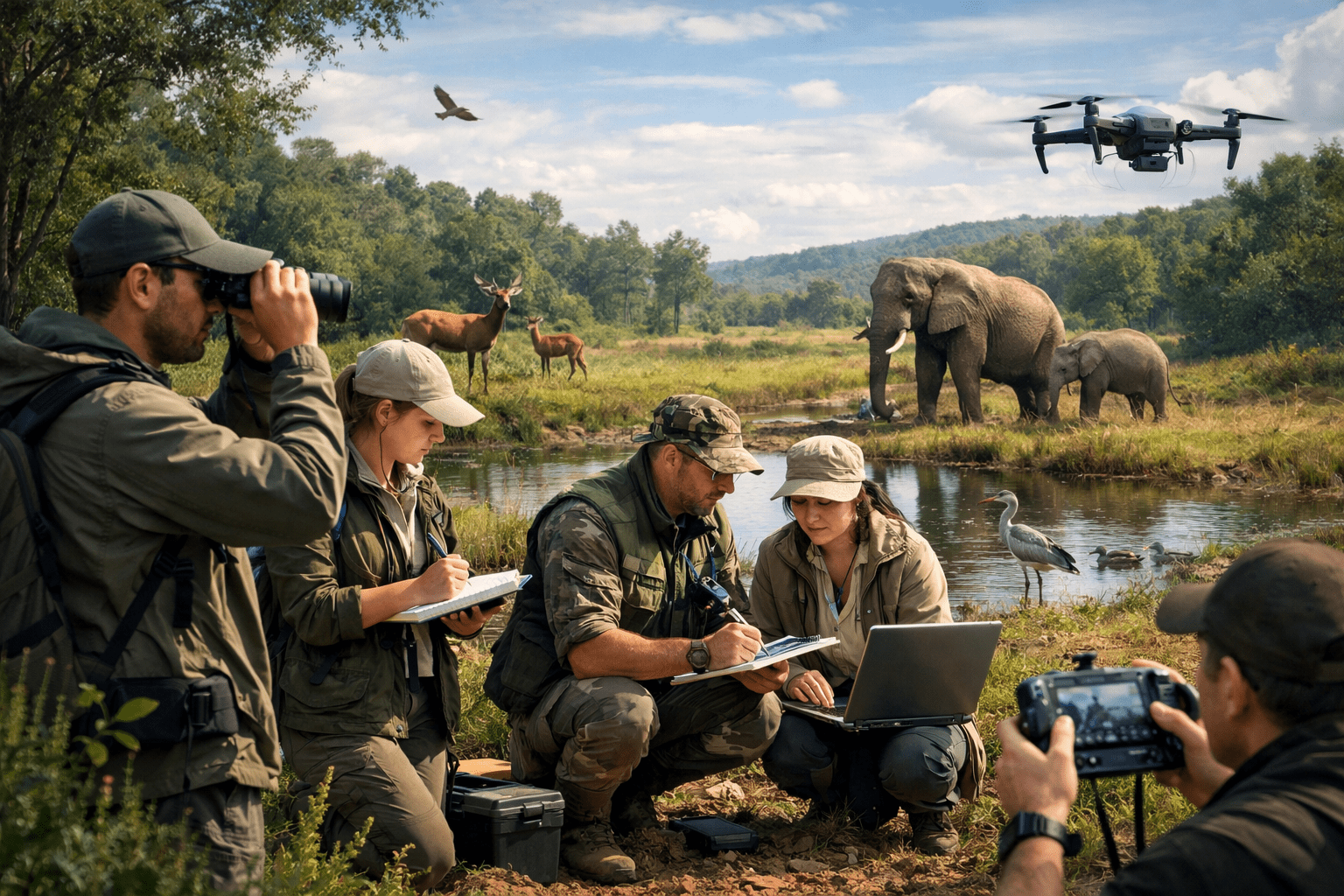
Wildlife Conservation Diploma is a comprehensive Level 3 programme designed to prepare learners for real-world conservation work through a blend of ecological theory, field practice and professional development. This course introduces the scientific principles that underpin wildlife protection while also exploring the social, legal and environmental responsibilities involved in safeguarding natural ecosystems. Learners gain a deep understanding of biodiversity, habitat management and species survival, helping them appreciate how healthy ecosystems support both wildlife and human communities.
Throughout the course, students develop practical skills in wildlife ecology, population monitoring and habitat restoration. They learn how to identify threats such as habitat loss, climate change and human activity, and how to design effective conservation responses. The programme also covers wildlife rehabilitation, equipping learners with knowledge on how injured or displaced animals are assessed, treated and safely returned to the wild. This ensures a balanced education that combines compassion with scientific best practice.
Legal and ethical frameworks are another core element of the Wildlife Conservation Diploma. Learners explore international and national conservation laws, understanding how policy, regulation and enforcement shape modern conservation work. Community engagement is also emphasised, as protecting wildlife requires collaboration between professionals, local communities and organisations. Students discover how awareness campaigns, education initiatives and sustainable development projects contribute to long-term conservation success.
Research and fieldwork training runs throughout the programme, building confidence in data collection, analysis and reporting. These skills are essential for evidence-based conservation, allowing learners to evaluate projects and contribute meaningfully to professional teams. The course concludes with professional development guidance, helping students understand career pathways, networking strategies and opportunities for further study in the conservation sector.
On successful completion, learners will receive a free course completion certificate, with multiple premium certificate and transcript options also available for purchase if desired. Students also benefit from 5-star rated support available 24/7 through email, ensuring expert guidance whenever it is needed.
Graduates may pursue roles such as wildlife conservation assistant, habitat management officer, environmental technician or community conservation coordinator. The qualification also supports progression to higher-level diplomas or university study in wildlife management, ecology, environmental science or conservation biology.
Who is this course for?
Wildlife Conservation Diploma is a comprehensive Level 3 programme designed to prepare learners for real-world conservation work through a blend of ecological theory, field practice and professional development. This course introduces the scientific principles that underpin wildlife protection while also exploring the social, legal and environmental responsibilities involved in safeguarding natural ecosystems. Learners gain a deep understanding of biodiversity, habitat management and species survival, helping them appreciate how healthy ecosystems support both wildlife and human communities.
Throughout the course, students develop practical skills in wildlife ecology, population monitoring and habitat restoration. They learn how to identify threats such as habitat loss, climate change and human activity, and how to design effective conservation responses. The programme also covers wildlife rehabilitation, equipping learners with knowledge on how injured or displaced animals are assessed, treated and safely returned to the wild. This ensures a balanced education that combines compassion with scientific best practice.
Legal and ethical frameworks are another core element of the Wildlife Conservation Diploma. Learners explore international and national conservation laws, understanding how policy, regulation and enforcement shape modern conservation work. Community engagement is also emphasised, as protecting wildlife requires collaboration between professionals, local communities and organisations. Students discover how awareness campaigns, education initiatives and sustainable development projects contribute to long-term conservation success.
Research and fieldwork training runs throughout the programme, building confidence in data collection, analysis and reporting. These skills are essential for evidence-based conservation, allowing learners to evaluate projects and contribute meaningfully to professional teams. The course concludes with professional development guidance, helping students understand career pathways, networking strategies and opportunities for further study in the conservation sector.
On successful completion, learners will receive a free course completion certificate, with multiple premium certificate and transcript options also available for purchase if desired. Students also benefit from 5-star rated support available 24/7 through email, ensuring expert guidance whenever it is needed.
Graduates may pursue roles such as wildlife conservation assistant, habitat management officer, environmental technician or community conservation coordinator. The qualification also supports progression to higher-level diplomas or university study in wildlife management, ecology, environmental science or conservation biology.
Requirements
Wildlife Conservation Diploma is a comprehensive Level 3 programme designed to prepare learners for real-world conservation work through a blend of ecological theory, field practice and professional development. This course introduces the scientific principles that underpin wildlife protection while also exploring the social, legal and environmental responsibilities involved in safeguarding natural ecosystems. Learners gain a deep understanding of biodiversity, habitat management and species survival, helping them appreciate how healthy ecosystems support both wildlife and human communities.
Throughout the course, students develop practical skills in wildlife ecology, population monitoring and habitat restoration. They learn how to identify threats such as habitat loss, climate change and human activity, and how to design effective conservation responses. The programme also covers wildlife rehabilitation, equipping learners with knowledge on how injured or displaced animals are assessed, treated and safely returned to the wild. This ensures a balanced education that combines compassion with scientific best practice.
Legal and ethical frameworks are another core element of the Wildlife Conservation Diploma. Learners explore international and national conservation laws, understanding how policy, regulation and enforcement shape modern conservation work. Community engagement is also emphasised, as protecting wildlife requires collaboration between professionals, local communities and organisations. Students discover how awareness campaigns, education initiatives and sustainable development projects contribute to long-term conservation success.
Research and fieldwork training runs throughout the programme, building confidence in data collection, analysis and reporting. These skills are essential for evidence-based conservation, allowing learners to evaluate projects and contribute meaningfully to professional teams. The course concludes with professional development guidance, helping students understand career pathways, networking strategies and opportunities for further study in the conservation sector.
On successful completion, learners will receive a free course completion certificate, with multiple premium certificate and transcript options also available for purchase if desired. Students also benefit from 5-star rated support available 24/7 through email, ensuring expert guidance whenever it is needed.
Graduates may pursue roles such as wildlife conservation assistant, habitat management officer, environmental technician or community conservation coordinator. The qualification also supports progression to higher-level diplomas or university study in wildlife management, ecology, environmental science or conservation biology.
Career path
Wildlife Conservation Diploma is a comprehensive Level 3 programme designed to prepare learners for real-world conservation work through a blend of ecological theory, field practice and professional development. This course introduces the scientific principles that underpin wildlife protection while also exploring the social, legal and environmental responsibilities involved in safeguarding natural ecosystems. Learners gain a deep understanding of biodiversity, habitat management and species survival, helping them appreciate how healthy ecosystems support both wildlife and human communities.
Throughout the course, students develop practical skills in wildlife ecology, population monitoring and habitat restoration. They learn how to identify threats such as habitat loss, climate change and human activity, and how to design effective conservation responses. The programme also covers wildlife rehabilitation, equipping learners with knowledge on how injured or displaced animals are assessed, treated and safely returned to the wild. This ensures a balanced education that combines compassion with scientific best practice.
Legal and ethical frameworks are another core element of the Wildlife Conservation Diploma. Learners explore international and national conservation laws, understanding how policy, regulation and enforcement shape modern conservation work. Community engagement is also emphasised, as protecting wildlife requires collaboration between professionals, local communities and organisations. Students discover how awareness campaigns, education initiatives and sustainable development projects contribute to long-term conservation success.
Research and fieldwork training runs throughout the programme, building confidence in data collection, analysis and reporting. These skills are essential for evidence-based conservation, allowing learners to evaluate projects and contribute meaningfully to professional teams. The course concludes with professional development guidance, helping students understand career pathways, networking strategies and opportunities for further study in the conservation sector.
On successful completion, learners will receive a free course completion certificate, with multiple premium certificate and transcript options also available for purchase if desired. Students also benefit from 5-star rated support available 24/7 through email, ensuring expert guidance whenever it is needed.
Graduates may pursue roles such as wildlife conservation assistant, habitat management officer, environmental technician or community conservation coordinator. The qualification also supports progression to higher-level diplomas or university study in wildlife management, ecology, environmental science or conservation biology.
-
- Definition and scope of wildlife conservation 00:10:00
- History of wildlife conservation 00:10:00
- Current challenges and threats to wildlife conservation 00:10:00
-
- Basic principles of wildlife ecology 00:10:00
- Interactions between wildlife and their environment 00:10:00
- Biodiversity and conservation 00:10:00
- Principles of habitat management 00:10:00
- Habitat loss and fragmentation 00:10:00
- Habitat restoration and enhancement 00:10:00
- Principles of population management 00:10:00
- Monitoring and survey techniques 00:10:00
- Managing populations for sustainability 00:10:00
- The importance of community engagement in conservation 00:10:00
- Developing and implementing community engagement programs 00:10:00
- Case studies of successful community engagement initiatives 00:10:00
- Planning and implementing conservation projects 00:10:00
- Evaluation and monitoring of conservation projects 00:10:00
- Case studies of successful conservation projects 00:10:00
- Exam of Wildlife Conservation Level 3 Advanced Diploma 00:50:00

No Reviews found for this course.
Is this certificate recognized?
Yes, our premium certificate and transcript are widely recognized and accepted by embassies worldwide, particularly by the UK embassy. This adds credibility to your qualification and enhances its value for professional and academic purposes.
I am a beginner. Is this course suitable for me?
Yes, this course is designed for learners of all levels, including beginners. The content is structured to provide step-by-step guidance, ensuring that even those with no prior experience can follow along and gain valuable knowledge.
I am a professional. Is this course suitable for me?
Yes, professionals will also benefit from this course. It covers advanced concepts, practical applications, and industry insights that can help enhance existing skills and knowledge. Whether you are looking to refine your expertise or expand your qualifications, this course provides valuable learning.
Does this course have an expiry date?
No, you have lifetime access to the course. Once enrolled, you can revisit the materials at any time as long as the course remains available. Additionally, we regularly update our content to ensure it stays relevant and up to date.
How do I claim my free certificate?
I trust you’re in good health. Your free certificate can be located in the Achievement section. The option to purchase a CPD certificate is available but entirely optional, and you may choose to skip it. Please be aware that it’s crucial to click the “Complete” button to ensure the certificate is generated, as this process is entirely automated.
Does this course have assessments and assignments?
Yes, the course includes both assessments and assignments. Your final marks will be determined by a combination of 20% from assignments and 80% from assessments. These evaluations are designed to test your understanding and ensure you have grasped the key concepts effectively.
Is this course accredited?
We are a recognized course provider with CPD, UKRLP, and AOHT membership. The logos of these accreditation bodies will be featured on your premium certificate and transcript, ensuring credibility and professional recognition.
Will I receive a certificate upon completion?
Yes, you will receive a free digital certificate automatically once you complete the course. If you would like a premium CPD-accredited certificate, either in digital or physical format, you can upgrade for a small fee.
Course Features
Price
Study Method
Online | Self-paced
Course Format
Reading Material - PDF, article
Duration
6 hours, 5 minutes
Qualification
No formal qualification
Certificate
At completion
Additional info
Coming soon
- Share

Safety Procedures in The Workplace
Course Line237£490.00Original price was: £490.00.£14.99Current price is: £14.99.Jewellery Making Level 5 Advanced Diploma
Course Line238£490.00Original price was: £490.00.£14.99Current price is: £14.99.Learning Disability Nursing Level 3 Advanced Diploma
Course Line243£490.00Original price was: £490.00.£14.99Current price is: £14.99.



Related Courses
Pet Training & Behaviour Mastery: Dogs, Cats, Rabbits & Pet First Aid
£490.00Original price was: £490.00.£14.99Current price is: £14.99.237Level 7 Advanced Diploma in Veterinary Science
£490.00Original price was: £490.00.£14.99Current price is: £14.99.238ISO-Conforming Life Management System Foundation: Leadership, Sustainability & Success
£490.00Original price was: £490.00.£14.99Current price is: £14.99.237


Related Courses
Pet Training & Behaviour Mastery: Dogs, Cats, Rabbits & Pet First Aid
£490.00Original price was: £490.00.£14.99Current price is: £14.99.237Level 7 Advanced Diploma in Veterinary Science
£490.00Original price was: £490.00.£14.99Current price is: £14.99.238ISO-Conforming Life Management System Foundation: Leadership, Sustainability & Success
£490.00Original price was: £490.00.£14.99Current price is: £14.99.237

