
Course Features
Price
Study Method
Online | Self-paced
Course Format
Reading Material - PDF, article
Duration
6 hours, 5 minutes
Qualification
No formal qualification
Certificate
At completion
Additional info
Coming soon
- Share
Overview
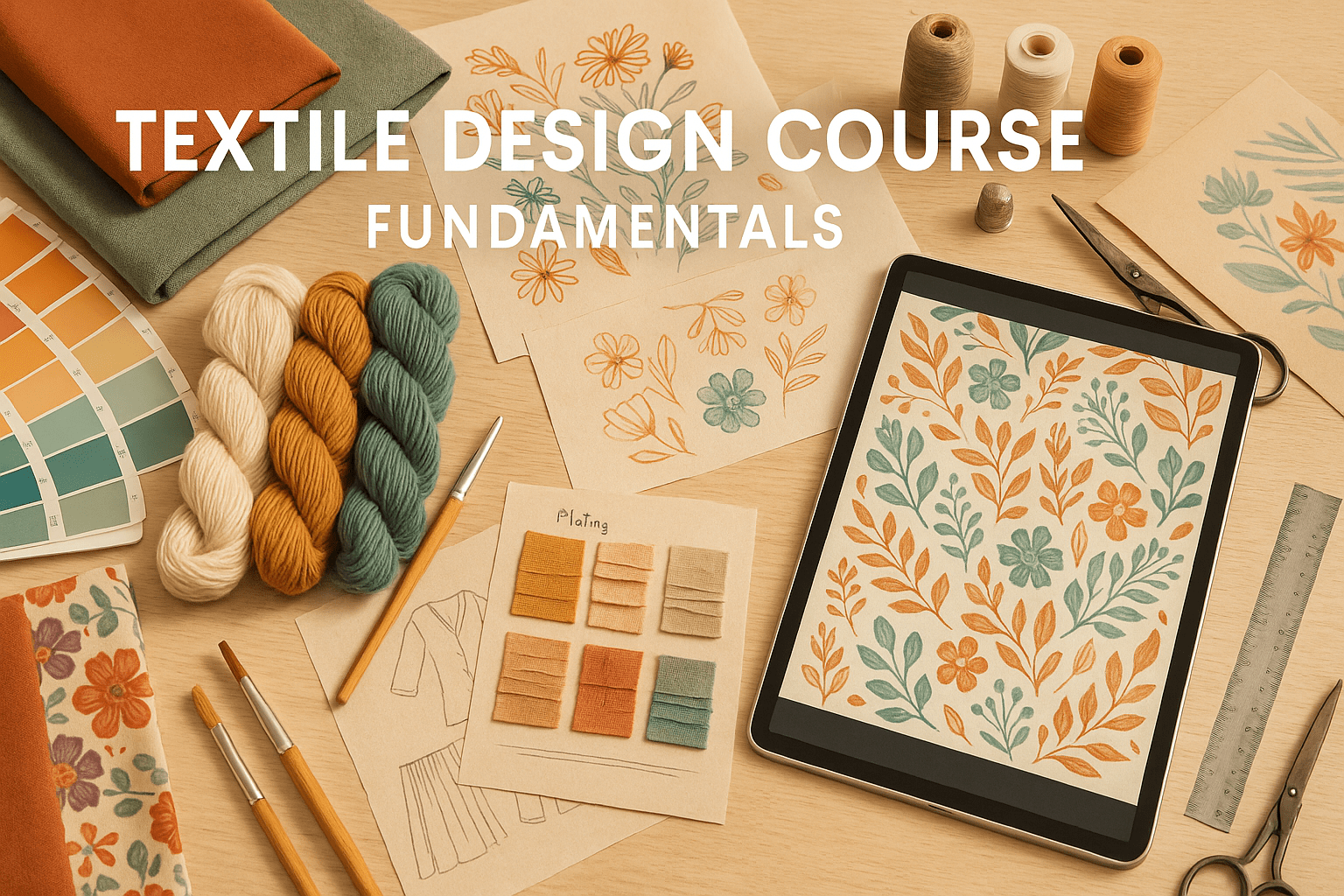
Textile Design Fundamentals introduces learners to the creative, technical, and professional world of textile design, guiding them from early inspiration through to the final creation of textile concepts. The course explores the artistic foundations behind textile design, including the role of research, colour theory, material selection, creative thinking, and the essential principles that shape high-quality textile outcomes. Learners gain a practical understanding of how textile designers build ideas, experiment with textures, refine patterns, and produce compelling designs for a wide range of industries.
Throughout the programme, students explore multiple areas of textile design development. They learn how to identify sources of inspiration, analyse references, and transform raw ideas into structured concepts. The course also highlights the importance of understanding material properties, teaching learners how fibres, fabrics, and sustainable materials influence design choices. A strong focus is placed on design principles and elements, enabling learners to create balanced, visually appealing textile compositions using shape, colour, pattern, and texture.
Learners also develop hands-on knowledge of key techniques such as surface design, fabric manipulation, digital textile design, and the integration of handcrafted and digital methods. These practical skills ensure students can produce original patterns and build a portfolio that reflects their creative identity. Industry-focused modules introduce learners to the applications of textile design across fashion, interiors, and related creative sectors, as well as the ethical and cultural considerations that shape responsible design practice today.
By the end of the course, students will be able to approach textile design projects with confidence, using both traditional and modern tools to bring their ideas to life. The programme also supports portfolio development, helping learners prepare their work for academic, freelance, or industry opportunities.
Upon successful completion, learners receive a free course completion certificate, with the option to purchase multiple premium certificates and transcripts if they wish. All students also receive 5-star rated support available 24/7 through email, ensuring guidance is always accessible throughout their learning journey.
This course is ideal for aspiring textile designers, fashion students, craft enthusiasts, and anyone interested in developing creative design skills. It suits beginners exploring textile design for the first time and individuals wanting to build a strong foundation before entering advanced programmes or creative industries. No prior textile experience is required.
Who is this course for?
Textile Design Fundamentals introduces learners to the creative, technical, and professional world of textile design, guiding them from early inspiration through to the final creation of textile concepts. The course explores the artistic foundations behind textile design, including the role of research, colour theory, material selection, creative thinking, and the essential principles that shape high-quality textile outcomes. Learners gain a practical understanding of how textile designers build ideas, experiment with textures, refine patterns, and produce compelling designs for a wide range of industries.
Throughout the programme, students explore multiple areas of textile design development. They learn how to identify sources of inspiration, analyse references, and transform raw ideas into structured concepts. The course also highlights the importance of understanding material properties, teaching learners how fibres, fabrics, and sustainable materials influence design choices. A strong focus is placed on design principles and elements, enabling learners to create balanced, visually appealing textile compositions using shape, colour, pattern, and texture.
Learners also develop hands-on knowledge of key techniques such as surface design, fabric manipulation, digital textile design, and the integration of handcrafted and digital methods. These practical skills ensure students can produce original patterns and build a portfolio that reflects their creative identity. Industry-focused modules introduce learners to the applications of textile design across fashion, interiors, and related creative sectors, as well as the ethical and cultural considerations that shape responsible design practice today.
By the end of the course, students will be able to approach textile design projects with confidence, using both traditional and modern tools to bring their ideas to life. The programme also supports portfolio development, helping learners prepare their work for academic, freelance, or industry opportunities.
Upon successful completion, learners receive a free course completion certificate, with the option to purchase multiple premium certificates and transcripts if they wish. All students also receive 5-star rated support available 24/7 through email, ensuring guidance is always accessible throughout their learning journey.
This course is ideal for aspiring textile designers, fashion students, craft enthusiasts, and anyone interested in developing creative design skills. It suits beginners exploring textile design for the first time and individuals wanting to build a strong foundation before entering advanced programmes or creative industries. No prior textile experience is required.
Requirements
Textile Design Fundamentals introduces learners to the creative, technical, and professional world of textile design, guiding them from early inspiration through to the final creation of textile concepts. The course explores the artistic foundations behind textile design, including the role of research, colour theory, material selection, creative thinking, and the essential principles that shape high-quality textile outcomes. Learners gain a practical understanding of how textile designers build ideas, experiment with textures, refine patterns, and produce compelling designs for a wide range of industries.
Throughout the programme, students explore multiple areas of textile design development. They learn how to identify sources of inspiration, analyse references, and transform raw ideas into structured concepts. The course also highlights the importance of understanding material properties, teaching learners how fibres, fabrics, and sustainable materials influence design choices. A strong focus is placed on design principles and elements, enabling learners to create balanced, visually appealing textile compositions using shape, colour, pattern, and texture.
Learners also develop hands-on knowledge of key techniques such as surface design, fabric manipulation, digital textile design, and the integration of handcrafted and digital methods. These practical skills ensure students can produce original patterns and build a portfolio that reflects their creative identity. Industry-focused modules introduce learners to the applications of textile design across fashion, interiors, and related creative sectors, as well as the ethical and cultural considerations that shape responsible design practice today.
By the end of the course, students will be able to approach textile design projects with confidence, using both traditional and modern tools to bring their ideas to life. The programme also supports portfolio development, helping learners prepare their work for academic, freelance, or industry opportunities.
Upon successful completion, learners receive a free course completion certificate, with the option to purchase multiple premium certificates and transcripts if they wish. All students also receive 5-star rated support available 24/7 through email, ensuring guidance is always accessible throughout their learning journey.
This course is ideal for aspiring textile designers, fashion students, craft enthusiasts, and anyone interested in developing creative design skills. It suits beginners exploring textile design for the first time and individuals wanting to build a strong foundation before entering advanced programmes or creative industries. No prior textile experience is required.
Career path
Textile Design Fundamentals introduces learners to the creative, technical, and professional world of textile design, guiding them from early inspiration through to the final creation of textile concepts. The course explores the artistic foundations behind textile design, including the role of research, colour theory, material selection, creative thinking, and the essential principles that shape high-quality textile outcomes. Learners gain a practical understanding of how textile designers build ideas, experiment with textures, refine patterns, and produce compelling designs for a wide range of industries.
Throughout the programme, students explore multiple areas of textile design development. They learn how to identify sources of inspiration, analyse references, and transform raw ideas into structured concepts. The course also highlights the importance of understanding material properties, teaching learners how fibres, fabrics, and sustainable materials influence design choices. A strong focus is placed on design principles and elements, enabling learners to create balanced, visually appealing textile compositions using shape, colour, pattern, and texture.
Learners also develop hands-on knowledge of key techniques such as surface design, fabric manipulation, digital textile design, and the integration of handcrafted and digital methods. These practical skills ensure students can produce original patterns and build a portfolio that reflects their creative identity. Industry-focused modules introduce learners to the applications of textile design across fashion, interiors, and related creative sectors, as well as the ethical and cultural considerations that shape responsible design practice today.
By the end of the course, students will be able to approach textile design projects with confidence, using both traditional and modern tools to bring their ideas to life. The programme also supports portfolio development, helping learners prepare their work for academic, freelance, or industry opportunities.
Upon successful completion, learners receive a free course completion certificate, with the option to purchase multiple premium certificates and transcripts if they wish. All students also receive 5-star rated support available 24/7 through email, ensuring guidance is always accessible throughout their learning journey.
This course is ideal for aspiring textile designers, fashion students, craft enthusiasts, and anyone interested in developing creative design skills. It suits beginners exploring textile design for the first time and individuals wanting to build a strong foundation before entering advanced programmes or creative industries. No prior textile experience is required.
-
- What is Textile Design? 00:10:00
- Importance of Textile Design in Various Industries 00:10:00
- Historical Overview of Textile Design 00:10:00
-
- Sources of Inspiration in Textile Design 00:10:00
- Developing a Creative Mindset 00:10:00
- Research Techniques for Textile Design Inspiration 00:10:00
- Types of Textile Fibers 00:10:00
- Properties of Different Textile Materials 00:10:00
- Sustainability in Textile Design 00:10:00
- Introduction to Textile Design Techniques 00:10:00
- Surface Design Techniques (e.g., printing, dyeing) 00:10:00
- Fabric Manipulation Techniques (e.g., pleating, smocking) 00:10:00
- Importance of a Textile Design Portfolio 00:10:00
- Creating a Cohesive Portfolio 00:10:00
- Presenting Your Work Effectively 00:10:00
- Ethical Practices in Textile Design 00:10:00
- Cultural Sensitivity in Design 00:10:00
- Trends in Sustainable and Ethical Textile Design 00:10:00
- Exam of Textile Design Fundamentals: From Inspiration to Creation 00:50:00

No Reviews found for this course.
Is this certificate recognized?
Yes, our premium certificate and transcript are widely recognized and accepted by embassies worldwide, particularly by the UK embassy. This adds credibility to your qualification and enhances its value for professional and academic purposes.
I am a beginner. Is this course suitable for me?
Yes, this course is designed for learners of all levels, including beginners. The content is structured to provide step-by-step guidance, ensuring that even those with no prior experience can follow along and gain valuable knowledge.
I am a professional. Is this course suitable for me?
Yes, professionals will also benefit from this course. It covers advanced concepts, practical applications, and industry insights that can help enhance existing skills and knowledge. Whether you are looking to refine your expertise or expand your qualifications, this course provides valuable learning.
Does this course have an expiry date?
No, you have lifetime access to the course. Once enrolled, you can revisit the materials at any time as long as the course remains available. Additionally, we regularly update our content to ensure it stays relevant and up to date.
How do I claim my free certificate?
I trust you’re in good health. Your free certificate can be located in the Achievement section. The option to purchase a CPD certificate is available but entirely optional, and you may choose to skip it. Please be aware that it’s crucial to click the “Complete” button to ensure the certificate is generated, as this process is entirely automated.
Does this course have assessments and assignments?
Yes, the course includes both assessments and assignments. Your final marks will be determined by a combination of 20% from assignments and 80% from assessments. These evaluations are designed to test your understanding and ensure you have grasped the key concepts effectively.
Is this course accredited?
We are a recognized course provider with CPD, UKRLP, and AOHT membership. The logos of these accreditation bodies will be featured on your premium certificate and transcript, ensuring credibility and professional recognition.
Will I receive a certificate upon completion?
Yes, you will receive a free digital certificate automatically once you complete the course. If you would like a premium CPD-accredited certificate, either in digital or physical format, you can upgrade for a small fee.
Course Features
Price
Study Method
Online | Self-paced
Course Format
Reading Material - PDF, article
Duration
6 hours, 5 minutes
Qualification
No formal qualification
Certificate
At completion
Additional info
Coming soon
- Share

Positive Psychology Practitioner Certificate – Theory, Application & Human Flourishing
Kazi Shofi Uddin Bablu237$652.44Original price was: $652.44.$19.96Current price is: $19.96.RSPH: Level 2 Award in Nutrition & Health (CPD Focus)
Course Line237$652.44Original price was: $652.44.$19.96Current price is: $19.96.Pattern Cutting for Fashion Designers
Course Line241$652.44Original price was: $652.44.$19.96Current price is: $19.96.


Related Courses
AutoCAD Floor Plan Rendering in Photoshop: Architectural Visualisation Professional Training
$652.44Original price was: $652.44.$19.96Current price is: $19.96.237Professional Photography Masterclass: Camera, Lighting, Composition & Portraits
$652.44Original price was: $652.44.$19.96Current price is: $19.96.237Adobe Photoshop CC MasterClass: From Beginner to Advanced Digital Artist
$652.44Original price was: $652.44.$19.96Current price is: $19.96.237




Related Courses
AutoCAD Floor Plan Rendering in Photoshop: Architectural Visualisation Professional Training
$652.44Original price was: $652.44.$19.96Current price is: $19.96.237Professional Photography Masterclass: Camera, Lighting, Composition & Portraits
$652.44Original price was: $652.44.$19.96Current price is: $19.96.237Adobe Photoshop CC MasterClass: From Beginner to Advanced Digital Artist
$652.44Original price was: $652.44.$19.96Current price is: $19.96.237

