
Course Features
Price
Study Method
Online | Self-paced
Course Format
Reading Material - PDF, article
Duration
4 hours, 56 minutes
Qualification
No formal qualification
Certificate
At completion
Additional info
Coming soon
- Share
Overview
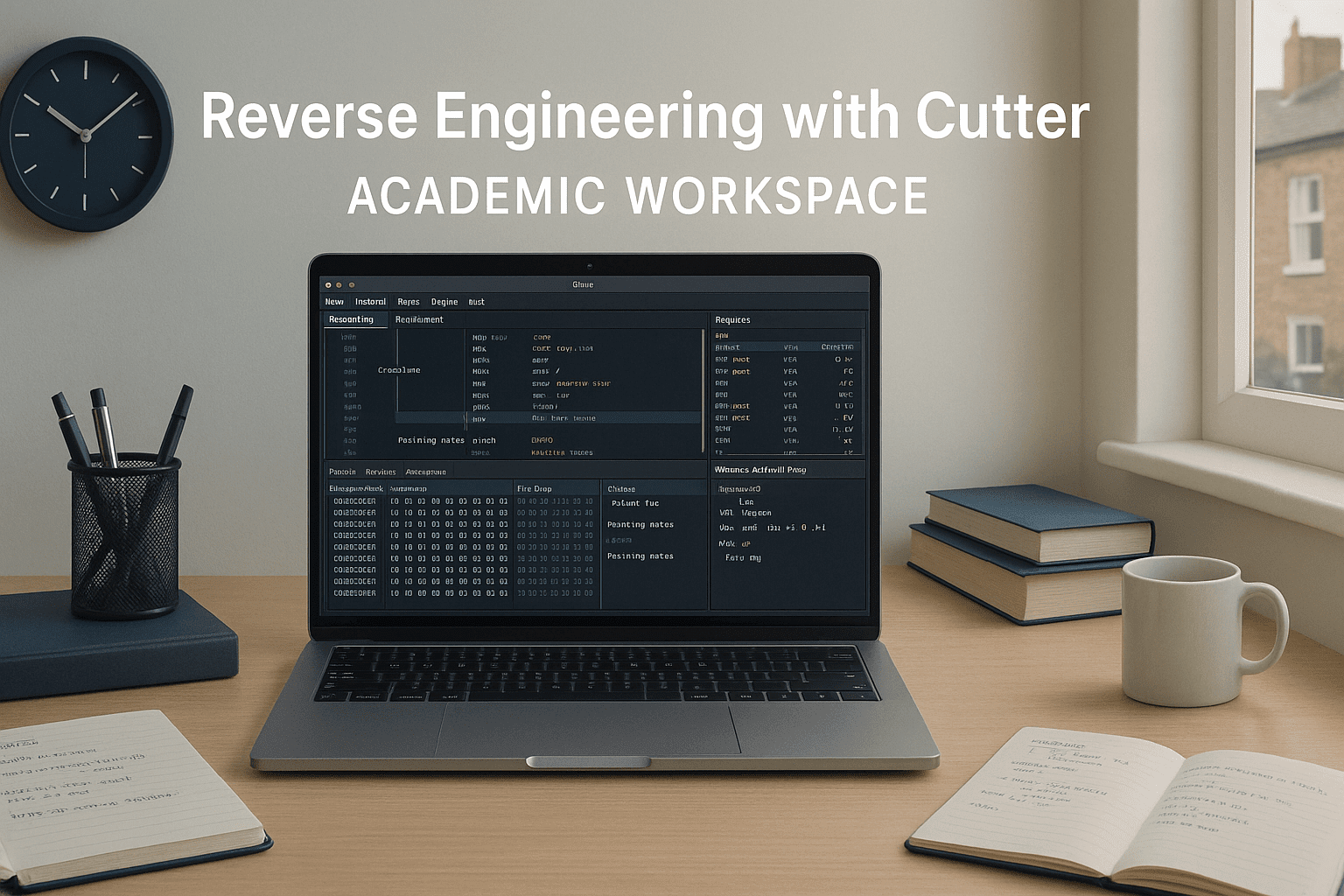
Reverse engineering cutter skills are increasingly valuable for anyone interested in understanding how software behaves beneath the surface, especially when analysing CrackMes, exploring binaries, or learning how modern tools reveal program logic. This beginner-friendly course offers a clear, structured path into the world of static and dynamic analysis using Cutter and its Rizin backend. Instead of overwhelming learners with low-level theory, the course focuses on practical, hands-on workflows that allow you to build confidence through real experience.
You will gradually learn how to install Cutter across different platforms, navigate its interface, and interpret disassembly, strings, registers, and memory layouts. Throughout the course, each module introduces real CrackMe challenges that mirror the troubleshooting steps used by reverse engineers in the field. You will explore essential debugging techniques, breakpoints, stepping through execution, and identifying common control-flow patterns such as conditional jumps. These skills will help you recognise how simple protections work and how to bypass them in an ethical, responsible learning environment.
The course also covers patching fundamentals, including modifying instructions, using NOP sequences, adjusting registers, and applying XOR-based tweaks to influence program outcomes. GUI CrackMes, Windows API calls, stack analysis, and parameter tracing are introduced in a progressive, easy-to-follow manner. You will even learn how to extract serial keys, reconstruct values from hexdumps, rename functions for clearer analysis, and use the Rizin console and rax2 to support your workflow.
By the end of the programme, you will have a practical toolkit for exploring binaries, understanding how protections operate, debugging step-by-step, and performing structured analysis using Cutter. Upon completion, every learner will receive a free course completion certificate, with optional premium certificates and transcripts available for purchase. Students also enjoy 5-star rated support, available 24/7 by email to assist with their learning experience.
Who is this course for?
Reverse engineering cutter skills are increasingly valuable for anyone interested in understanding how software behaves beneath the surface, especially when analysing CrackMes, exploring binaries, or learning how modern tools reveal program logic. This beginner-friendly course offers a clear, structured path into the world of static and dynamic analysis using Cutter and its Rizin backend. Instead of overwhelming learners with low-level theory, the course focuses on practical, hands-on workflows that allow you to build confidence through real experience.
You will gradually learn how to install Cutter across different platforms, navigate its interface, and interpret disassembly, strings, registers, and memory layouts. Throughout the course, each module introduces real CrackMe challenges that mirror the troubleshooting steps used by reverse engineers in the field. You will explore essential debugging techniques, breakpoints, stepping through execution, and identifying common control-flow patterns such as conditional jumps. These skills will help you recognise how simple protections work and how to bypass them in an ethical, responsible learning environment.
The course also covers patching fundamentals, including modifying instructions, using NOP sequences, adjusting registers, and applying XOR-based tweaks to influence program outcomes. GUI CrackMes, Windows API calls, stack analysis, and parameter tracing are introduced in a progressive, easy-to-follow manner. You will even learn how to extract serial keys, reconstruct values from hexdumps, rename functions for clearer analysis, and use the Rizin console and rax2 to support your workflow.
By the end of the programme, you will have a practical toolkit for exploring binaries, understanding how protections operate, debugging step-by-step, and performing structured analysis using Cutter. Upon completion, every learner will receive a free course completion certificate, with optional premium certificates and transcripts available for purchase. Students also enjoy 5-star rated support, available 24/7 by email to assist with their learning experience.
Requirements
Reverse engineering cutter skills are increasingly valuable for anyone interested in understanding how software behaves beneath the surface, especially when analysing CrackMes, exploring binaries, or learning how modern tools reveal program logic. This beginner-friendly course offers a clear, structured path into the world of static and dynamic analysis using Cutter and its Rizin backend. Instead of overwhelming learners with low-level theory, the course focuses on practical, hands-on workflows that allow you to build confidence through real experience.
You will gradually learn how to install Cutter across different platforms, navigate its interface, and interpret disassembly, strings, registers, and memory layouts. Throughout the course, each module introduces real CrackMe challenges that mirror the troubleshooting steps used by reverse engineers in the field. You will explore essential debugging techniques, breakpoints, stepping through execution, and identifying common control-flow patterns such as conditional jumps. These skills will help you recognise how simple protections work and how to bypass them in an ethical, responsible learning environment.
The course also covers patching fundamentals, including modifying instructions, using NOP sequences, adjusting registers, and applying XOR-based tweaks to influence program outcomes. GUI CrackMes, Windows API calls, stack analysis, and parameter tracing are introduced in a progressive, easy-to-follow manner. You will even learn how to extract serial keys, reconstruct values from hexdumps, rename functions for clearer analysis, and use the Rizin console and rax2 to support your workflow.
By the end of the programme, you will have a practical toolkit for exploring binaries, understanding how protections operate, debugging step-by-step, and performing structured analysis using Cutter. Upon completion, every learner will receive a free course completion certificate, with optional premium certificates and transcripts available for purchase. Students also enjoy 5-star rated support, available 24/7 by email to assist with their learning experience.
Career path
Reverse engineering cutter skills are increasingly valuable for anyone interested in understanding how software behaves beneath the surface, especially when analysing CrackMes, exploring binaries, or learning how modern tools reveal program logic. This beginner-friendly course offers a clear, structured path into the world of static and dynamic analysis using Cutter and its Rizin backend. Instead of overwhelming learners with low-level theory, the course focuses on practical, hands-on workflows that allow you to build confidence through real experience.
You will gradually learn how to install Cutter across different platforms, navigate its interface, and interpret disassembly, strings, registers, and memory layouts. Throughout the course, each module introduces real CrackMe challenges that mirror the troubleshooting steps used by reverse engineers in the field. You will explore essential debugging techniques, breakpoints, stepping through execution, and identifying common control-flow patterns such as conditional jumps. These skills will help you recognise how simple protections work and how to bypass them in an ethical, responsible learning environment.
The course also covers patching fundamentals, including modifying instructions, using NOP sequences, adjusting registers, and applying XOR-based tweaks to influence program outcomes. GUI CrackMes, Windows API calls, stack analysis, and parameter tracing are introduced in a progressive, easy-to-follow manner. You will even learn how to extract serial keys, reconstruct values from hexdumps, rename functions for clearer analysis, and use the Rizin console and rax2 to support your workflow.
By the end of the programme, you will have a practical toolkit for exploring binaries, understanding how protections operate, debugging step-by-step, and performing structured analysis using Cutter. Upon completion, every learner will receive a free course completion certificate, with optional premium certificates and transcripts available for purchase. Students also enjoy 5-star rated support, available 24/7 by email to assist with their learning experience.
-
- Welcome & Course Overview 00:10:00
-
- Downloading Cutter (Windows) and verifying installation 00:10:00
- Downloading legal CrackMe samples and lab files 00:10:00
- Exploring Cutter’s interface (views, panels, basic navigation) 00:10:00
- Setting breakpoints and stepping over instructions 00:10:00
- Safely replacing jumps with NOPs and testing changes 00:01:00
- Finding GUI strings, mapping buttons to functions 00:10:00
- Using xor eax, eax and register 00:10:00
- Installing Cutter (Linux) and dependencies 00:10:00
- Rename functions, variables, and add comments 00:10:00
- Using the integrated Rizin console and rax2 00:10:00
- How and when to step into calls to follow logic deeper 00:10:00
- Further reading, CTF sites, practice CrackMes 00:10:00
- Premium Certificate 00:15:00

No Reviews found for this course.
Is this certificate recognized?
Yes, our premium certificate and transcript are widely recognized and accepted by embassies worldwide, particularly by the UK embassy. This adds credibility to your qualification and enhances its value for professional and academic purposes.
I am a beginner. Is this course suitable for me?
Yes, this course is designed for learners of all levels, including beginners. The content is structured to provide step-by-step guidance, ensuring that even those with no prior experience can follow along and gain valuable knowledge.
I am a professional. Is this course suitable for me?
Yes, professionals will also benefit from this course. It covers advanced concepts, practical applications, and industry insights that can help enhance existing skills and knowledge. Whether you are looking to refine your expertise or expand your qualifications, this course provides valuable learning.
Does this course have an expiry date?
No, you have lifetime access to the course. Once enrolled, you can revisit the materials at any time as long as the course remains available. Additionally, we regularly update our content to ensure it stays relevant and up to date.
How do I claim my free certificate?
I trust you’re in good health. Your free certificate can be located in the Achievement section. The option to purchase a CPD certificate is available but entirely optional, and you may choose to skip it. Please be aware that it’s crucial to click the “Complete” button to ensure the certificate is generated, as this process is entirely automated.
Does this course have assessments and assignments?
Yes, the course includes both assessments and assignments. Your final marks will be determined by a combination of 20% from assignments and 80% from assessments. These evaluations are designed to test your understanding and ensure you have grasped the key concepts effectively.
Is this course accredited?
We are a recognized course provider with CPD, UKRLP, and AOHT membership. The logos of these accreditation bodies will be featured on your premium certificate and transcript, ensuring credibility and professional recognition.
Will I receive a certificate upon completion?
Yes, you will receive a free digital certificate automatically once you complete the course. If you would like a premium CPD-accredited certificate, either in digital or physical format, you can upgrade for a small fee.
Course Features
Price
Study Method
Online | Self-paced
Course Format
Reading Material - PDF, article
Duration
4 hours, 56 minutes
Qualification
No formal qualification
Certificate
At completion
Additional info
Coming soon
- Share

Business Administration Level 2
Course Line259£490.00Original price was: £490.00.£14.99Current price is: £14.99.Uniform System of Accounting for Lodging Industries: Food & Beverage Financial Management Part 2
Course Line237£490.00Original price was: £490.00.£14.99Current price is: £14.99.Electrical Engineering Level 3 Advanced Diploma
Course Line258£490.00Original price was: £490.00.£14.99Current price is: £14.99.


Related Courses
C++ Programming for Beginners: From Zero to AI-Ready Developer
£490.00Original price was: £490.00.£14.99Current price is: £14.99.237Microsoft SQL Server & T-SQL Certification Training: Beginner to Advanced
£490.00Original price was: £490.00.£14.99Current price is: £14.99.237Full Stack Web Developer Bootcamp: HTML, JavaScript, PHP & MySQL
£490.00Original price was: £490.00.£14.99Current price is: £14.99.237




Related Courses
C++ Programming for Beginners: From Zero to AI-Ready Developer
£490.00Original price was: £490.00.£14.99Current price is: £14.99.237Microsoft SQL Server & T-SQL Certification Training: Beginner to Advanced
£490.00Original price was: £490.00.£14.99Current price is: £14.99.237Full Stack Web Developer Bootcamp: HTML, JavaScript, PHP & MySQL
£490.00Original price was: £490.00.£14.99Current price is: £14.99.237

