
Course Features
Price
Study Method
Online | Self-paced
Course Format
Reading Material - PDF, article
Duration
3 hours, 55 minutes
Qualification
No formal qualification
Certificate
At completion
Additional info
Coming soon
- Share
Overview
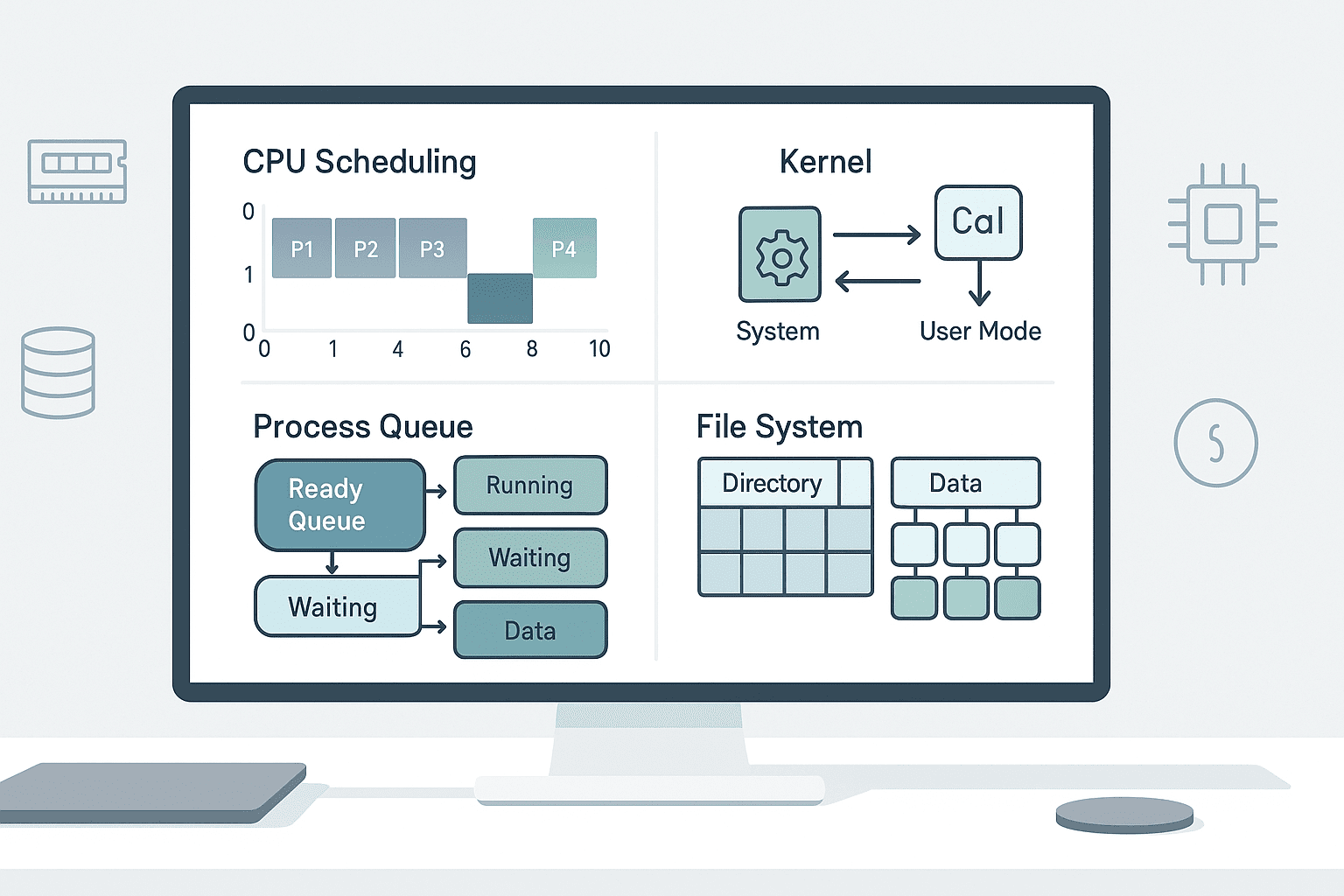
Operating System Concepts form the foundation of how modern computers function, manage resources, and deliver reliable performance. This course is designed to give learners a clear, structured, and practical understanding of operating systems without unnecessary complexity. It explains not just what operating systems do, but how and why they work the way they do.
You will begin by exploring the role of an operating system as the central manager of hardware and software resources. Core topics such as CPU management, memory usage, device coordination, and system calls are introduced in a clear and approachable way. The course then moves into essential operating system structures, helping you understand how the kernel communicates with user programs and how system-level decisions affect performance and stability.
A key focus of this course is file systems and process management. You will learn how data is organised, stored, and accessed efficiently, as well as how operating systems track and control multiple processes running at the same time. CPU scheduling is explained in detail, including common scheduling algorithms and the trade-offs between efficiency, responsiveness, and fairness. These concepts are broken down using practical examples and visual explanations to ensure strong conceptual understanding.
The course is ideal for learners who want a solid academic and practical foundation in operating systems. It supports further study in computer science, software engineering, and IT, while also strengthening problem-solving and analytical thinking skills. By the end of the course, you will be able to confidently explain operating system behaviour, analyse scheduling decisions, and understand file system design from a systems-level perspective.
On completion, learners will receive a free course completion certificate. For those who wish to enhance their academic or professional profile, multiple premium certificate and transcript options are also available for purchase. Students also benefit from 5-star rated learner support available 24/7 via email, ensuring guidance and assistance whenever needed.
Who is this course for?
Operating System Concepts form the foundation of how modern computers function, manage resources, and deliver reliable performance. This course is designed to give learners a clear, structured, and practical understanding of operating systems without unnecessary complexity. It explains not just what operating systems do, but how and why they work the way they do.
You will begin by exploring the role of an operating system as the central manager of hardware and software resources. Core topics such as CPU management, memory usage, device coordination, and system calls are introduced in a clear and approachable way. The course then moves into essential operating system structures, helping you understand how the kernel communicates with user programs and how system-level decisions affect performance and stability.
A key focus of this course is file systems and process management. You will learn how data is organised, stored, and accessed efficiently, as well as how operating systems track and control multiple processes running at the same time. CPU scheduling is explained in detail, including common scheduling algorithms and the trade-offs between efficiency, responsiveness, and fairness. These concepts are broken down using practical examples and visual explanations to ensure strong conceptual understanding.
The course is ideal for learners who want a solid academic and practical foundation in operating systems. It supports further study in computer science, software engineering, and IT, while also strengthening problem-solving and analytical thinking skills. By the end of the course, you will be able to confidently explain operating system behaviour, analyse scheduling decisions, and understand file system design from a systems-level perspective.
On completion, learners will receive a free course completion certificate. For those who wish to enhance their academic or professional profile, multiple premium certificate and transcript options are also available for purchase. Students also benefit from 5-star rated learner support available 24/7 via email, ensuring guidance and assistance whenever needed.
Requirements
Operating System Concepts form the foundation of how modern computers function, manage resources, and deliver reliable performance. This course is designed to give learners a clear, structured, and practical understanding of operating systems without unnecessary complexity. It explains not just what operating systems do, but how and why they work the way they do.
You will begin by exploring the role of an operating system as the central manager of hardware and software resources. Core topics such as CPU management, memory usage, device coordination, and system calls are introduced in a clear and approachable way. The course then moves into essential operating system structures, helping you understand how the kernel communicates with user programs and how system-level decisions affect performance and stability.
A key focus of this course is file systems and process management. You will learn how data is organised, stored, and accessed efficiently, as well as how operating systems track and control multiple processes running at the same time. CPU scheduling is explained in detail, including common scheduling algorithms and the trade-offs between efficiency, responsiveness, and fairness. These concepts are broken down using practical examples and visual explanations to ensure strong conceptual understanding.
The course is ideal for learners who want a solid academic and practical foundation in operating systems. It supports further study in computer science, software engineering, and IT, while also strengthening problem-solving and analytical thinking skills. By the end of the course, you will be able to confidently explain operating system behaviour, analyse scheduling decisions, and understand file system design from a systems-level perspective.
On completion, learners will receive a free course completion certificate. For those who wish to enhance their academic or professional profile, multiple premium certificate and transcript options are also available for purchase. Students also benefit from 5-star rated learner support available 24/7 via email, ensuring guidance and assistance whenever needed.
Career path
Operating System Concepts form the foundation of how modern computers function, manage resources, and deliver reliable performance. This course is designed to give learners a clear, structured, and practical understanding of operating systems without unnecessary complexity. It explains not just what operating systems do, but how and why they work the way they do.
You will begin by exploring the role of an operating system as the central manager of hardware and software resources. Core topics such as CPU management, memory usage, device coordination, and system calls are introduced in a clear and approachable way. The course then moves into essential operating system structures, helping you understand how the kernel communicates with user programs and how system-level decisions affect performance and stability.
A key focus of this course is file systems and process management. You will learn how data is organised, stored, and accessed efficiently, as well as how operating systems track and control multiple processes running at the same time. CPU scheduling is explained in detail, including common scheduling algorithms and the trade-offs between efficiency, responsiveness, and fairness. These concepts are broken down using practical examples and visual explanations to ensure strong conceptual understanding.
The course is ideal for learners who want a solid academic and practical foundation in operating systems. It supports further study in computer science, software engineering, and IT, while also strengthening problem-solving and analytical thinking skills. By the end of the course, you will be able to confidently explain operating system behaviour, analyse scheduling decisions, and understand file system design from a systems-level perspective.
On completion, learners will receive a free course completion certificate. For those who wish to enhance their academic or professional profile, multiple premium certificate and transcript options are also available for purchase. Students also benefit from 5-star rated learner support available 24/7 via email, ensuring guidance and assistance whenever needed.
-
- Course Orientation: What You’ll Learn & How to Succeed 00:10:00
- What Is an Operating System? (Core Functions & Role) 00:10:00
- Operating System as a Resource Manager: CPU, Memory & Devices 00:10:00
- Modern Processing Trends and OS Evolution 00:10:00
- Exploring Types of Operating Systems 00:10:00
- Understanding System Calls: How User 00:10:00
- Quick Recap: Key Concepts in Operating System Basics 00:10:00
-
- What Is a File System? Purpose and Design 00:10:00
- Inside the File System: Structure and Organisation 00:10:00
- File Access Methods: Sequential, Direct, and Indexed Access 00:10:00
- Summary & Review: File System Fundamentals 00:10:00
- CPU Scheduling Overview: Why It Matters 00:10:00
- Understanding Processes and the Process Model 00:10:00
- The Three Types of Schedulers: Long-, Medium-, and Short-Term 00:10:00
- Scheduling Criteria: Balancing Performance and Efficiency 00:10:00
- Common Scheduling Algorithms Explained (FCFS, SJF, RR, Priority) 00:10:00
- Recap & Quick Quiz: CPU Scheduling Essentials 00:10:00
- Premium Certificate 00:15:00

No Reviews found for this course.
Is this certificate recognized?
Yes, our premium certificate and transcript are widely recognized and accepted by embassies worldwide, particularly by the UK embassy. This adds credibility to your qualification and enhances its value for professional and academic purposes.
I am a beginner. Is this course suitable for me?
Yes, this course is designed for learners of all levels, including beginners. The content is structured to provide step-by-step guidance, ensuring that even those with no prior experience can follow along and gain valuable knowledge.
I am a professional. Is this course suitable for me?
Yes, professionals will also benefit from this course. It covers advanced concepts, practical applications, and industry insights that can help enhance existing skills and knowledge. Whether you are looking to refine your expertise or expand your qualifications, this course provides valuable learning.
Does this course have an expiry date?
No, you have lifetime access to the course. Once enrolled, you can revisit the materials at any time as long as the course remains available. Additionally, we regularly update our content to ensure it stays relevant and up to date.
How do I claim my free certificate?
I trust you’re in good health. Your free certificate can be located in the Achievement section. The option to purchase a CPD certificate is available but entirely optional, and you may choose to skip it. Please be aware that it’s crucial to click the “Complete” button to ensure the certificate is generated, as this process is entirely automated.
Does this course have assessments and assignments?
Yes, the course includes both assessments and assignments. Your final marks will be determined by a combination of 20% from assignments and 80% from assessments. These evaluations are designed to test your understanding and ensure you have grasped the key concepts effectively.
Is this course accredited?
We are a recognized course provider with CPD, UKRLP, and AOHT membership. The logos of these accreditation bodies will be featured on your premium certificate and transcript, ensuring credibility and professional recognition.
Will I receive a certificate upon completion?
Yes, you will receive a free digital certificate automatically once you complete the course. If you would like a premium CPD-accredited certificate, either in digital or physical format, you can upgrade for a small fee.
Course Features
Price
Study Method
Online | Self-paced
Course Format
Reading Material - PDF, article
Duration
3 hours, 55 minutes
Qualification
No formal qualification
Certificate
At completion
Additional info
Coming soon
- Share

Meditation Level 3 Advanced Diploma
Course Line242£490.00Original price was: £490.00.£14.99Current price is: £14.99.IT Service Desk Analyst Level 3 Advanced Diploma
Course Line243£490.00Original price was: £490.00.£14.99Current price is: £14.99.Mastering Synonyms & Antonyms: Boost Your English Vocabulary and Expression
Course Line237£490.00Original price was: £490.00.£14.99Current price is: £14.99.


Related Courses
Microsoft Excel for Business: Beginner to Advanced Data Analysis
£490.00Original price was: £490.00.£14.99Current price is: £14.99.237C++ Programming for Beginners: From Zero to AI-Ready Developer
£490.00Original price was: £490.00.£14.99Current price is: £14.99.237Microsoft SQL Server & T-SQL Certification Training: Beginner to Advanced
£490.00Original price was: £490.00.£14.99Current price is: £14.99.237



Related Courses
Microsoft Excel for Business: Beginner to Advanced Data Analysis
£490.00Original price was: £490.00.£14.99Current price is: £14.99.237C++ Programming for Beginners: From Zero to AI-Ready Developer
£490.00Original price was: £490.00.£14.99Current price is: £14.99.237Microsoft SQL Server & T-SQL Certification Training: Beginner to Advanced
£490.00Original price was: £490.00.£14.99Current price is: £14.99.237

