
Course Features
Price
Study Method
Online | Self-paced
Course Format
Reading Material - PDF, article
Duration
5 hours, 5 minutes
Qualification
No formal qualification
Certificate
At completion
Additional info
Coming soon
- Share
Overview
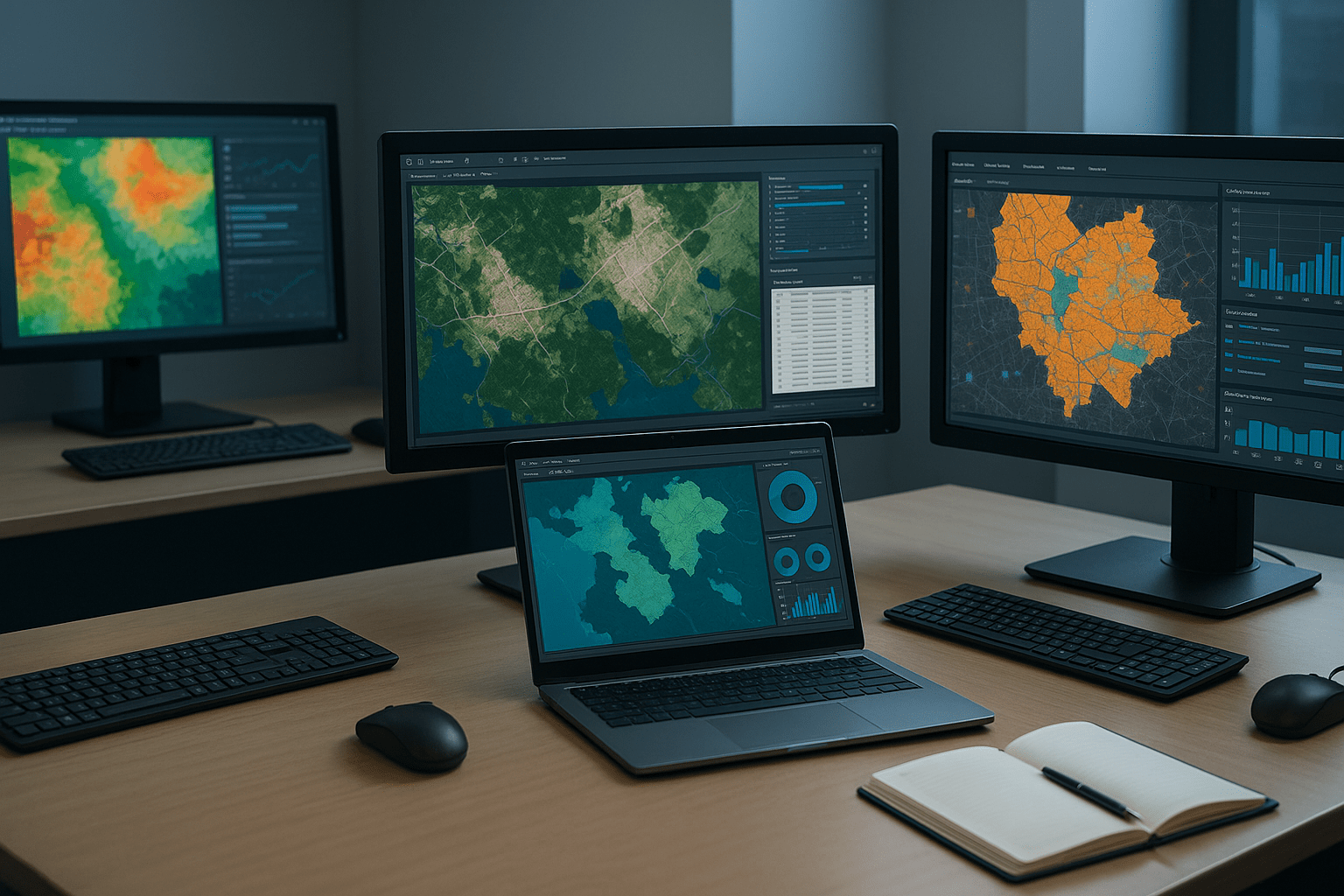
Geographic Information Systems play a vital role in modern decision-making, environmental planning, urban development, transport modelling, disaster response and countless other fields that rely on spatial data. This Level 3 Advanced Diploma provides a strong foundation in advanced GIS concepts, enabling learners to understand, analyse and visualise complex geospatial information with confidence. The course begins with essential spatial analysis techniques and remote-sensing integration before moving into advanced data management, database design, and the principles of quality assurance within a GIS environment.
Learners explore powerful analytical tools such as spatial interpolation, network modelling, 3D surface analysis and geospatial automation. Through hands-on exposure to Python for GIS, ArcPy, and QGIS processing frameworks, students learn to build automated workflows, streamline geoprocessing tasks and develop efficient analytical pipelines. The curriculum also covers Web GIS technologies, cloud platforms, and web-mapping application development, ensuring learners stay aligned with current industry trends.
A dedicated module in cartography and visualisation helps learners master professional symbolisation, cartographic design principles and the creation of interactive dashboards. The programme concludes with GIS project management, preparing students to plan, organise and deliver real-world geospatial projects effectively. Advanced applications across environmental management, smart city development and emergency response give learners a clear understanding of how GIS is used to tackle global challenges.
By the end of the course, students will be able to navigate leading GIS platforms, analyse spatial datasets, design high-quality maps, build web-based mapping tools, automate processes and contribute to professional geospatial projects. This makes the programme ideal for those pursuing a technical, analytical or planning-oriented career path.
Upon completion, learners will receive a free course completion certificate. They also have the option to purchase premium printed certificates, transcripts and other official credentials if they require enhanced documentation. All students benefit from 5-star rated 24/7 email support, ensuring guidance is always available throughout the learning journey.
Who is this course for?
Geographic Information Systems play a vital role in modern decision-making, environmental planning, urban development, transport modelling, disaster response and countless other fields that rely on spatial data. This Level 3 Advanced Diploma provides a strong foundation in advanced GIS concepts, enabling learners to understand, analyse and visualise complex geospatial information with confidence. The course begins with essential spatial analysis techniques and remote-sensing integration before moving into advanced data management, database design, and the principles of quality assurance within a GIS environment.
Learners explore powerful analytical tools such as spatial interpolation, network modelling, 3D surface analysis and geospatial automation. Through hands-on exposure to Python for GIS, ArcPy, and QGIS processing frameworks, students learn to build automated workflows, streamline geoprocessing tasks and develop efficient analytical pipelines. The curriculum also covers Web GIS technologies, cloud platforms, and web-mapping application development, ensuring learners stay aligned with current industry trends.
A dedicated module in cartography and visualisation helps learners master professional symbolisation, cartographic design principles and the creation of interactive dashboards. The programme concludes with GIS project management, preparing students to plan, organise and deliver real-world geospatial projects effectively. Advanced applications across environmental management, smart city development and emergency response give learners a clear understanding of how GIS is used to tackle global challenges.
By the end of the course, students will be able to navigate leading GIS platforms, analyse spatial datasets, design high-quality maps, build web-based mapping tools, automate processes and contribute to professional geospatial projects. This makes the programme ideal for those pursuing a technical, analytical or planning-oriented career path.
Upon completion, learners will receive a free course completion certificate. They also have the option to purchase premium printed certificates, transcripts and other official credentials if they require enhanced documentation. All students benefit from 5-star rated 24/7 email support, ensuring guidance is always available throughout the learning journey.
Requirements
Geographic Information Systems play a vital role in modern decision-making, environmental planning, urban development, transport modelling, disaster response and countless other fields that rely on spatial data. This Level 3 Advanced Diploma provides a strong foundation in advanced GIS concepts, enabling learners to understand, analyse and visualise complex geospatial information with confidence. The course begins with essential spatial analysis techniques and remote-sensing integration before moving into advanced data management, database design, and the principles of quality assurance within a GIS environment.
Learners explore powerful analytical tools such as spatial interpolation, network modelling, 3D surface analysis and geospatial automation. Through hands-on exposure to Python for GIS, ArcPy, and QGIS processing frameworks, students learn to build automated workflows, streamline geoprocessing tasks and develop efficient analytical pipelines. The curriculum also covers Web GIS technologies, cloud platforms, and web-mapping application development, ensuring learners stay aligned with current industry trends.
A dedicated module in cartography and visualisation helps learners master professional symbolisation, cartographic design principles and the creation of interactive dashboards. The programme concludes with GIS project management, preparing students to plan, organise and deliver real-world geospatial projects effectively. Advanced applications across environmental management, smart city development and emergency response give learners a clear understanding of how GIS is used to tackle global challenges.
By the end of the course, students will be able to navigate leading GIS platforms, analyse spatial datasets, design high-quality maps, build web-based mapping tools, automate processes and contribute to professional geospatial projects. This makes the programme ideal for those pursuing a technical, analytical or planning-oriented career path.
Upon completion, learners will receive a free course completion certificate. They also have the option to purchase premium printed certificates, transcripts and other official credentials if they require enhanced documentation. All students benefit from 5-star rated 24/7 email support, ensuring guidance is always available throughout the learning journey.
Career path
Geographic Information Systems play a vital role in modern decision-making, environmental planning, urban development, transport modelling, disaster response and countless other fields that rely on spatial data. This Level 3 Advanced Diploma provides a strong foundation in advanced GIS concepts, enabling learners to understand, analyse and visualise complex geospatial information with confidence. The course begins with essential spatial analysis techniques and remote-sensing integration before moving into advanced data management, database design, and the principles of quality assurance within a GIS environment.
Learners explore powerful analytical tools such as spatial interpolation, network modelling, 3D surface analysis and geospatial automation. Through hands-on exposure to Python for GIS, ArcPy, and QGIS processing frameworks, students learn to build automated workflows, streamline geoprocessing tasks and develop efficient analytical pipelines. The curriculum also covers Web GIS technologies, cloud platforms, and web-mapping application development, ensuring learners stay aligned with current industry trends.
A dedicated module in cartography and visualisation helps learners master professional symbolisation, cartographic design principles and the creation of interactive dashboards. The programme concludes with GIS project management, preparing students to plan, organise and deliver real-world geospatial projects effectively. Advanced applications across environmental management, smart city development and emergency response give learners a clear understanding of how GIS is used to tackle global challenges.
By the end of the course, students will be able to navigate leading GIS platforms, analyse spatial datasets, design high-quality maps, build web-based mapping tools, automate processes and contribute to professional geospatial projects. This makes the programme ideal for those pursuing a technical, analytical or planning-oriented career path.
Upon completion, learners will receive a free course completion certificate. They also have the option to purchase premium printed certificates, transcripts and other official credentials if they require enhanced documentation. All students benefit from 5-star rated 24/7 email support, ensuring guidance is always available throughout the learning journey.
-
- Overview of Advanced GIS Applications 00:10:00
- Spatial Analysis Techniques 00:10:00
- Remote Sensing Integration with GIS 00:10:00
-
- Database Design and Management 00:10:00
- Data Quality Assurance and Quality Control 00:10:00
- Spatial Data Infrastructure (SDI) Concepts 00:10:00
- Spatial Interpolation Techniques 00:10:00
- Network Analysis and Routing 00:10:00
- 3D GIS and Surface Analysis 00:10:00
- Introduction to Python for GIS 00:10:00
- Automation of GIS Processes 00:10:00
- Scripting with ArcPy and QGIS Processing Framework 00:10:00
- Project Planning and Execution 00:10:00
- Team Collaboration and Communication 00:10:00
- Project Documentation and Reporting 00:10:00
- Exam of Geographic Information Systems (GIS) Level 3 Advanced Diploma 00:50:00

No Reviews found for this course.
Is this certificate recognized?
Yes, our premium certificate and transcript are widely recognized and accepted by embassies worldwide, particularly by the UK embassy. This adds credibility to your qualification and enhances its value for professional and academic purposes.
I am a beginner. Is this course suitable for me?
Yes, this course is designed for learners of all levels, including beginners. The content is structured to provide step-by-step guidance, ensuring that even those with no prior experience can follow along and gain valuable knowledge.
I am a professional. Is this course suitable for me?
Yes, professionals will also benefit from this course. It covers advanced concepts, practical applications, and industry insights that can help enhance existing skills and knowledge. Whether you are looking to refine your expertise or expand your qualifications, this course provides valuable learning.
Does this course have an expiry date?
No, you have lifetime access to the course. Once enrolled, you can revisit the materials at any time as long as the course remains available. Additionally, we regularly update our content to ensure it stays relevant and up to date.
How do I claim my free certificate?
I trust you’re in good health. Your free certificate can be located in the Achievement section. The option to purchase a CPD certificate is available but entirely optional, and you may choose to skip it. Please be aware that it’s crucial to click the “Complete” button to ensure the certificate is generated, as this process is entirely automated.
Does this course have assessments and assignments?
Yes, the course includes both assessments and assignments. Your final marks will be determined by a combination of 20% from assignments and 80% from assessments. These evaluations are designed to test your understanding and ensure you have grasped the key concepts effectively.
Is this course accredited?
We are a recognized course provider with CPD, UKRLP, and AOHT membership. The logos of these accreditation bodies will be featured on your premium certificate and transcript, ensuring credibility and professional recognition.
Will I receive a certificate upon completion?
Yes, you will receive a free digital certificate automatically once you complete the course. If you would like a premium CPD-accredited certificate, either in digital or physical format, you can upgrade for a small fee.
Course Features
Price
Study Method
Online | Self-paced
Course Format
Reading Material - PDF, article
Duration
5 hours, 5 minutes
Qualification
No formal qualification
Certificate
At completion
Additional info
Coming soon
- Share

Transport Planning Level 3 Advanced Diploma
Course Line249£490.00Original price was: £490.00.£14.99Current price is: £14.99.Fiverr Blueprint: The Success Formula to Build and Scale Your Gig-Based Business
Course Line237£490.00Original price was: £490.00.£14.99Current price is: £14.99.Business Administration Level 3 Advanced Diploma
Course Line243£490.00Original price was: £490.00.£14.99Current price is: £14.99.



Related Courses
Microsoft Excel for Business: Beginner to Advanced Data Analysis
£490.00Original price was: £490.00.£14.99Current price is: £14.99.237C++ Programming for Beginners: From Zero to AI-Ready Developer
£490.00Original price was: £490.00.£14.99Current price is: £14.99.237Microsoft SQL Server & T-SQL Certification Training: Beginner to Advanced
£490.00Original price was: £490.00.£14.99Current price is: £14.99.237




Related Courses
Microsoft Excel for Business: Beginner to Advanced Data Analysis
£490.00Original price was: £490.00.£14.99Current price is: £14.99.237C++ Programming for Beginners: From Zero to AI-Ready Developer
£490.00Original price was: £490.00.£14.99Current price is: £14.99.237Microsoft SQL Server & T-SQL Certification Training: Beginner to Advanced
£490.00Original price was: £490.00.£14.99Current price is: £14.99.237

