Course Features
Price
Study Method
Online | Self-paced
Course Format
Reading Material - PDF, article
Duration
5 hours, 15 minutes
Qualification
No formal qualification
Certificate
At completion
Additional info
Coming soon
- Share

Overview
Understanding how to read financial statements is one of the most valuable skills in business, finance, and investment. Financial Statement Analysis – Mastering the Art of Reading Reports offers a complete foundation for interpreting corporate financial information with confidence. Whether you’re a student, aspiring analyst, or business professional, this course will equip you with the knowledge to evaluate company performance, assess profitability, and make informed financial decisions.
The course begins with a detailed introduction to financial reporting standards, including IFRS and GAAP, exploring their history, principles, and global relevance. You’ll learn the structure and purpose of the main financial statements—the balance sheet, income statement, and cash flow statement—and understand how each reflects a company’s financial health. From there, the lessons dive into corporate governance and transparency, covering the crucial roles of shareholders, directors, and auditors in ensuring reliable reporting and ethical business practices.
You’ll then explore balance sheet analysis in depth—breaking down assets, liabilities, and capital sources to see how companies fund operations and create long-term value. Through practical exercises in vertical and horizontal analysis, you’ll learn how to identify growth trends, evaluate leverage, and spot hidden risks. The course also examines profitability and value creation, teaching you how to interpret revenue patterns, link net income to cash flow, and calculate key ratios such as Return on Invested Capital (ROIC).
To reinforce your learning, you’ll analyse real company case studies, including Vonovia, Qurate, and SkyWest Airlines, applying theoretical frameworks to real-life financial data. These examples demonstrate how professional analysts assess company stability and market performance using authentic corporate reports. By the end of the course, you’ll not only be able to read financial statements fluently but also understand how they tell a company’s story—from growth and risk to opportunity and value creation.
With expert instruction and practical insights, this course bridges the gap between accounting theory and professional financial analysis, giving you the analytical edge needed for careers in finance, banking, investment, or corporate management.
Who is this course for?
Understanding how to read financial statements is one of the most valuable skills in business, finance, and investment. Financial Statement Analysis – Mastering the Art of Reading Reports offers a complete foundation for interpreting corporate financial information with confidence. Whether you’re a student, aspiring analyst, or business professional, this course will equip you with the knowledge to evaluate company performance, assess profitability, and make informed financial decisions.
The course begins with a detailed introduction to financial reporting standards, including IFRS and GAAP, exploring their history, principles, and global relevance. You’ll learn the structure and purpose of the main financial statements—the balance sheet, income statement, and cash flow statement—and understand how each reflects a company’s financial health. From there, the lessons dive into corporate governance and transparency, covering the crucial roles of shareholders, directors, and auditors in ensuring reliable reporting and ethical business practices.
You’ll then explore balance sheet analysis in depth—breaking down assets, liabilities, and capital sources to see how companies fund operations and create long-term value. Through practical exercises in vertical and horizontal analysis, you’ll learn how to identify growth trends, evaluate leverage, and spot hidden risks. The course also examines profitability and value creation, teaching you how to interpret revenue patterns, link net income to cash flow, and calculate key ratios such as Return on Invested Capital (ROIC).
To reinforce your learning, you’ll analyse real company case studies, including Vonovia, Qurate, and SkyWest Airlines, applying theoretical frameworks to real-life financial data. These examples demonstrate how professional analysts assess company stability and market performance using authentic corporate reports. By the end of the course, you’ll not only be able to read financial statements fluently but also understand how they tell a company’s story—from growth and risk to opportunity and value creation.
With expert instruction and practical insights, this course bridges the gap between accounting theory and professional financial analysis, giving you the analytical edge needed for careers in finance, banking, investment, or corporate management.
Requirements
Understanding how to read financial statements is one of the most valuable skills in business, finance, and investment. Financial Statement Analysis – Mastering the Art of Reading Reports offers a complete foundation for interpreting corporate financial information with confidence. Whether you’re a student, aspiring analyst, or business professional, this course will equip you with the knowledge to evaluate company performance, assess profitability, and make informed financial decisions.
The course begins with a detailed introduction to financial reporting standards, including IFRS and GAAP, exploring their history, principles, and global relevance. You’ll learn the structure and purpose of the main financial statements—the balance sheet, income statement, and cash flow statement—and understand how each reflects a company’s financial health. From there, the lessons dive into corporate governance and transparency, covering the crucial roles of shareholders, directors, and auditors in ensuring reliable reporting and ethical business practices.
You’ll then explore balance sheet analysis in depth—breaking down assets, liabilities, and capital sources to see how companies fund operations and create long-term value. Through practical exercises in vertical and horizontal analysis, you’ll learn how to identify growth trends, evaluate leverage, and spot hidden risks. The course also examines profitability and value creation, teaching you how to interpret revenue patterns, link net income to cash flow, and calculate key ratios such as Return on Invested Capital (ROIC).
To reinforce your learning, you’ll analyse real company case studies, including Vonovia, Qurate, and SkyWest Airlines, applying theoretical frameworks to real-life financial data. These examples demonstrate how professional analysts assess company stability and market performance using authentic corporate reports. By the end of the course, you’ll not only be able to read financial statements fluently but also understand how they tell a company’s story—from growth and risk to opportunity and value creation.
With expert instruction and practical insights, this course bridges the gap between accounting theory and professional financial analysis, giving you the analytical edge needed for careers in finance, banking, investment, or corporate management.
Career path
Understanding how to read financial statements is one of the most valuable skills in business, finance, and investment. Financial Statement Analysis – Mastering the Art of Reading Reports offers a complete foundation for interpreting corporate financial information with confidence. Whether you’re a student, aspiring analyst, or business professional, this course will equip you with the knowledge to evaluate company performance, assess profitability, and make informed financial decisions.
The course begins with a detailed introduction to financial reporting standards, including IFRS and GAAP, exploring their history, principles, and global relevance. You’ll learn the structure and purpose of the main financial statements—the balance sheet, income statement, and cash flow statement—and understand how each reflects a company’s financial health. From there, the lessons dive into corporate governance and transparency, covering the crucial roles of shareholders, directors, and auditors in ensuring reliable reporting and ethical business practices.
You’ll then explore balance sheet analysis in depth—breaking down assets, liabilities, and capital sources to see how companies fund operations and create long-term value. Through practical exercises in vertical and horizontal analysis, you’ll learn how to identify growth trends, evaluate leverage, and spot hidden risks. The course also examines profitability and value creation, teaching you how to interpret revenue patterns, link net income to cash flow, and calculate key ratios such as Return on Invested Capital (ROIC).
To reinforce your learning, you’ll analyse real company case studies, including Vonovia, Qurate, and SkyWest Airlines, applying theoretical frameworks to real-life financial data. These examples demonstrate how professional analysts assess company stability and market performance using authentic corporate reports. By the end of the course, you’ll not only be able to read financial statements fluently but also understand how they tell a company’s story—from growth and risk to opportunity and value creation.
With expert instruction and practical insights, this course bridges the gap between accounting theory and professional financial analysis, giving you the analytical edge needed for careers in finance, banking, investment, or corporate management.
-
- Welcome & Course Overview 00:10:00
- History and Purpose of Financial Statements 00:10:00
- Key Reporting Standards (IFRS & GAAP) 00:10:00
- Types of Financial Statements 00:10:00
- Core Accounting Principles for Reporting 00:10:00
-
- Corporate Law and Company Consolidation 00:10:00
- Role of Shareholders 00:10:00
- Board of Directors – Responsibilities & Oversight 00:10:00
- Auditors – Ensuring Transparency 00:10:00
- Balance Sheet Structure & Value Creation Cycle 00:10:00
- Vertical and Horizontal Analysis – How to Capture Insights 00:10:00
- Primary Sources of Capital – Equity 00:10:00
- Secondary Sources of Capital – An Introduction 00:10:00
- Debt and Liabilities – Key Types 00:10:00
- Introduction to Assets on the Balance Sheet 00:10:00
- Main Current Assets Explained 00:10:00
- Main Non-Current (Long-Term) Assets 00:10:00
- Case Study – Analysis of Vonovia 00:10:00
- Case Study – Analysis of Qurate 00:10:00
- Case Study – Analysis of SkyWest Airlines 00:10:00
- Final Thoughts & Next Steps 00:10:00
- Premium Certificate 00:15:00

No Reviews found for this course.
Is this certificate recognized?
Yes, our premium certificate and transcript are widely recognized and accepted by embassies worldwide, particularly by the UK embassy. This adds credibility to your qualification and enhances its value for professional and academic purposes.
I am a beginner. Is this course suitable for me?
Yes, this course is designed for learners of all levels, including beginners. The content is structured to provide step-by-step guidance, ensuring that even those with no prior experience can follow along and gain valuable knowledge.
I am a professional. Is this course suitable for me?
Yes, professionals will also benefit from this course. It covers advanced concepts, practical applications, and industry insights that can help enhance existing skills and knowledge. Whether you are looking to refine your expertise or expand your qualifications, this course provides valuable learning.
Does this course have an expiry date?
No, you have lifetime access to the course. Once enrolled, you can revisit the materials at any time as long as the course remains available. Additionally, we regularly update our content to ensure it stays relevant and up to date.
How do I claim my free certificate?
I trust you’re in good health. Your free certificate can be located in the Achievement section. The option to purchase a CPD certificate is available but entirely optional, and you may choose to skip it. Please be aware that it’s crucial to click the “Complete” button to ensure the certificate is generated, as this process is entirely automated.
Does this course have assessments and assignments?
Yes, the course includes both assessments and assignments. Your final marks will be determined by a combination of 20% from assignments and 80% from assessments. These evaluations are designed to test your understanding and ensure you have grasped the key concepts effectively.
Is this course accredited?
We are a recognized course provider with CPD, UKRLP, and AOHT membership. The logos of these accreditation bodies will be featured on your premium certificate and transcript, ensuring credibility and professional recognition.
Will I receive a certificate upon completion?
Yes, you will receive a free digital certificate automatically once you complete the course. If you would like a premium CPD-accredited certificate, either in digital or physical format, you can upgrade for a small fee.
Course Features
Price
Study Method
Online | Self-paced
Course Format
Reading Material - PDF, article
Duration
5 hours, 15 minutes
Qualification
No formal qualification
Certificate
At completion
Additional info
Coming soon
- Share

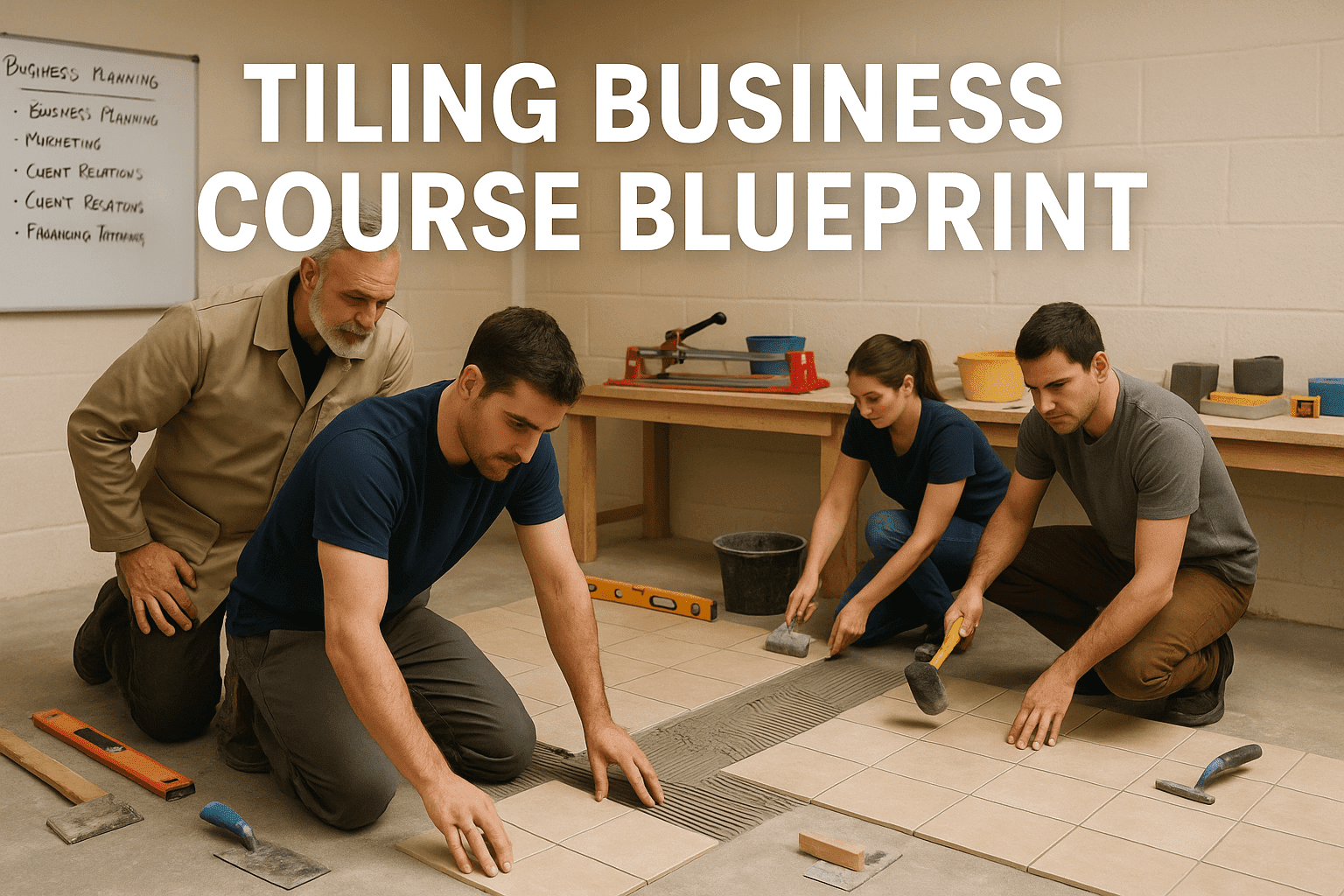
Tiling Business Blueprint Start and Grow Your Tile Installation Business
Course Line244£490.00Original price was: £490.00.£14.99Current price is: £14.99.AI Marketing Mastery: Automate Growth with Artificial Intelligence Tools
Course Line237£490.00Original price was: £490.00.£14.99Current price is: £14.99.