
Course Features
Price
Study Method
Online | Self-paced
Course Format
Reading Material - PDF, article
Duration
15 minutes
Qualification
No formal qualification
Certificate
At completion
Additional info
Coming soon
- Share
Overview
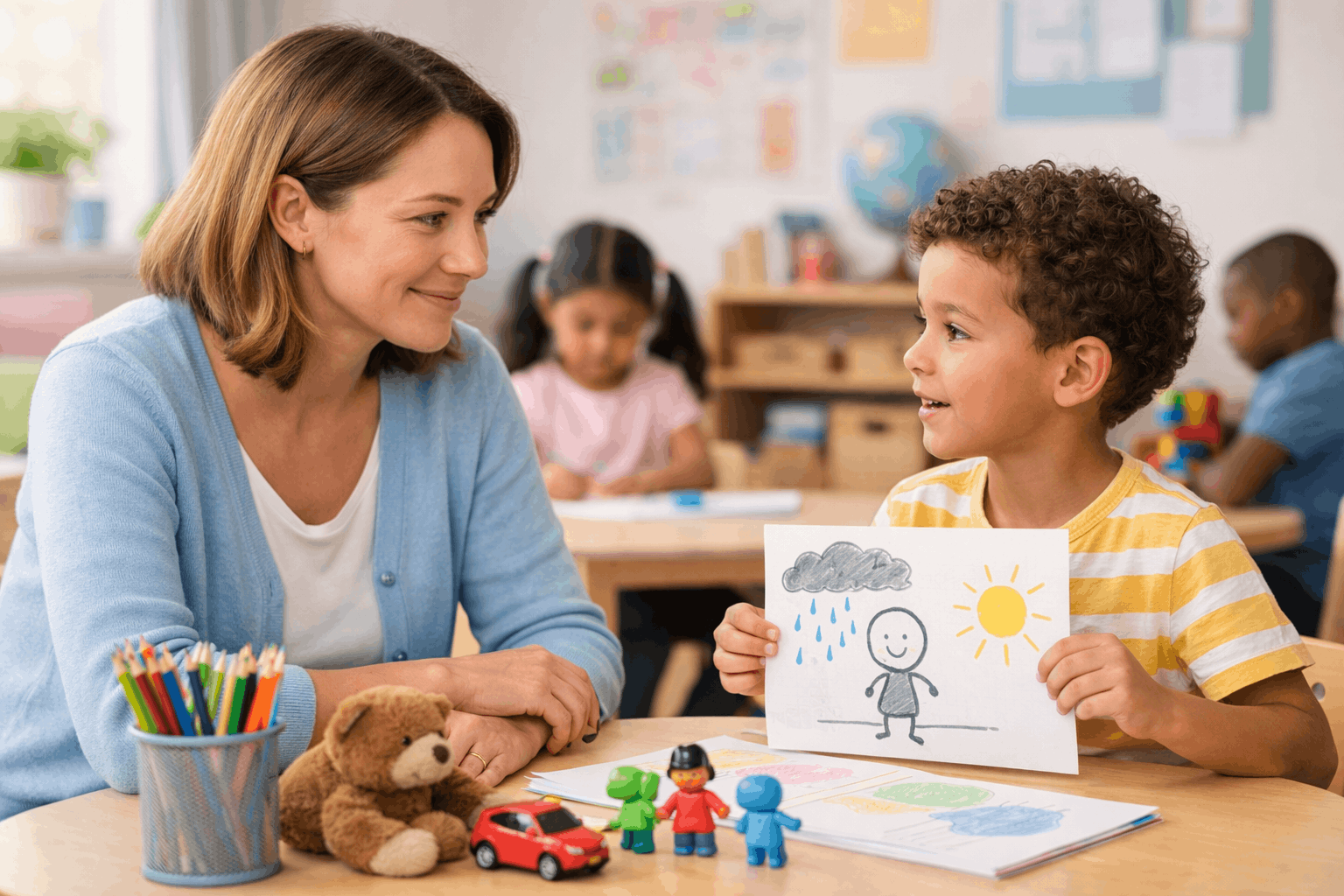
Communicating with Children is a practical and theory-based course designed to help learners understand how young people express their thoughts, emotions, and needs. This course explores how communication develops from early childhood through adolescence, showing how language, behaviour, play, and emotional signals all work together. You will gain insight into how children think, feel, and interact, and how adults can support this process in positive and meaningful ways.
The course combines key child development theories with real-life communication strategies used in childcare, education, and family settings. You will learn how listening skills, clear language, emotional awareness, and non-verbal cues influence children’s confidence, behaviour, and relationships. Through practical examples and case studies, you will discover how to respond calmly to challenging situations, encourage children to speak openly, and build trust through respectful communication.
Special attention is given to inclusion and individual needs, including children with speech and language difficulties, autism, and other SEND requirements. You will explore visual aids, play-based communication, storytelling, and creative expression as powerful tools for helping children feel understood. The course also explains how professional communication supports safeguarding, emotional wellbeing, and positive learning environments.
By the end of the course, you will be able to communicate more clearly and compassionately with children across a range of settings, including homes, schools, and care environments. You will develop practical skills for listening, questioning, guiding behaviour, and supporting emotional expression in a way that builds confidence and security for every child.
All learners receive a free course completion certificate after finishing the programme. For those who wish to enhance their credentials, multiple premium certificate and transcript options are also available for purchase. Students also benefit from 5-star rated support available 24/7 through email, ensuring guidance and help whenever it is needed.
This course is ideal for parents, teachers, teaching assistants, childcare workers, nursery staff, youth workers, and anyone who supports or cares for children. It is also suitable for learners who want to build strong communication skills for working with young people in education, social care, or family support roles.
Who is this course for?
Communicating with Children is a practical and theory-based course designed to help learners understand how young people express their thoughts, emotions, and needs. This course explores how communication develops from early childhood through adolescence, showing how language, behaviour, play, and emotional signals all work together. You will gain insight into how children think, feel, and interact, and how adults can support this process in positive and meaningful ways.
The course combines key child development theories with real-life communication strategies used in childcare, education, and family settings. You will learn how listening skills, clear language, emotional awareness, and non-verbal cues influence children’s confidence, behaviour, and relationships. Through practical examples and case studies, you will discover how to respond calmly to challenging situations, encourage children to speak openly, and build trust through respectful communication.
Special attention is given to inclusion and individual needs, including children with speech and language difficulties, autism, and other SEND requirements. You will explore visual aids, play-based communication, storytelling, and creative expression as powerful tools for helping children feel understood. The course also explains how professional communication supports safeguarding, emotional wellbeing, and positive learning environments.
By the end of the course, you will be able to communicate more clearly and compassionately with children across a range of settings, including homes, schools, and care environments. You will develop practical skills for listening, questioning, guiding behaviour, and supporting emotional expression in a way that builds confidence and security for every child.
All learners receive a free course completion certificate after finishing the programme. For those who wish to enhance their credentials, multiple premium certificate and transcript options are also available for purchase. Students also benefit from 5-star rated support available 24/7 through email, ensuring guidance and help whenever it is needed.
This course is ideal for parents, teachers, teaching assistants, childcare workers, nursery staff, youth workers, and anyone who supports or cares for children. It is also suitable for learners who want to build strong communication skills for working with young people in education, social care, or family support roles.
Requirements
Communicating with Children is a practical and theory-based course designed to help learners understand how young people express their thoughts, emotions, and needs. This course explores how communication develops from early childhood through adolescence, showing how language, behaviour, play, and emotional signals all work together. You will gain insight into how children think, feel, and interact, and how adults can support this process in positive and meaningful ways.
The course combines key child development theories with real-life communication strategies used in childcare, education, and family settings. You will learn how listening skills, clear language, emotional awareness, and non-verbal cues influence children’s confidence, behaviour, and relationships. Through practical examples and case studies, you will discover how to respond calmly to challenging situations, encourage children to speak openly, and build trust through respectful communication.
Special attention is given to inclusion and individual needs, including children with speech and language difficulties, autism, and other SEND requirements. You will explore visual aids, play-based communication, storytelling, and creative expression as powerful tools for helping children feel understood. The course also explains how professional communication supports safeguarding, emotional wellbeing, and positive learning environments.
By the end of the course, you will be able to communicate more clearly and compassionately with children across a range of settings, including homes, schools, and care environments. You will develop practical skills for listening, questioning, guiding behaviour, and supporting emotional expression in a way that builds confidence and security for every child.
All learners receive a free course completion certificate after finishing the programme. For those who wish to enhance their credentials, multiple premium certificate and transcript options are also available for purchase. Students also benefit from 5-star rated support available 24/7 through email, ensuring guidance and help whenever it is needed.
This course is ideal for parents, teachers, teaching assistants, childcare workers, nursery staff, youth workers, and anyone who supports or cares for children. It is also suitable for learners who want to build strong communication skills for working with young people in education, social care, or family support roles.
Career path
Communicating with Children is a practical and theory-based course designed to help learners understand how young people express their thoughts, emotions, and needs. This course explores how communication develops from early childhood through adolescence, showing how language, behaviour, play, and emotional signals all work together. You will gain insight into how children think, feel, and interact, and how adults can support this process in positive and meaningful ways.
The course combines key child development theories with real-life communication strategies used in childcare, education, and family settings. You will learn how listening skills, clear language, emotional awareness, and non-verbal cues influence children’s confidence, behaviour, and relationships. Through practical examples and case studies, you will discover how to respond calmly to challenging situations, encourage children to speak openly, and build trust through respectful communication.
Special attention is given to inclusion and individual needs, including children with speech and language difficulties, autism, and other SEND requirements. You will explore visual aids, play-based communication, storytelling, and creative expression as powerful tools for helping children feel understood. The course also explains how professional communication supports safeguarding, emotional wellbeing, and positive learning environments.
By the end of the course, you will be able to communicate more clearly and compassionately with children across a range of settings, including homes, schools, and care environments. You will develop practical skills for listening, questioning, guiding behaviour, and supporting emotional expression in a way that builds confidence and security for every child.
All learners receive a free course completion certificate after finishing the programme. For those who wish to enhance their credentials, multiple premium certificate and transcript options are also available for purchase. Students also benefit from 5-star rated support available 24/7 through email, ensuring guidance and help whenever it is needed.
This course is ideal for parents, teachers, teaching assistants, childcare workers, nursery staff, youth workers, and anyone who supports or cares for children. It is also suitable for learners who want to build strong communication skills for working with young people in education, social care, or family support roles.
-
-
- Premium Certificate 00:15:00

No Reviews found for this course.
Is this certificate recognized?
Yes, our premium certificate and transcript are widely recognized and accepted by embassies worldwide, particularly by the UK embassy. This adds credibility to your qualification and enhances its value for professional and academic purposes.
I am a beginner. Is this course suitable for me?
Yes, this course is designed for learners of all levels, including beginners. The content is structured to provide step-by-step guidance, ensuring that even those with no prior experience can follow along and gain valuable knowledge.
I am a professional. Is this course suitable for me?
Yes, professionals will also benefit from this course. It covers advanced concepts, practical applications, and industry insights that can help enhance existing skills and knowledge. Whether you are looking to refine your expertise or expand your qualifications, this course provides valuable learning.
Does this course have an expiry date?
No, you have lifetime access to the course. Once enrolled, you can revisit the materials at any time as long as the course remains available. Additionally, we regularly update our content to ensure it stays relevant and up to date.
How do I claim my free certificate?
I trust you’re in good health. Your free certificate can be located in the Achievement section. The option to purchase a CPD certificate is available but entirely optional, and you may choose to skip it. Please be aware that it’s crucial to click the “Complete” button to ensure the certificate is generated, as this process is entirely automated.
Does this course have assessments and assignments?
Yes, the course includes both assessments and assignments. Your final marks will be determined by a combination of 20% from assignments and 80% from assessments. These evaluations are designed to test your understanding and ensure you have grasped the key concepts effectively.
Is this course accredited?
We are a recognized course provider with CPD, UKRLP, and AOHT membership. The logos of these accreditation bodies will be featured on your premium certificate and transcript, ensuring credibility and professional recognition.
Will I receive a certificate upon completion?
Yes, you will receive a free digital certificate automatically once you complete the course. If you would like a premium CPD-accredited certificate, either in digital or physical format, you can upgrade for a small fee.
Course Features
Price
Study Method
Online | Self-paced
Course Format
Reading Material - PDF, article
Duration
15 minutes
Qualification
No formal qualification
Certificate
At completion
Additional info
Coming soon
- Share

Physiotherapy Assistant Level 3 Advanced Diploma
Course Line239£490.00Original price was: £490.00.£14.99Current price is: £14.99.Acoustic Research and Experimentation Level 3 Advanced Diploma
Course Line237£490.00Original price was: £490.00.£14.99Current price is: £14.99.Finance Mastery: Working Capital, Cash Cycles & Business Liquidity
Kazi Shofi Uddin Bablu237£490.00Original price was: £490.00.£14.99Current price is: £14.99.


Related Courses
Workplace Stress Management: Build Resilience & Reduce Daily Pressure
£490.00Original price was: £490.00.£14.99Current price is: £14.99.237Practical TEFL Training: How to Teach English with Confidence, Structure & Classroom Control
£490.00Original price was: £490.00.£14.99Current price is: £14.99.237Holistic Health Coach Certification: Nutrition, Fitness & Lifestyle Coaching
£490.00Original price was: £490.00.£14.99Current price is: £14.99.237




Related Courses
Workplace Stress Management: Build Resilience & Reduce Daily Pressure
£490.00Original price was: £490.00.£14.99Current price is: £14.99.237Practical TEFL Training: How to Teach English with Confidence, Structure & Classroom Control
£490.00Original price was: £490.00.£14.99Current price is: £14.99.237Holistic Health Coach Certification: Nutrition, Fitness & Lifestyle Coaching
£490.00Original price was: £490.00.£14.99Current price is: £14.99.237

