
Course Features
Price
Study Method
Online | Self-paced
Course Format
Interactive PDFs, Articles & Learning Resources
Duration
4 hours, 55 minutes
Qualification
Professional Skills Development Course
Assessment
Final MCQ Exam (included in price)
Certificate
Verifiable Digital Certificate - Free
Additional info
Lifetime Access | Start Instantly
- Share
Overview
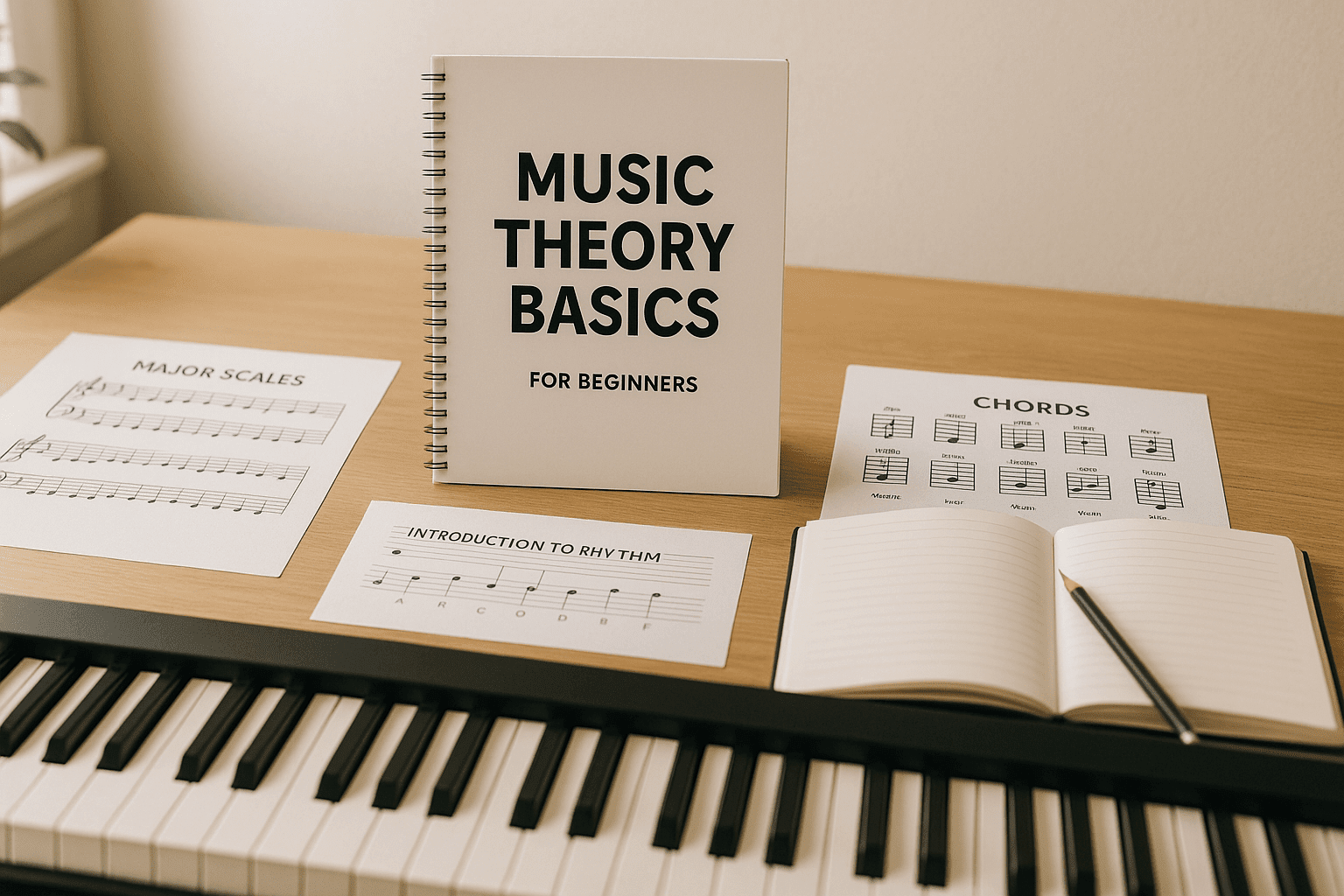
Music theory basics form the foundation of every confident musician, and this beginner-friendly course is designed to give you a clear, structured starting point. Whether you’re learning piano, guitar, voice, or digital production, this course guides you through the essential elements that make music work. You’ll begin with the core concepts of notation, pitch, and rhythm, making sense of how musical ideas are written, read, and understood. From there, you progress into scales, key signatures, intervals, and chords—building a strong understanding of melody and harmony.
Each lesson is carefully developed to help new learners grow step by step, without overwhelming terminology or unnecessary complexity. You’ll explore the musical alphabet, major and minor scales, time signatures, common rhythms, song structure, and the basics of harmonic analysis. By connecting theory with real-world musical examples, the course allows you to quickly apply what you learn to your chosen instrument or composition projects.
Practical tasks are included throughout, giving you opportunities to practise building scales, identifying intervals, creating simple chord progressions, and analysing short melodies. These exercises help reinforce new knowledge and build long-term confidence. The course also includes guidance on how to listen actively, recognise patterns, and understand the structure behind the music you enjoy.
By the end, you’ll be able to read notation more fluently, understand how songs are constructed, and apply theoretical concepts in your own playing, singing, or writing. This course is ideal for absolute beginners, self-taught musicians, and learners preparing for more advanced study.
Upon completion, learners will receive a free course completion certificate. Additional premium printed certificates, transcripts, and student ID options are available for purchase if desired. You will also have access to our 5-star rated 24/7 email support throughout your learning journey.
Who is this course for?
Music theory basics form the foundation of every confident musician, and this beginner-friendly course is designed to give you a clear, structured starting point. Whether you’re learning piano, guitar, voice, or digital production, this course guides you through the essential elements that make music work. You’ll begin with the core concepts of notation, pitch, and rhythm, making sense of how musical ideas are written, read, and understood. From there, you progress into scales, key signatures, intervals, and chords—building a strong understanding of melody and harmony.
Each lesson is carefully developed to help new learners grow step by step, without overwhelming terminology or unnecessary complexity. You’ll explore the musical alphabet, major and minor scales, time signatures, common rhythms, song structure, and the basics of harmonic analysis. By connecting theory with real-world musical examples, the course allows you to quickly apply what you learn to your chosen instrument or composition projects.
Practical tasks are included throughout, giving you opportunities to practise building scales, identifying intervals, creating simple chord progressions, and analysing short melodies. These exercises help reinforce new knowledge and build long-term confidence. The course also includes guidance on how to listen actively, recognise patterns, and understand the structure behind the music you enjoy.
By the end, you’ll be able to read notation more fluently, understand how songs are constructed, and apply theoretical concepts in your own playing, singing, or writing. This course is ideal for absolute beginners, self-taught musicians, and learners preparing for more advanced study.
Upon completion, learners will receive a free course completion certificate. Additional premium printed certificates, transcripts, and student ID options are available for purchase if desired. You will also have access to our 5-star rated 24/7 email support throughout your learning journey.
Requirements
Music theory basics form the foundation of every confident musician, and this beginner-friendly course is designed to give you a clear, structured starting point. Whether you’re learning piano, guitar, voice, or digital production, this course guides you through the essential elements that make music work. You’ll begin with the core concepts of notation, pitch, and rhythm, making sense of how musical ideas are written, read, and understood. From there, you progress into scales, key signatures, intervals, and chords—building a strong understanding of melody and harmony.
Each lesson is carefully developed to help new learners grow step by step, without overwhelming terminology or unnecessary complexity. You’ll explore the musical alphabet, major and minor scales, time signatures, common rhythms, song structure, and the basics of harmonic analysis. By connecting theory with real-world musical examples, the course allows you to quickly apply what you learn to your chosen instrument or composition projects.
Practical tasks are included throughout, giving you opportunities to practise building scales, identifying intervals, creating simple chord progressions, and analysing short melodies. These exercises help reinforce new knowledge and build long-term confidence. The course also includes guidance on how to listen actively, recognise patterns, and understand the structure behind the music you enjoy.
By the end, you’ll be able to read notation more fluently, understand how songs are constructed, and apply theoretical concepts in your own playing, singing, or writing. This course is ideal for absolute beginners, self-taught musicians, and learners preparing for more advanced study.
Upon completion, learners will receive a free course completion certificate. Additional premium printed certificates, transcripts, and student ID options are available for purchase if desired. You will also have access to our 5-star rated 24/7 email support throughout your learning journey.
Career path
Music theory basics form the foundation of every confident musician, and this beginner-friendly course is designed to give you a clear, structured starting point. Whether you’re learning piano, guitar, voice, or digital production, this course guides you through the essential elements that make music work. You’ll begin with the core concepts of notation, pitch, and rhythm, making sense of how musical ideas are written, read, and understood. From there, you progress into scales, key signatures, intervals, and chords—building a strong understanding of melody and harmony.
Each lesson is carefully developed to help new learners grow step by step, without overwhelming terminology or unnecessary complexity. You’ll explore the musical alphabet, major and minor scales, time signatures, common rhythms, song structure, and the basics of harmonic analysis. By connecting theory with real-world musical examples, the course allows you to quickly apply what you learn to your chosen instrument or composition projects.
Practical tasks are included throughout, giving you opportunities to practise building scales, identifying intervals, creating simple chord progressions, and analysing short melodies. These exercises help reinforce new knowledge and build long-term confidence. The course also includes guidance on how to listen actively, recognise patterns, and understand the structure behind the music you enjoy.
By the end, you’ll be able to read notation more fluently, understand how songs are constructed, and apply theoretical concepts in your own playing, singing, or writing. This course is ideal for absolute beginners, self-taught musicians, and learners preparing for more advanced study.
Upon completion, learners will receive a free course completion certificate. Additional premium printed certificates, transcripts, and student ID options are available for purchase if desired. You will also have access to our 5-star rated 24/7 email support throughout your learning journey.
-
- What is Music Theory? 00:10:00
- The Importance of Music Theory 00:10:00
- Notation and Terminology 00:10:00
-
- Understanding Pitch 00:10:00
- The Musical Alphabet 00:10:00
- Building Scales 00:10:00
- Major and Minor Scales 00:10:00
- Introduction to Rhythm 00:10:00
- Note Values and Rests 00:10:00
- Time Signatures 00:10:00
- Basic Rhythmic Patterns 00:10:00
- Understanding Intervals 00:10:00
- Building Chords 00:10:00
- Common Chord Progressions 00:10:00
- Applying Music Theory to Playing an Instrument 00:10:00
- Composing Simple Melodies 00:10:00
- Listening and Analyzing Music 00:10:00
- Premium Certificate 00:15:00

No Reviews found for this course.
Is this certificate recognized?
Yes, our premium certificate and transcript are widely recognized and accepted by embassies worldwide, particularly by the UK embassy. This adds credibility to your qualification and enhances its value for professional and academic purposes.
I am a beginner. Is this course suitable for me?
Yes, this course is designed for learners of all levels, including beginners. The content is structured to provide step-by-step guidance, ensuring that even those with no prior experience can follow along and gain valuable knowledge.
I am a professional. Is this course suitable for me?
Yes, professionals will also benefit from this course. It covers advanced concepts, practical applications, and industry insights that can help enhance existing skills and knowledge. Whether you are looking to refine your expertise or expand your qualifications, this course provides valuable learning.
Does this course have an expiry date?
No, you have lifetime access to the course. Once enrolled, you can revisit the materials at any time as long as the course remains available. Additionally, we regularly update our content to ensure it stays relevant and up to date.
How do I claim my free certificate?
I trust you’re in good health. Your free certificate can be located in the Achievement section. The option to purchase a CPD certificate is available but entirely optional, and you may choose to skip it. Please be aware that it’s crucial to click the “Complete” button to ensure the certificate is generated, as this process is entirely automated.
Does this course have assessments and assignments?
Yes, the course includes both assessments and assignments. Your final marks will be determined by a combination of 20% from assignments and 80% from assessments. These evaluations are designed to test your understanding and ensure you have grasped the key concepts effectively.
Is this course accredited?
We are a recognized course provider with CPD, UKRLP, and AOHT membership. The logos of these accreditation bodies will be featured on your premium certificate and transcript, ensuring credibility and professional recognition.
Will I receive a certificate upon completion?
Yes, you will receive a free digital certificate automatically once you complete the course. If you would like a premium CPD-accredited certificate, either in digital or physical format, you can upgrade for a small fee.
Course Features
Price
Study Method
Online | Self-paced
Course Format
Interactive PDFs, Articles & Learning Resources
Duration
4 hours, 55 minutes
Qualification
Professional Skills Development Course
Assessment
Final MCQ Exam (included in price)
Certificate
Verifiable Digital Certificate - Free
Additional info
Lifetime Access | Start Instantly
- Share

Pharmacy Technician
Course Line239£490.00Original price was: £490.00.£14.99Current price is: £14.99.Geodetic Surveying and Geodesy Level 3 Advanced Diploma
Course Line241£490.00Original price was: £490.00.£14.99Current price is: £14.99.



Related Courses
Level 3 Youth Award in Football: Coaching, Performance and Leadership
£490.00Original price was: £490.00.£14.99Current price is: £14.99.237Level 2 Youth Award in Football: Fundamentals, Skills & Team Play
£490.00Original price was: £490.00.£14.99Current price is: £14.99.237Communicating with Children: Theory to Practice
£490.00Original price was: £490.00.£14.99Current price is: £14.99.237




Related Courses
Level 3 Youth Award in Football: Coaching, Performance and Leadership
£490.00Original price was: £490.00.£14.99Current price is: £14.99.237Level 2 Youth Award in Football: Fundamentals, Skills & Team Play
£490.00Original price was: £490.00.£14.99Current price is: £14.99.237Communicating with Children: Theory to Practice
£490.00Original price was: £490.00.£14.99Current price is: £14.99.237

